Households with washing up every day
If you cook regularly, look for a capacity that suits the meals you have at home and the dishes you use. A machine that’s too small may leave some items to be washed by hand.


A dishwasher is worth considering if washing up is a daily task and your kitchen has room for the appliance and its connections. How much water you save compared with washing up by hand depends on your habits and how you load the machine, as UFC-Que Choisir points out. Before choosing a freestanding, integrated or compact model, check how much washing up you have, how much space is available and what installation involves. If no appliance is suitable, continuing to wash by hand is still an option.
If you cook regularly, look for a capacity that suits the meals you have at home and the dishes you use. A machine that’s too small may leave some items to be washed by hand.
If space is tight or you’re unsure about the connections, start by checking what can be installed. A smaller model may suit a lighter load of washing up, but it may not keep pace in the same way as a larger appliance.
If you’re comparing appliances on more than capacity, look at Eco programme consumption, consumables, maintenance and how easy the model is to repair. These considerations also matter when replacing an existing appliance.
The first thing to establish is whether a machine can accommodate the dishes you use regularly, in the space available and with the connections you have. The options below suit different needs. You can then compare consumption and noise levels model by model.
Consider it if: you have floor space and the necessary connections. UFC-Que Choisir says a 45 cm model may suit a small family, although it may need to be run every day.
Bear in mind: the appliance needs a dedicated space. Measure its depth and the clearance needed to open the door, even if it isn’t being fitted into your kitchen units.
Consider it if: your kitchen has a suitable cabinet space and fitting a matching door front is part of your plans.
Bear in mind: you’ll need to check the cabinet space, door front and installation requirements carefully. Electrolux states that its installers do not carry out carpentry, plumbing or electrical work.
Consider it if: space is limited and you don’t have a large volume of washing up.
Bear in mind: check that the capacity suits the dishes you use, as you may need to run more frequent cycles. How the machine is filled and drained depends on the model you choose.
Stick with it if: you don’t have much washing up, or there’s currently no suitable space or way to install an appliance.
Bear in mind: the job remains a manual one. Comparisons of water consumption with a machine vary depending on washing-up habits, UFC-Que Choisir notes.
| Consideration | What to check | Who it matters to |
|---|---|---|
| Capacity and daily washing up | Compare the stated number of place settings with your usual meals. Also check that the racks can accommodate your larger dishes. | When washing up piles up after every meal, I want to be able to load the machine without regularly having to wash some items by hand. Around 36% of consumers would put suitable capacity and less washing up at the top of their list. |
| Space and installation | Measure the space and door clearance. Check the model’s water supply, drainage and electrical requirements. | In a small kitchen, I first need to know whether the appliance will fit and can be used as intended. Around 29% of consumers would put this practical consideration ahead of the others. |
| Consumption and maintenance | Look at energy use per 100 cycles, water use per cycle and the length of the Eco programme together. Allow for the consumables and maintenance listed in the instruction manual. | If I’m planning to use the machine often, I want to understand what its cycles and day-to-day maintenance involve. For around 21% of consumers, these would be their main concerns. |
| Noise and repairability | Check the model’s noise level and, for appliances covered by the scheme in France, its repairability index. Find out what repair options are available. | In an open-plan kitchen, I want to be able to run a cycle without overlooking the noise or whether the appliance can be repaired. Around 14% of consumers would put these practical considerations first. |
Two households of the same size can have very different amounts of washing up, depending on how often they eat at home and what dishes they use. UFC-Que Choisir says a 45 cm model may suit a small family, although it may need to be run every day.
For a representative week, note how often you eat at home and how much space your pans and dishes take up before settling on a capacity.
For a plumbed-in model, confirm that the water supply, drainage and electrical supply are suitable. An integrated model also requires checks on the cabinet space and door front.
Measure the space, read the model’s instructions and ask exactly what the installation service includes.
A brand worth considering if you’re looking at freestanding dishwashers in different widths to suit the space available.
A brand to look at if you’re comparing freestanding models with different ways of integrating a dishwasher into a fitted kitchen.
A brand to consider if you’re starting your search with the size of your kitchen and the amount of washing up you have.
These appliances illustrate three ways to move from washing up by hand to using a machine: an integrated model, freestanding models and countertop options. First, choose a format that suits your kitchen, then check that the stated capacity matches the washing up you usually have.
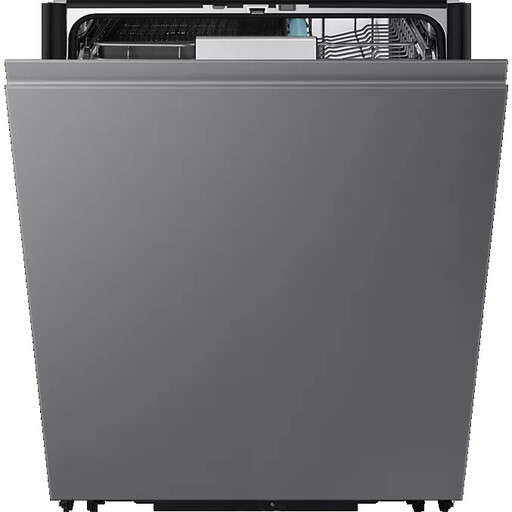 Image unavailable
Worth considering if you have a suitable space in a fitted kitchen and regularly have a large amount of washing up.
Stated capacity of 14 place settings, width of 60 cm and energy rating A. Check that the cabinet space, door front and connections are compatible before choosing this model.
 Image unavailable
An option for a household with regular washing up, if you have floor space available.
Stated capacity of 14 place settings, noise level of 41 dB and energy rating C. Check the connections and door clearance. When the door opens automatically at the end of a cycle, keep children away from the hot steam.
 Image unavailable
Worth comparing if you regularly have washing up and your kitchen can accommodate a freestanding appliance.
Stated capacity of 14 place settings and seven programmes. Check the dimensions, connections and space needed to open the door.
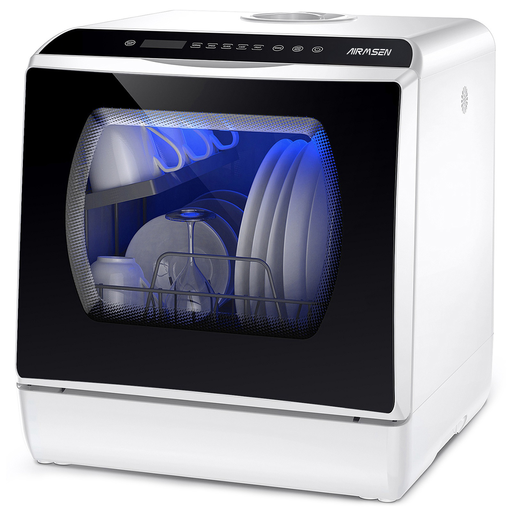 Image unavailable
Worth considering if you’re looking for a compact option and a manually filled tank suits the way you plan to use it.
The title lists a built-in 5 L tank and 5+1 wash cycles. Check that you have enough worktop space and a way to drain the wastewater. Not needing a permanent water supply connection doesn’t remove the need for drainage.
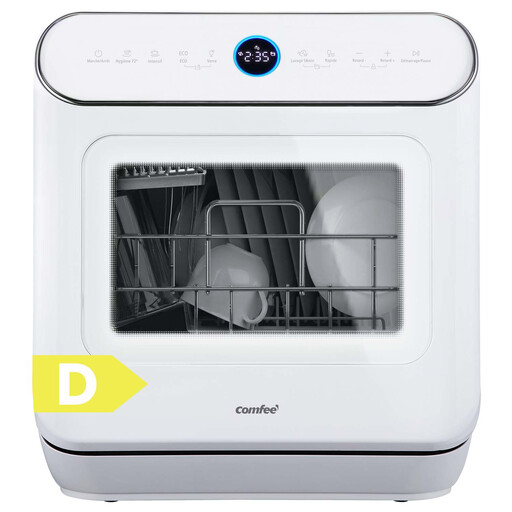 Image unavailable
Worth considering for a small amount of washing up in a kitchen with limited space, as long as your dishes fit inside.
Listed with seven programmes, automatic door opening and energy rating D. Check how to fill the tank and where the drainage hose needs to go.
For a plumbed-in model, check that the water supply, drainage and electrical supply meet the requirements in its instructions. Bosch lists all three in its installation guidance. For an integrated model, also check the cabinet space, door front and what’s included in the proposed installation service.
For household dishwashers covered by the scheme, use the index as an indication of repairability, not as a guarantee of lifespan. The ministries responsible for the ecological transition state that it’s a score from 0 to 10. Consider it alongside the model’s capacity, installation requirements and repair options.
No. The water and energy consumption figures used to compare dishwashers on the label relate to the Eco programme, according to information from GIFAM and the European Union. Check its duration too, and don’t assume these figures apply to other programmes.
Allow for consumables suited to the appliance and your water, then follow the instructions for cleaning the filters and seals and descaling. Factor these tasks into your choice if you’re hoping to replace a daily chore with a routine you can keep up with.