Households tired of daily washing up
If you’re unsure about buying an appliance, think about how much washing up builds up between meals and whether you could wait until the dishwasher is full before running a cycle.


If you don’t generate much washing up and are short on space or plumbing connections, carrying on washing by hand may be the simpler option. For regular use, choose a dishwasher based on how much washing up builds up between cycles and the space available: a compact model for smaller loads, a freestanding model if you have a suitable space, or a built-in model if your kitchen has a compatible housing unit. Then check the noise level and consumption figures on the model’s energy label.
If you’re unsure about buying an appliance, think about how much washing up builds up between meals and whether you could wait until the dishwasher is full before running a cycle.
A compact or 45 cm model is worth considering if space or the amount of washing up is limited. Also check that your dishes and pans will fit in the baskets.
A housing unit, existing cabinet door or proximity to the living area makes the installation type, dimensions and noise level particularly important.
First decide whether the amount of washing up you produce justifies an appliance. Then check that the type you’re considering will suit your kitchen before comparing energy labels.
Worth considering: if you have very little washing up, or if there’s no suitable space or plumbing for an appliance.
Bear in mind: you won’t need to install an appliance, but you’ll have to wash and dry the dishes yourself.
Worth considering: for a small kitchen and light loads; Que Choisir notes that some countertop models hold 6 place settings.
Bear in mind: saving space may mean running more frequent cycles if you use a lot of dishes or pans.
Worth considering: if you have regular loads and a suitable space in your kitchen, but no housing unit for a built-in model.
Bear in mind: according to Que Choisir, 45 cm models generally hold 9 to 10 place settings, compared with 12 to 17 for 60 cm models. Choose one that fits your available space, too.
Worth considering: if your kitchen has a suitable housing unit and you want the appliance integrated into your cabinets.
Bear in mind: Que Choisir explains that built-in models are supplied without a cabinet door, top or side panels. Check that you have a compatible door and confirm the installation requirements.
| What to consider | What to check | What suits my needs |
|---|---|---|
| Load size and format | Count how much washing up builds up between cycles. Compare the stated capacity in place settings, the width and the basket layout. According to Que Choisir, a compact model may hold fewer than 9 place settings. | I don’t have much washing up, but my pans and dishes need to fit too. If my loads are bigger, a 45 cm or 60 cm model may be a better fit for my usual washing-up routine. |
| Installation | Measure the width, height and depth. Check the installation type, housing unit or cabinet door required, and then the water supply, drainage and power requirements in the manual. | I need an appliance that will genuinely fit in my kitchen and can be connected where I plan to put it. |
| Water and energy | Compare the kWh per 100 cycles, litres per reference cycle, capacity and Eco programme duration on the label described by ADEME. | I want to understand the consumption figures rather than relying on the energy class alone, and to be able to wait until the appliance is full before starting it. |
| Noise | Compare the stated noise level in dB and the model’s noise class. If you look at test results, make sure they relate to the exact model number. | In an open-plan kitchen, I want to minimise disruption when the cycle is running while people are using the living area. |
Even a narrow model may not have enough height or depth, or may not be possible to connect where you want to put it.
Measure all three dimensions and check the connection requirements in the model’s manual before ordering.
According to Que Choisir, a built-in model is designed for a housing unit and is supplied without a cabinet door, top or side panels.
Check the housing unit, compatible cabinet door and installation requirements with your kitchen supplier or installer.
The energy class alone doesn’t tell you how much water is used per cycle, how long the Eco programme takes or how noisy the appliance is. Capacity matters too if the dishwasher is often run with a small load.
Compare these details on the labels of models with a capacity that suits the amount of washing up you usually have.
The stated capacity in place settings doesn’t guarantee that your pans and large containers will fit easily in the baskets.
Make a note of the washing up you produce in a day and check the interior layout before ruling out a 45 cm model.
Bosch offers 45 cm and 60 cm freestanding dishwashers in France.
Siemens offers freestanding and built-in dishwashers in France.
Miele offers freestanding and integrated models in France to suit different kitchen layouts.
This Joybuy selection includes 60 cm freestanding models, a built-in model and two compact countertop appliances. Compare their stated capacity with your everyday washing up, then check the installation requirements for your chosen model.
 Image unavailable
Worth considering for regular, larger loads if a freestanding appliance suits your kitchen. The product details state a capacity of 14 place settings and 7 programmes. Check the dimensions and the connections required for your chosen space.
 Image unavailable
For a 60 cm space and larger loads, the product details state a capacity of 14 place settings, a C energy class and 41 dB. Check the available height and connections if the appliance needs to fit under a worktop.
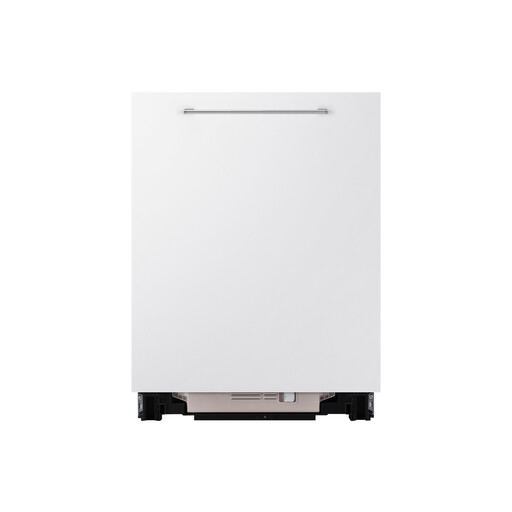 Image unavailable
Worth considering for a kitchen with a suitable housing unit: the model is listed with a capacity of 13 place settings and a B energy class. Check the housing unit dimensions, compatible cabinet door and connections before choosing this built-in model.
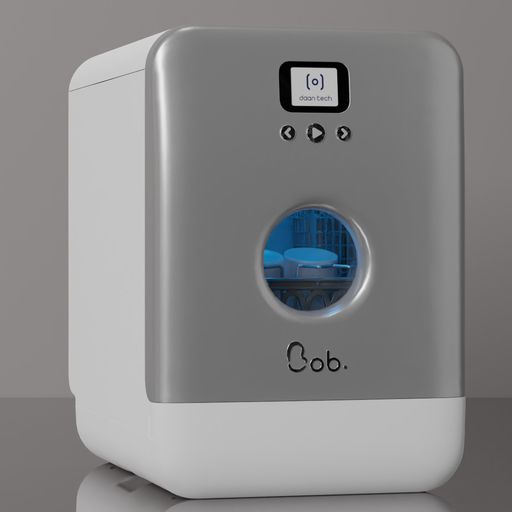 Image unavailable
This countertop model is listed with a capacity of 3 place settings, making it suited to small loads. Check that your dishes will fit, and make sure the water supply and drainage method will work in your kitchen.
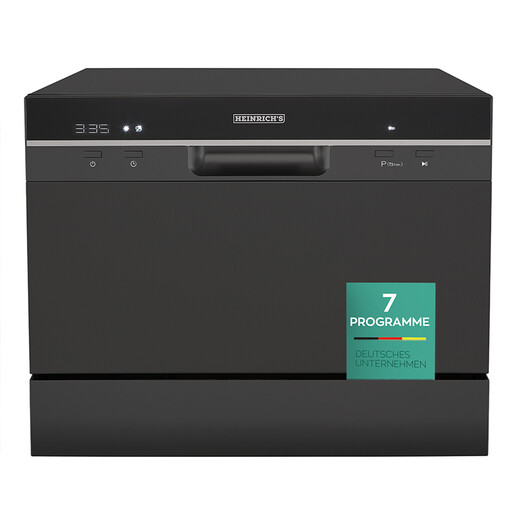 Image unavailable
This countertop model is listed with a capacity of 6 place settings and may be worth considering if space is limited, provided the baskets can hold the dishes you usually use. The title states 7 programmes, 47 dB and a D energy class. Confirm the dimensions and connections before buying.
Measure the available width, height and depth, then compare them with the product details and manual. Also check the installation type, water supply, drainage and electrical connection. If a new connection needs to be installed, find out what work is required before you buy.
It may be, if you don’t produce much washing up between cycles and your dishes fit inside. Que Choisir notes that some countertop compact models hold 6 place settings. Check the capacity and basket layout of the exact model, especially if you often use pans.
Compare the figures on the labels on a like-for-like basis: ADEME says energy is shown in kWh per 100 reference cycles and water in litres per reference cycle. Also consider the capacity and Eco programme duration. For everyday use, ADEME recommends waiting until the appliance is full and not pre-rinsing the dishes.