Households where washing-up piles up every day
If meals regularly leave you with a large load, compare the appliance’s capacity with the dishes you usually use and how often you could run a cycle.


If washing-up piles up after meals in your household, a dishwasher can take some of the effort out of washing by hand — provided you can fill it sufficiently and have a suitable space with the necessary connections. Choose between freestanding, built-in and compact models based on the space available and how much you need to wash. If you only have very small loads or installation isn’t possible, washing up by hand remains an option.
If meals regularly leave you with a large load, compare the appliance’s capacity with the dishes you usually use and how often you could run a cycle.
Available width isn’t the only thing to consider: you’ll also need to allow for the door to open, the position of the hoses and the connections. A compact countertop model and a built-in compact model have different installation requirements.
In an open-plan kitchen, noise can matter as much as capacity. The energy label lets you compare water and electricity use, the Eco programme duration and the noise emissions of the model you’re considering.
If you can regularly fill an appliance, first check the available space and connections, then choose a capacity that suits your dishes. If there’s no recess, a freestanding model may work; a suitable recess makes a built-in model an option, while a compact model is better for smaller loads. Washing up by hand is still an option if installation isn’t suitable.
| Criteria | What to check | Consumers concerned |
|---|---|---|
| Capacity | Compare the number of place settings and the basket layout with the plates, dishes and glasses you usually use. UFC-Que Choisir lists, among other options, 60 cm models with 12 to 17 place settings and 45 cm models with 9 to 10. | When washing-up from several meals builds up, I want to be able to wash it all together without running multiple cycles. Around 36% of consumers would make capacity their top priority. |
| Space and connections | Measure the usable space and check the water inlet, drainage, socket and door clearance. For a built-in model, also check the recess and cabinet door. | In a narrow kitchen, I first need to know whether the appliance can be installed and used without obstructing movement. Around 29% of consumers would put practicality first. |
| Water, energy and noise | Check the label for the exact model and compare kWh per 100 Eco cycles, litres per Eco cycle, the programme duration and noise emissions. The European Commission lists these indicators on dishwasher energy labels. | With an open-plan kitchen or frequent cycles, I want to consider noise and resource use, not just the energy class. Around 21% of consumers would put these criteria first. |
| Fitting | Check whether you’ll need a compatible cabinet door and an installation service, as well as any work needed to make the space suitable. | To fit the appliance in with my existing kitchen units, I want to understand the requirements for the cabinet door and installation before choosing a built-in model. Around 14% of consumers would make this their priority. |
A built-in appliance is designed for a suitable space and cabinet door: it can’t simply be installed like a freestanding model.
Measure the recess, check which cabinet door is compatible and ask exactly what the installation service includes.
The stated capacity doesn’t guarantee that your saucepans, large dishes or tall glasses will all fit at the same time.
Check the basket layout and adjustments against the dishes you actually use.
Two models in the same class can have different water use, Eco programme durations and noise levels.
Check the full energy label for the exact model, particularly its noise emissions if you have an open-plan kitchen.
When replacing a dishwasher, you’ll need to have the old one removed or taken away. This can affect how your delivery is arranged.
Arrange collection or disposal when you place your order, and confirm the options available.
Bosch offers freestanding, built-in, slimline and compact models in its dishwasher range.
Electrolux offers freestanding, integrated and compact models, including appliances designed for smaller spaces.
Beko offers freestanding and built-in dishwashers, with a range of capacities across its models.
These models cover three possible setups for washing up at home: freestanding, built-in with fitted kitchen units, and compact countertop. First choose an installation type that works in your kitchen, then a capacity suited to your loads.
 Image unavailable
Worth considering if you want to handle a regular load of washing-up in a freestanding model.
Stated width: 60 cm; energy class C; stated noise level: 41 dB. Check the available space and connections before choosing this size.
 Image unavailable
Another freestanding option for a household with regular loads and enough space for the appliance.
Stated width: 60 cm; energy class E. Check the available height and the energy label details for the exact model.
 Image unavailable
Worth a look if the amount of washing-up you generate calls for a freestanding model with a stated capacity of 14 place settings.
The product name lists seven cycles. To compare its consumption and noise with other models, check the energy label for this exact model.
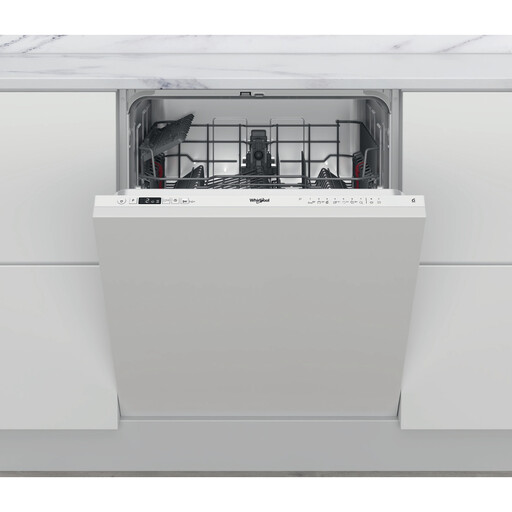 Image unavailable
Consider this if your kitchen has a suitable recess and you’d like the appliance to blend in with your units.
Stated width: 60 cm; energy class E. Check the usable recess dimensions, compatible cabinet door and installation requirements.
 Image unavailable
A countertop model may suit smaller loads if you have a suitable space and the necessary connections.
The product name lists seven programmes, energy class D and 47 dB. With a stated capacity of six place settings, check that your usual dishes will fit without needing to run multiple cycles.
There’s no number of place settings that makes buying a dishwasher worthwhile for every household. If you can wait until you have a sufficiently full load after regular meals, an appliance could save you some washing up by hand. ADEME recommends running it when full and not pre-rinsing the dishes.
Check the water inlet, drainage and socket required for your chosen model, and make sure they’re positioned suitably for the installation space. Bosch says its dishwashers should be plugged directly into a mains socket, without an extension lead or multi-socket adaptor. Always consult the manual for the appliance you choose.
Check the energy label for the exact model rather than relying on its energy class alone. According to the European Commission, the label includes energy use per 100 Eco cycles, water use per Eco cycle, the programme duration, capacity and noise emissions.
No — don’t assume a compatible cabinet door is included with the appliance. Check the recess, the cabinet door you’ll need and what the installation service covers before ordering.