Which households are these options suited to?

Households that regularly have plenty of washing-up

If you can save enough dishes to fill the appliance, compare its capacity with the water and electricity figures for the Eco programme. ADEME recommends waiting until the dishwasher is full before starting it.

Small homes with limited kitchen space

You’ll need to find a suitable spot without choosing a capacity that means you have to run multiple cycles. UFC-Que Choisir distinguishes between slimline 45 cm appliances and small freestanding models.

Households considering sticking with hand-washing

If the amount of washing-up varies or installing an appliance is a problem, first consider your rinsing habits and whether you can reduce the tap flow rate.

How do the options compare?

Standard dishwasher

Consider this if: you have enough space and enough washing-up to run full loads.

Bear in mind: a larger capacity won’t automatically save energy or water if you run the appliance with only a few items in it.

Compact dishwasher

Consider this if: space is limited and you don’t have more washing-up than a smaller appliance can handle.

Bear in mind: a smaller capacity may mean running cycles more often.

Hand-washing

Stick with this if: you have few dishes to wash, the amount varies, or installing an appliance isn’t practical.

Keep an eye on: the tap flow rate and the time spent rinsing under running water, as both affect consumption.

What matters to you What to check before buying Who this matters to
Loads and consumption For a suitable capacity, compare the litres per cycle and kWh per 100 cycles on the energy label. Ask yourself whether you can wait until you have a full enough load without pre-rinsing. When washing-up builds up regularly, I want to avoid running partly filled cycles without having to pre-rinse every item; around 50% of consumers would put managing their cycles first.
Space and capacity Measure the available space and compare the place-setting capacity with the amount you need to wash between cycles. In a small kitchen, I need an appliance that fits without a tub that’s too small for my dishes; around 30% of consumers would make this their priority.
Whether it’s worth buying Consider how regularly you wash up, whether you can install an appliance and your habits when rinsing under the tap. If I don’t have much washing-up or only wash occasionally, I’d rather look at how I use the tap before buying an appliance; around 20% of consumers would prioritise this question.

Two mistakes to avoid

  • Assuming the litres per cycle apply to every use

    According to ADEME, the figures on the energy label relate to the reference cycle. The programme you use, pre-rinsing and how full the appliance is will all affect its actual use.

    Compare appliances using the same energy-label figures, then check that the Eco programme and its duration suit your washing-up routine.

  • Choosing the smallest size without checking its capacity

    UFC-Que Choisir lists 6-place-setting freestanding models and slimline 45 cm appliances with around 9 place settings. If the capacity doesn’t suit your washing-up, you may end up running more cycles.

    Consider how much washing-up you accumulate between washes, then check the capacity and energy-label figures for the model you’re considering.

Brands to consider

There are no brands to feature in this section.

Dishwashers available on Joybuy

These appliances include a 60 cm built-in model and freestanding worktop models. First, choose a format that suits your kitchen and the amount of washing-up you have, then compare the energy-label figures.
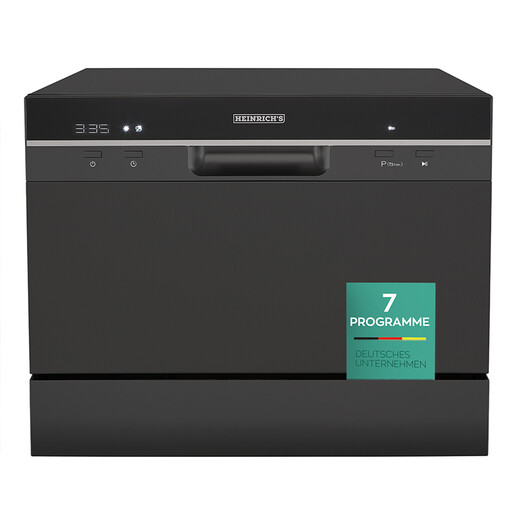
Heinrich's HTG 8840 Schwarz tabletop dishwasher

Heinrich's HTG 8840 Schwarz, 6 place settings

For a kitchen where a tabletop appliance can hold the washing-up you accumulate before each cycle. The listing states 6 place settings and energy rating D. Check the dimensions, connections and Eco programme figures for this version.

View on Joybuy
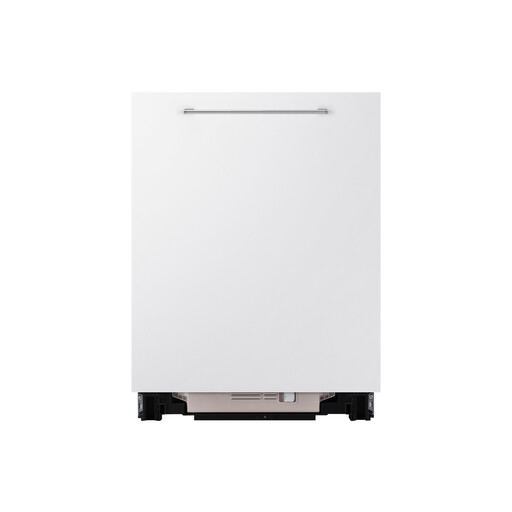
Samsung DW80H72YBB0U1 built-in dishwasher

Samsung DW80H72YBB0U1 built-in dishwasher, 60 cm, 13 place settings

Worth considering if you regularly have enough washing-up to make use of its stated capacity of 13 place settings. The listing gives it energy rating B. Check the litres per cycle, kWh per 100 cycles and the dimensions needed for installation.

View on Joybuy
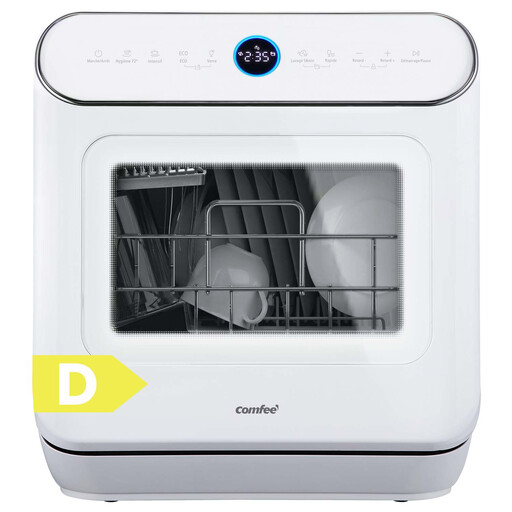
White COMFEE CDWMT305WD mini tabletop dishwasher

COMFEE CDWMT305WD, white mini dishwasher

Worth considering if you plan to put the appliance on a worktop and have smaller loads of washing-up. The listing states energy rating D, but gives the capacity as “3 place settings”. Confirm the capacity and water-supply requirements before choosing.

View on Joybuy
White Comfee' CDWMTO201D(W) worktop dishwasher

Comfee' CDWMTO201D(W), white worktop model

Worth considering if you’re looking for a freestanding appliance and want to explore the option of filling it from a tank. The listing states that it has a built-in 5 L tank, which isn’t the same as the amount of water used per cycle. Check the place-setting capacity, energy label and any connection accessories you’ll need separately.

View on Joybuy

Frequently asked questions

What should I look for on a dishwasher’s energy label?

Compare the energy rating, kWh per 100 cycles, litres per cycle, place-setting capacity, Eco programme duration and noise level. ADEME and the European Commission recommend considering these figures together, particularly when choosing between appliances with different capacities.

Do the litres shown on the label apply to every programme?

No. They relate to the reference cycle shown on the label, which is associated with the Eco programme. To estimate your own usage, also consider which programmes you’ll run and how full the appliance will be.

Should I pre-rinse dishes before putting them in the dishwasher?

ADEME recommends not pre-rinsing and waiting until the dishwasher is full before starting a cycle. These are usage tips, not a guarantee that every household will use the same amount of water and energy.

Does a compact dishwasher always use less?

No. Its smaller size alone doesn’t tell you how much your household will use. A smaller capacity may mean running more cycles, so compare the capacity, litres per cycle and kWh per 100 cycles of the appliances you’re considering.