For everyday washing up, first choose a format that fits your kitchen space and connections, then pick a capacity that suits the amount of washing up you accumulate between cycles. According to Que Choisir, 60 cm models usually hold 12 to 17 place settings, compared with 9 to 10 for 45 cm models; a compact dishwasher is an option when space is especially limited, but check its capacity carefully. Then compare the energy and water consumption, noise, drying performance and repairability of each model. Don’t assume that the installation type alone determines how well it washes.
Who are these options for?
Households fitting out an existing kitchen
If your options are limited by the space, worktop or connections, start by checking the measurements and installation type. Que Choisir’s guides outline, in particular, the different requirements for freestanding and integrated appliances.
Households with washing up that builds up between meals
Compare the advertised place settings with the plates, dishes and saucepans you use regularly. Que Choisir gives different capacities for 45 cm and 60 cm models; basket layout also matters when you need to fit larger items.
Households mindful of noise and energy use
If your dishwasher is near a living area, check the noise level of the exact model. To compare day-to-day use, ADEME and the European Commission also recommend checking the kWh per 100 cycles, litres per cycle and Eco programme duration shown on the energy label.
What should you check before buying?
Freestanding
Consider it: if you don’t have a dedicated space or want to keep your kitchen layout flexible.
Bear in mind: the appliance will be visible. If you plan to put it under a worktop, check whether the top panel can be removed from the model you’ve chosen.
Integrated
Consider it: if you have a suitable space and want the appliance to blend in with your kitchen units.
Bear in mind: the space, door panel, fixings and plinth must all be suitable for the model you choose. An integrated design doesn’t guarantee better washing performance.
Compact
Consider it: if there isn’t room for a 45 or 60 cm appliance and you usually have smaller loads.
Bear in mind: a smaller capacity may mean running cycles more often. Also check how the water supply and drainage work.
| Criteria |
What to check |
Who is it for? |
| Size and installation |
Measure the space and check whether you need a door panel, as well as the water supply, drainage and socket. |
If my kitchen has a dedicated space or a narrow opening, I need to know which appliance will actually fit. Around 31% of consumers make this a priority. |
| Usable capacity |
Compare the advertised place settings with the space in the baskets for your dishes and saucepans. |
When washing up builds up between meals, I want to avoid running a cycle just because larger items won’t fit. Around 31% of consumers put capacity first. |
| Energy use, water use and noise |
Compare the kWh per 100 cycles, litres per cycle, Eco programme duration and dB on the energy label, using models with similar capacities. |
In an open-plan kitchen or when I run frequent cycles, I pay attention to noise as well as water and electricity use. Around 23% of consumers prioritise these aspects of everyday use. |
| Drying and lifespan |
Check how well it dries on the programme you plan to use, whether it has leak protection and the details of its repairability index. |
If I want to put the washing up away quickly and keep the appliance for a long time, I look at the features of the specific model without overlooking its installation requirements. Around 15% of consumers put these concerns first. |
Mistakes to avoid
-
Buying an integrated dishwasher before measuring the space
An integrated model needs to be fitted into a suitable space; simply placing it on the floor isn’t a substitute for installation. The door panel and plinth can also affect your choice.
Measure the space and check that the door panel, fixings and plinth are compatible before choosing a model.
-
Choosing a small model without considering your mealtime washing up
If the capacity is too small, you may have to run more cycles. Que Choisir says that a 45 cm model may suit a small family, though it might need to be run every day.
Think about the washing up from several meals, including dishes and saucepans, then decide how often you’re happy to run a cycle.
-
Relying on a ‘quiet’ or ‘drying’ feature name alone
A product name doesn’t tell you the noise level shown on the energy label or the conditions for using a particular feature. Miele, for example, says that AutoOpen is only available on certain programmes.
Check the dB rating, noise class and manual for the exact model, especially for the programme you plan to use.
-
Assuming leak protection prevents all leaks
According to Bosch, AquaStop detects certain leaks and shuts off the water supply on models that have it; it can’t prevent every leak from occurring.
Check that the model has this feature, follow its installation instructions and, as Bosch recommends, turn off the tap if you’ll be away for an extended period.
Brands to consider
These brands offer different formats, with features and specifications that vary by model.
Bosch
Bosch offers freestanding, integrated, compact and under-counter dishwashers.
- The range lets you compare different installation types for an existing kitchen.
- According to Bosch, AquaStop is only available on certain models. Check whether Zeolith is included and how it works on the model you’re considering.
Beko
Beko offers, among other options, 60 cm freestanding dishwashers; its range includes models with Selfdry.
- One model featured by Beko is a 60 cm freestanding dishwasher with an advertised capacity of 15 place settings.
- This capacity and the drying or leak-protection features shouldn’t be assumed to apply to all Beko models.
Miele
Miele offers freestanding and integrated models, including 45 and 60 cm widths.
- The different widths make it easier to find a model suited to the space you have.
- Noise, energy class and AutoOpen availability vary by model. Miele also limits AutoOpen to certain programmes.
Whirlpool
Whirlpool offers integrated and freestanding models, with features that vary by model.
- For its integrated model WH6ITC14B3N6L, Whirlpool lists 14 place settings and a noise level of 43 dB.
- The specifications of this model and the stated benefits of NaturalDry or PowerClean don’t apply to the whole range.
Dishwashers for different spaces
These Joybuy models include freestanding options, a dishwasher for fitting into a fitted kitchen and a compact worktop model for small loads. Before choosing, compare their specifications with your available space and the washing up you usually have.
 Image unavailable
Indesit D2F HK26 S freestanding dishwasher, 14 place settings, grey
Worth considering if you’re looking for a freestanding model for regular mealtime loads.
The product name lists a width of 60 cm, 14 place settings and an energy class of E. Check the full dimensions and connections against your available space.
View on Joybuy
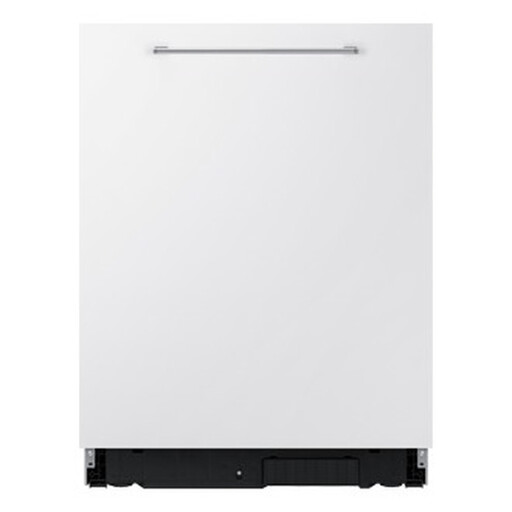 Image unavailable
Samsung DW70H72WCB0U1 integrated dishwasher, 13 place settings
Consider it if your kitchen has a suitable space for an integrated dishwasher.
The product name lists a width of 60 cm, 13 place settings and an energy class of C. Check the dimensions of the space, door panel and connections before installation.
View on Joybuy
 Image unavailable
Hotpoint H4FD641A freestanding dishwasher, 14 place settings, white
Worth considering for larger mealtime loads if a freestanding appliance suits your kitchen.
The product name lists a width of 60 cm, a noise level of 41 dB and an energy class of C. If you use a high-temperature programme, take care of the steam when opening the door and wait before unloading the appliance.
View on Joybuy
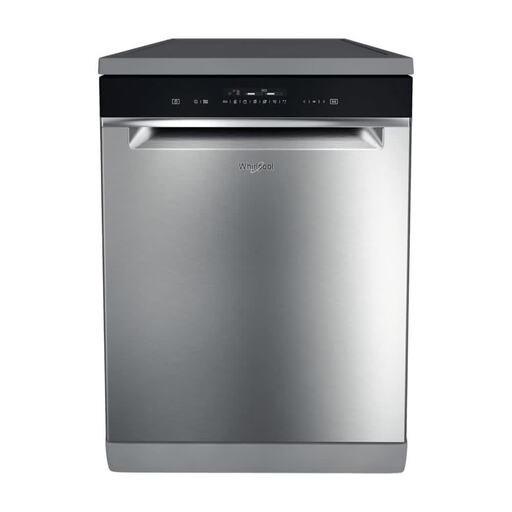 Image unavailable
Whirlpool WFP5O41PLGX freestanding dishwasher, 14 place settings, stainless steel
Worth considering for regular loads if you have space for a freestanding appliance.
The product name lists a width of 60 cm and an energy class of C. The detailed dimensions don’t clearly match this width, so confirm the exact measurements before setting aside space for it.
View on Joybuy
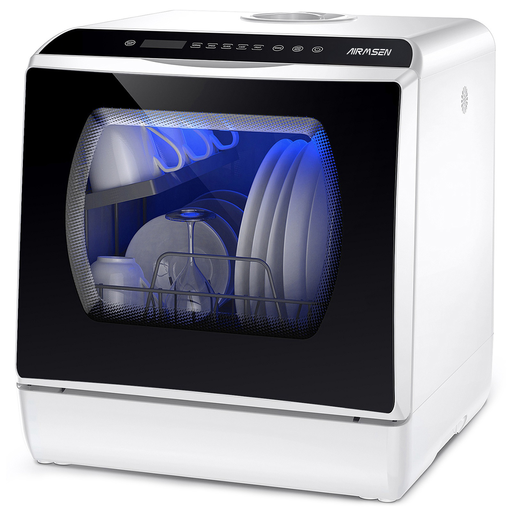 Image unavailable
AIRMSEN worktop dishwasher, 5 L tank
Worth considering for small loads when limited space makes a worktop model a better fit.
The product name mentions a built-in 5 L tank and 5+1 wash cycles. Check that it can fit the dishes you use every day and plan where to drain the water, including when using the tank.
View on Joybuy
Frequently asked questions
Is a 45 cm dishwasher big enough for a small household?
Yes, if its capacity of 9 to 10 place settings suits your washing up and how often you want to run a cycle. Que Choisir says a 9-place-setting model may suit a small family, but it might need to run every day. Also check that there’s room for your dishes and saucepans.
How do you compare the energy use of two dishwashers?
Compare their energy labels on a like-for-like basis, and choose capacities that suit your needs. ADEME and the European Commission list the kWh per 100 cycles, litres per cycle, Eco programme duration and noise level. The energy class letter alone doesn’t tell you everything about how an appliance performs in everyday use.
Which connections should you check before buying?
Check the water supply, drainage and electrical socket at the intended installation point. Then consult the manual for your chosen model to confirm the connection requirements and the length of the hoses needed.
How can the repairability index help you choose a dishwasher?
It helps you compare how easy it is to repair the models you’re considering, rather than judging an appliance on capacity alone. According to the French Ministry of the Economy, this score out of 10 takes account of factors including documentation, ease of dismantling and parts availability. Check the details of the index for the specific model.
Does leak protection eliminate the risk of water damage?
No. It doesn’t replace correct installation or sensible precautions. Bosch says AquaStop can detect certain leaks and shut off the water supply on models that have it, and recommends turning off the tap if you’ll be away for an extended period.


