Start by considering how much washing-up you produce between cycles and how much space you have. A full-size appliance is better suited to larger loads, while a compact model is a better fit for smaller loads and kitchens with limited space. Then compare the models that work with your installation, looking at water use and duration per eco cycle, electricity use per 100 eco cycles and the noise level shown on the label, rather than relying on the energy rating alone.
Who is this choice for ?
Households that eat at home regularly
If plates, glasses and pans pile up between cycles, compare the stated capacity and basket layout before looking at extra features. Gifam generally gives a capacity of 12 to 15 place settings for a 60 cm model, compared with 6 for a compact tabletop model. Check that it suits the crockery you use most often.
Kitchens where space is limited
Your choice depends on the space available, the worktop and the connections. A 45 cm built-in model and a small countertop appliance don’t go in the same place. Measure the space and check the model’s dimensions and installation instructions.
Open-plan kitchens
If you can hear cycles during meals or while you’re relaxing, compare the stated noise emissions and the duration of the programme you’ll use. The EU energy label includes information about noise and the duration of the eco programme.
Which features should you compare ?
For your everyday mealtime routine, first consider the load and installation requirements, then compare noise levels and usage figures.
| What matters |
What to check |
Who should consider it ? |
| Amount of washing-up |
Count the crockery and cookware you use between washes, then compare the stated place settings and basket layout. |
If I want to wash up after my usual meals without running several cycles, capacity and layout come first; around 36 % of consumers prioritise capacity. |
| Space and connections |
Measure the space and check the installation type, water supply if required, power supply and drainage. For a built-in model, also check that the door panel is compatible. |
When the space or connections in my kitchen limit my options, I check that a model can actually be installed there; around 29 % of consumers prioritise space and connections. |
| Noise during cycles |
Compare the stated noise emissions of models suited to your space and load. |
In an open-plan kitchen, I want to run a cycle without disturbing meals or relaxation; around 21 % of consumers prioritise quiet operation. |
| Water, electricity and cycle duration |
Compare water use per eco cycle, electricity use per 100 eco cycles and programme duration on a like-for-like basis. In France, also check the model’s repairability rating. |
If I run cycles frequently, I compare the resources they use and how much time they take out of my day; around 14 % of consumers prioritise water, electricity or cycle duration. |
Mistakes to avoid
-
Confusing a 45 cm built-in model with a compact countertop dishwasher
These formats suit different spaces: one needs to fit into a kitchen unit, while the other sits on a worktop. Their capacities may differ too.
Measure the kitchen unit and worktop, then check the installation type and stated place settings for the specific model.
-
Assuming a model with a water tank needs no drainage
Daan Tech says that Bob can be filled using its tank, but wastewater still needs to be drained through a hose.
Before choosing a model with a water tank, make sure you have a suitable space and a drainage route that follows the instructions.
-
Comparing figures from different programmes
The EU energy label gives figures for the eco programme. Daan Tech’s stated 2.9 litres for Bob applies to its Express cycle, so it isn’t directly comparable with an eco-cycle figure.
Make sure you’re comparing the same programme, unit and number of cycles.
-
Overlooking installation requirements
A fitted kitchen may require a compatible door panel and an installation service, in addition to the appliance.
Before choosing a built-in model, check what’s included in delivery, connections and setup.
Brands to consider for different formats
Beko
The BDFN15440S is an example of a 60 cm freestanding model designed for larger loads.
- Beko states that this model has 14 place settings and an automatic door-opening feature.
- These features aren’t an independent assessment of its cleaning performance. Check the dimensions and product specifications before comparing it with a 45 cm appliance or a compact model.
Whirlpool
The W7IHP40LSC is an example of a 60 cm fully integrated model for a fitted kitchen.
- Whirlpool states that this model has 15 place settings, a noise level of 40 dB, uses 9.5 litres of water and has a C energy rating.
- These figures apply to this model, not the whole range. Check the dimensions of the space, door-panel compatibility and installation requirements.
Electrolux
The EES42210L is an example of a 45 cm fully integrated model.
- The manufacturer’s specifications state that it has 9 place settings, uses 9.9 litres per cycle and consumes 70 kWh per 100 cycles.
- Compare the basket layout and door panel with your kitchen. These stated figures aren’t the result of a comparative test.
Daan Tech
Bob is an example of a small countertop dishwasher with a water tank, designed for smaller loads and kitchens without a fixed water supply.
- Daan Tech states that Bob has 3 place settings and a 3.9-litre tank. The manufacturer gives an Express programme duration of 20 minutes and water use of 2.9 litres.
- Wastewater drains through a hose, so check that you can set it up as described in the instructions. Express programme figures aren’t a comparison with eco cycles.
Bosch
The SMS4EMI06E is an example of a freestanding model to consider if its stated noise level is important to you.
- Bosch states that this model has a noise level of 42 dB and an automatic door-opening feature at the end of the cycle.
- These features don’t tell you about the noise level or drying performance of every Bosch dishwasher. Compare the specifications for the specific model.
Joybuy products for different needs
This selection includes compact countertop dishwashers for smaller loads, as well as freestanding models for households that have more washing-up between cycles.
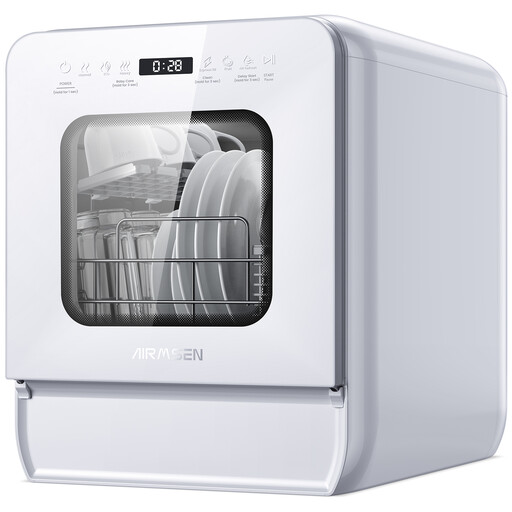 Image unavailable
AIRMSEN countertop dishwasher, 5-litre tank
Its countertop design and stated capacity of 4 place settings make it suitable for smaller loads in a kitchen with limited space.
Integrated 5-litre tank, 9 programmes, stated dimensions of 37 × 50 cm and D energy rating.
View on Joybuy
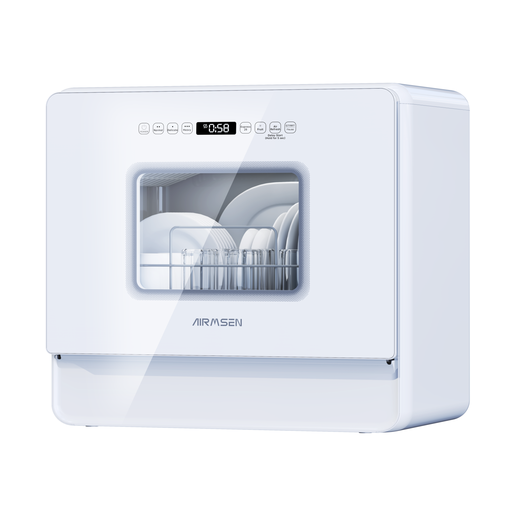 Image unavailable
AIRMSEN A01 countertop dishwasher
Its stated capacity of 5 place settings and integrated tank make it suitable for smaller loads when space is limited.
Stated features include a 5-litre tank and a 12-hour delay-start function. Check the space available and water-supply requirements before choosing.
View on Joybuy
 Image unavailable
Heinrich’s HTG 8840 Schwarz
Its stated capacity of 6 place settings makes it suitable for smaller loads where a countertop appliance is a good fit.
It’s listed with 7 programmes, a noise level of 47 dB and water use of 6.5 litres per wash. Stated energy consumption is 49 kWh per 100 uses. Check which programmes the figures apply to before comparing specifications.
View on Joybuy
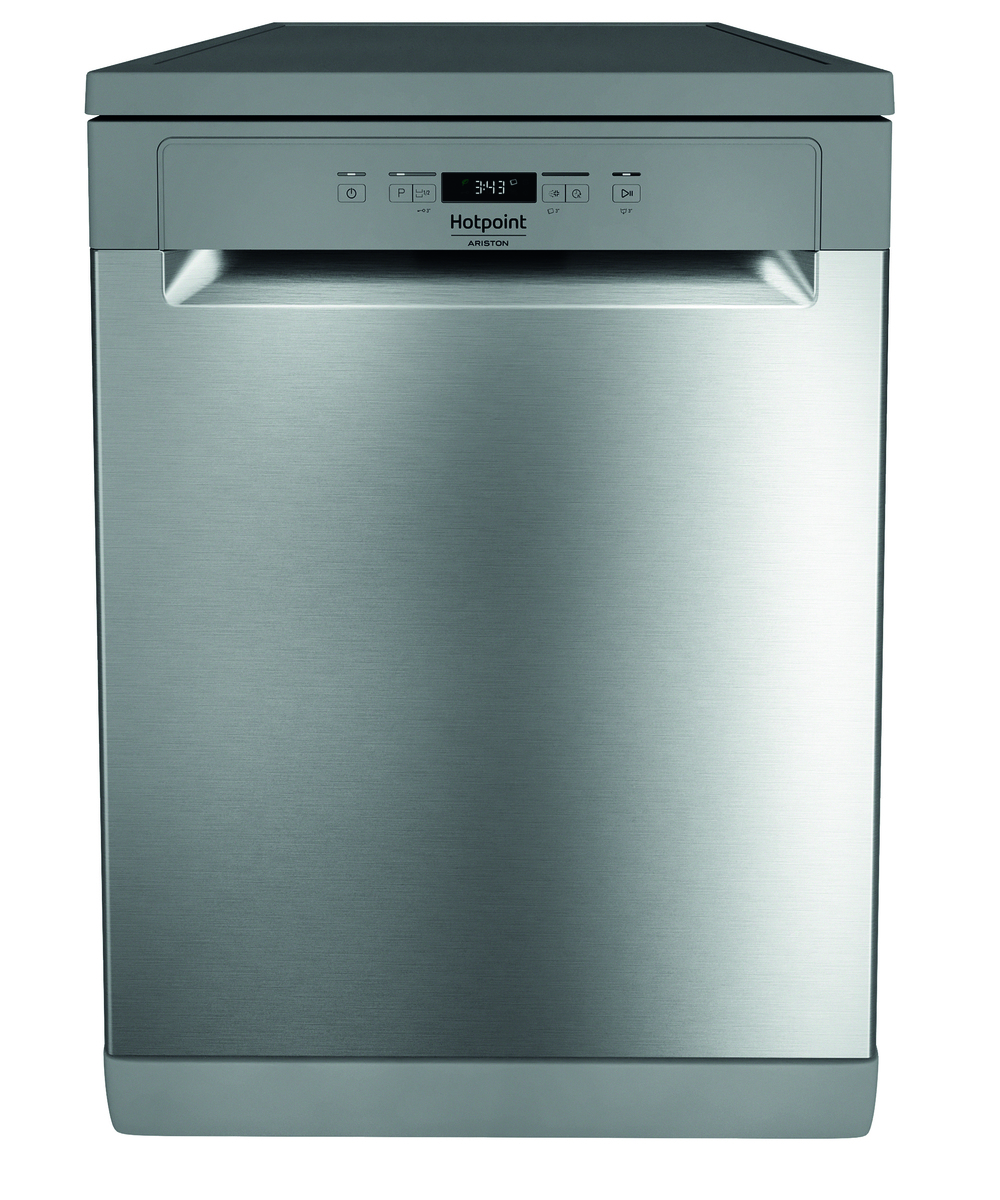 Image unavailable
Hotpoint H3FFD636X, freestanding, 60 cm
Its stated capacity of 14 place settings and freestanding design may suit a household that produces larger loads.
The specifications give a noise level of 46 dB. For the eco programme, they state 11.5 litres per cycle, 85 kWh per 100 cycles and a duration of 5 hours. Compare these figures on a like-for-like basis.
View on Joybuy
 Image unavailable
Whirlpool WFP5O41PLGX, freestanding, 60 cm
Its stated capacity of 14 place settings and cutlery drawer suit households that load the appliance regularly.
The specifications give a noise level of 41 dB and a C energy rating. For the eco programme, they state 9.5 litres per cycle and 75 kWh per 100 cycles.
View on Joybuy
Frequently asked questions
Which figures should I compare if I run cycles often ?
Compare specifications on a like-for-like basis. The EU energy label shows electricity use per 100 eco cycles, water use per eco cycle, its duration, capacity and noise level. Eco programme figures don’t necessarily apply to other programmes.
Does a dishwasher with a water tank mean you don’t need any installation ?
No. Daan Tech says Bob can operate without a fixed water supply, but wastewater needs to be drained through a hose into a sink or bucket. Also check the available space and the chosen model’s electrical and drainage requirements.
What should I do if the cleaning results aren’t as good ?
Check the manual for your model and inspect its filter. Bosch says a dirty filter can be associated with crockery that’s still dirty or unpleasant smells, and provides cleaning instructions for its appliances. Maintenance instructions and frequency vary by model.
Which regulations should I check when buying a new dishwasher in France ?
For a consumer buying from a business, the French Ministry of the Economy explains that the statutory guarantee of conformity applies to new goods and that you have two years to take action. The Ministry also states that dishwashers must display a repairability rating out of 10. This is different from the durability rating required for some other product categories.


