If washing-up regularly piles up, a dishwasher could make the task easier, provided you have the space and the necessary connections. Choose a freestanding model if your kitchen has no dedicated space, a built-in model if your units can accommodate one, or a worktop model for smaller loads. If you have only a few dishes to wash, first weigh that against the demands of installation and everyday use.
Who is this choice for?
Households that wash up by hand every day
If washing up is part of your routine after most meals, compare the amount of washing-up with an appliance’s capacity and the space it would take up in your kitchen. For a small amount of crockery, washing by hand may still be simpler.
First-time buyers with an unequipped kitchen
Before choosing a model, decide where it will go. According to Que Choisir, installing a dishwasher requires a water supply, an electrical connection and a waste-water outlet.
Small households or narrow kitchens
Available width and the number of place settings used between washes are equally important. Que Choisir states that a 45 cm model typically holds 9 to 10 place settings; check whether this capacity suits your routine.
What should you consider before buying?
Start with the amount of washing-up you actually have and the space available. Then compare the features of models that can genuinely be installed in your home.
| Priority |
What to check |
What you need |
| Everyday usefulness |
Look at how much washing-up you have between washes and how often you would like to run a cycle. |
Washing-up often piles up at home, so an appliance could save me from washing everything by hand after each meal. If there isn’t much, I can also carry on washing by hand. |
| Space and connections |
Measure the space and check for the water supply, electrical connection and waste-water outlet required, according to Que Choisir. For a built-in model, also check that the space and door panel are compatible. |
I want to know where the appliance will go before choosing between a freestanding, built-in or worktop model. |
| Capacity |
Compare the stated number of place settings with the amount of washing-up you have. Que Choisir gives a typical capacity of 9 to 10 place settings for a 45 cm model and 12 to 17 for a 60 cm freestanding model. |
An appliance that’s too small would mean running cycles more often; a larger model also needs to suit the space and the amount of washing-up in my household. |
| Water, energy and noise |
On the energy label, compare water use in litres per cycle and energy use in kWh per 100 cycles, as shown by ADEME. Also check the model’s noise level. |
If the kitchen is close to living areas, noise matters to me just as much as the stated consumption figures for the reference cycles. |
| Washing and drying |
Check comparable washing and drying results for the programmes you’ll use. Que Choisir lists these results among the selection criteria; the energy class doesn’t tell you everything. |
I want to be able to put away clean crockery that’s dry enough, rather than choosing based only on the number of programmes. |
What mistakes should you avoid?
-
Ordering before checking the connections
Having enough space isn’t all you need: according to Que Choisir, a dishwasher also needs to be connected to the water supply, electricity and a waste-water outlet.
Measure the space and check for all three connections before choosing a type. Also make sure the appliance can be levelled.
If new connections need to be installed, factor this work into your installation plans.
-
Treating a built-in model like a freestanding one
According to Que Choisir, a built-in model needs to fit into a purpose-built space. The kitchen door panel and plinth must also be suitable for the appliance and units.
Before ordering, check the space, door type and any parts that need to be fitted. Otherwise, consider a freestanding model that suits the available space.
Fitting a door panel and adapting the units can add extra steps to the installation.
-
Assuming a smaller model uses less
A slimline or worktop model won’t necessarily use less for your needs: its capacity may mean running more cycles if washing-up piles up.
Compare the capacity with the amount you usually have, then check the water used per cycle and kWh per 100 cycles on the energy label, as ADEME recommends when comparing appliances.
-
Choosing based on energy class alone
Consumption figures don’t tell you everything about washing and drying performance. Que Choisir treats these results as important selection criteria in their own right.
Use the label to compare consumption, then look for comparable washing and drying results for the models you’re considering.
Which brands should you compare?
These ranges can help you explore the available types; always check the specifications of the exact model before choosing.
Bosch
Bosch Électroménager France offers freestanding, built-in and compact dishwashers.
- Several installation types to consider, depending on your kitchen layout.
- Check the dimensions, capacity, noise level and consumption of the model you choose.
Beko
Beko France offers freestanding, built-in and fully integrated models.
- The range lets you compare different ways of fitting an appliance into your kitchen.
- Check that the space and capacity are right for you for each individual model.
Miele
Miele France offers freestanding, built-in and integrated dishwashers.
- Several installation configurations are available to compare how the appliance fits with your kitchen units.
- For an integrated model, check the available space and the door panel required.
Dishwashers for different spaces
These Joybuy options include freestanding models, a built-in model and worktop appliances. Start with the space available and the amount of washing-up you have: the specifications don’t replace checking the dimensions and connections in your home.
 Image unavailable
Hotpoint H4FD641A freestanding dishwasher, 60 cm, 14 place settings
Worth considering if your everyday washing-up suits a stated capacity of 14 place settings. The model title lists a width of 60 cm, a noise level of 41 dB and energy class C. Measure the space and check access to the connections before choosing.
View on Joybuy
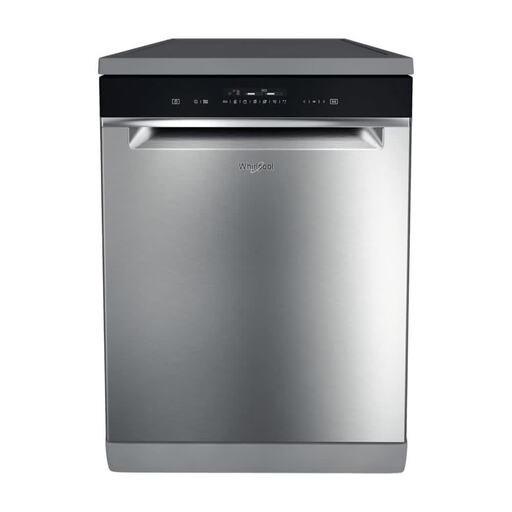 Image unavailable
Whirlpool WFP5O41PLGX freestanding dishwasher, 60 cm, 14 place settings
Another freestanding option, listed for 14 place settings and energy class C. Check its exact dimensions before setting aside space in your kitchen: the width in the title doesn’t tell you the appliance’s full dimensions.
View on Joybuy
 Image unavailable
Samsung DW80H72YBB0U1 built-in dishwasher, 60 cm, 13 place settings
Worth considering if your kitchen has a suitable space for a built-in model. The title lists 13 place settings and energy class B; check the installation dimensions and make sure the door panel and plinth are compatible.
View on Joybuy
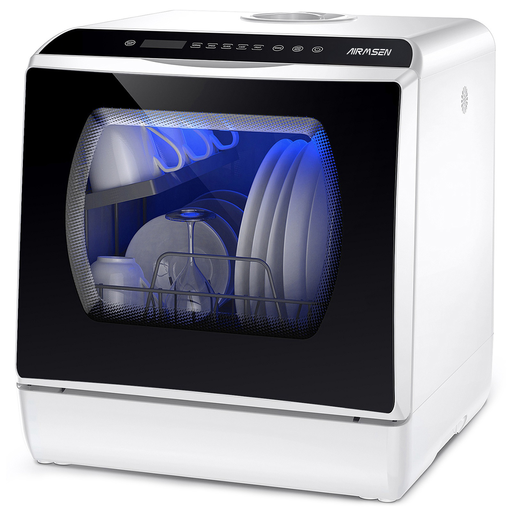 Image unavailable
AIRMSEN worktop dishwasher, 5 L tank, 5+1 cycles
This worktop model is worth considering if space is limited. Its title lists a built-in 5 L tank; even when using the tank, you’ll need an electrical connection and somewhere to direct the waste-water hose.
View on Joybuy
 Image unavailable
Heinrich's HTG 8840 Schwarz worktop dishwasher, 6 place settings
Compare its capacity with the amount of washing-up you have if you’re looking for a worktop appliance. The title lists 6 place settings, 7 programmes, 47 dB and energy class D; check the exact dimensions and connection requirements before buying.
View on Joybuy
Frequently asked questions
What connections do you need for your first dishwasher?
You’ll need a water supply, an electrical connection and a waste-water outlet, according to Que Choisir. Before ordering, check that all three are accessible from the chosen location and that the appliance can be levelled.
Could a 45 cm model suit a small household?
Yes, if its capacity suits the amount of washing-up you build up between cycles. Que Choisir says this size typically holds 9 to 10 place settings and can be an option for a small family, sometimes for daily use. Remember to measure the available space too.
What should you compare on the energy label?
In particular, compare energy use in kWh per 100 cycles and water use in litres per cycle, the two units specified by ADEME. Relate these figures to the capacity you need, then check the noise level and washing and drying results separately.


