One person or a couple with few dishes
A tabletop appliance is worth considering if your everyday plates, glasses and utensils all fit in the basket together. The stated capacity alone won’t tell you how much room will be left for your pans.


A tabletop dishwasher could suit a small kitchen if your everyday dishes fit in its basket and you have a suitable spot with access to water, drainage and electricity. If plates and pans regularly exceed its capacity, consider a slimline freestanding model if you have floor space. An integrated compact model, meanwhile, requires a compatible cabinet and door panel.
A tabletop appliance is worth considering if your everyday plates, glasses and utensils all fit in the basket together. The stated capacity alone won’t tell you how much room will be left for your pans.
If dishes pile up or take up a lot of room, a slimline model could offer more capacity without taking up worktop space. For example, Darty lists the Proline PDW10CWH as 45 cm wide, with a capacity of 10 place settings. You’ll also need room for its height and depth.
An integrated compact model keeps your worktop clear, provided you check the cabinet, door panel, door clearance and connections against the instructions for your chosen model.
Start with how much you need to wash, then check the space and connections before comparing usage figures.
Consider it: if you have few dishes to wash each day and no suitable floor space.
The trade-off: the basket can fill up quickly when you add larger utensils, and placing the appliance on a worktop doesn’t remove the need to check installation requirements.
Consider it: if you can set aside floor space and want to look at options with more capacity than a compact 6-place-setting model.
The trade-off: your worktop stays clear, but the appliance takes up floor space permanently.
Consider it: if you already have a suitable cabinet and want to free up your worktop.
The trade-off: installation requires a few checks and doesn’t necessarily mean greater capacity: Electrolux lists the ESL2500RO as having a capacity of 6 place settings.
| Factor | What to check | Think about your needs |
|---|---|---|
| Space and capacity | Measure the width, depth and height, and allow room for the door to open. Check the basket against your plates and pans: the stated number of place settings doesn’t tell you everything about what will fit. | I want to avoid running extra cycles, even on days when I use a frying pan or a large dish. |
| Connections | Check how the model takes in water, the route for the waste hose and the electrical supply. Bosch lists water, electricity and drainage among the connections required for a dishwasher. | My chosen spot needs to allow for the door to open and the hoses to run through, not just fit the appliance’s dimensions. |
| Installation and cabinetry | For an integrated model, check the cabinet and door panel requirements in the instructions. Electrolux states that its 55 cm ESL2500RO compact model is supplied without a cabinet door. | I want to keep my worktop clear, but only if my cabinet is suitable for the model I choose. |
| Noise and consumption | Compare the labels on the models you’re considering: kWh per 100 cycles, litres per reference cycle and noise level in dB. ADEME explains how to interpret the energy and water figures. | If my kitchen is close to my living area, noise matters to me. I also want to compare consumption on a like-for-like basis, without confusing it with figures for a quick cycle. |
An appliance may fit on your worktop but still be unsuitable for that spot. You’ll need to consider its water supply, drainage and electricity requirements.
Check where these connections are before buying, then read the instructions to see how the model should be installed. If you’re unsure about the electrical installation, ask a professional to check it.
Pans, frying pans and dishes can fill a small basket before you reach the stated number of place settings.
Compare the basket dimensions and the space between its sections with your bulkiest dishes. If they don’t fit regularly, consider a slimline model too.
The consumption figures on the label don’t necessarily reflect the quick programme you plan to use.
Compare kWh per 100 cycles and litres per cycle using the basis shown on the label, then check the programmes that suit your routine separately.
Candy offers tabletop dishwashers with a capacity of 6 place settings, among other options.
The French models reviewed show two integration options, with different capacities.
Bosch provides useful installation guidance to help you check a dishwasher’s connections.
These tabletop models are options to consider if you’re looking for an appliance for a small kitchen. Compare their stated capacity and water supply requirements with your available space and the dishes you usually wash.
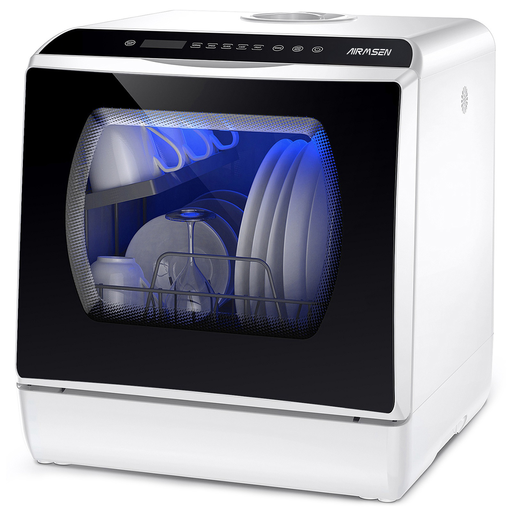 Image unavailable
Worth considering if you want a small-capacity model that can be filled from a tank or connected to a tap. The listing states that it holds 4 place settings and measures 45,8 × 42,8 × 42,5 cm. Check the space needed to open the door, drainage and electrical compatibility at your chosen spot.
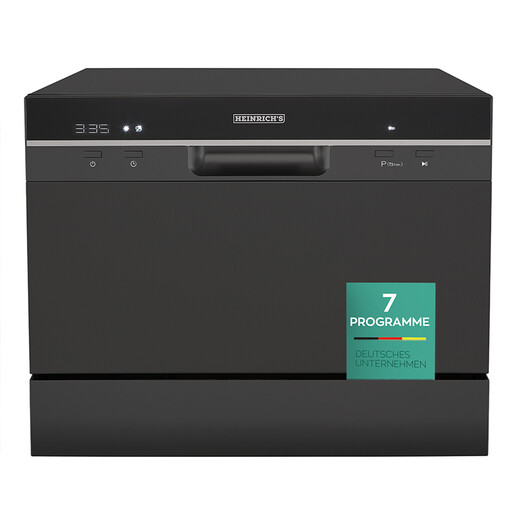 Image unavailable
The listing states that it holds 6 place settings, has 7 programmes and connects to the water supply using hoses. Before choosing a spot for it, check its dimensions, the clearance needed for the door and access to the water supply and drainage.
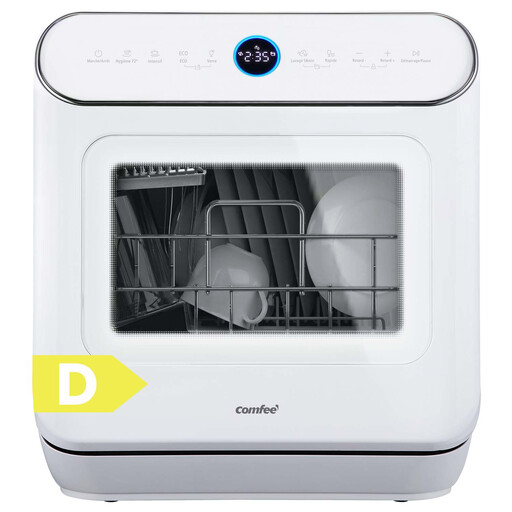 Image unavailable
This model is listed as holding 3 place settings and measuring 420 × 436 × 465 mm. It has a 5 L tank that needs to be filled manually. Check that your plates and dishes fit in the basket, and make sure you have a suitable route for the waste water.
 Image unavailable
The description states that it can be filled from a tank or connected to a tap, and that it measures 420 × 435 × 435 mm. Before choosing this model, check that the basket can fit your dishes, then make sure you have suitable drainage and an electrical supply at the planned location.
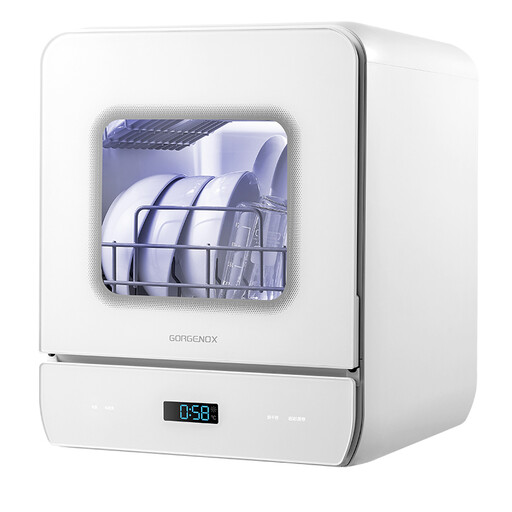 Image unavailable
The listing states that it holds 3 place settings. Check this against your pans and dishes before buying. Read the instructions for the exact model to check its dimensions and find out how water is supplied and drained at your chosen location.
No. You need a suitable spot for the appliance’s dimensions, door clearance and connections. Bosch notes that a dishwasher needs water, electricity and drainage, while Candy says its CP 6E51LS connects directly to the water supply. Check the instructions for the model you’re considering before deciding where to put it.
It could be suitable if you don’t use many dishes at each meal and your plates and utensils fit in the basket. A capacity of 6 place settings doesn’t guarantee there’ll be room for pans or frying pans, so compare their dimensions with the appliance’s interior layout.
Check the kWh per 100 cycles and litres per cycle on both models’ labels, taking their capacities into account. ADEME says these figures are based on reference cycles, so don’t assume they apply to a quick programme.