People with an open-plan kitchen
If your dishwasher runs near the living room or a workspace, noise matters just as much as the space it takes up. UFC-Que Choisir highlights how important this is in an open-plan kitchen.


First, choose a format that suits the available space, water supply and drainage. A freestanding appliance needs a dedicated spot, a built-in model needs a suitable housing unit, and a countertop model needs enough capacity for your dishes. In an open-plan kitchen, also compare the noise level shown on the energy label. If you’re considering a compact model with a water tank, check separately how wastewater will be drained.
If your dishwasher runs near the living room or a workspace, noise matters just as much as the space it takes up. UFC-Que Choisir highlights how important this is in an open-plan kitchen.
When floor space, room under the worktop or a housing unit is limited, the installation type and the exact model’s dimensions should come before its features. UFC-Que Choisir describes 6-place-setting countertop models as an option for smaller homes, provided their capacity suits the household.
A model with a water tank may be an option if the manual confirms that it has this feature. Daan Tech’s guide describes this option for Bob, while also providing for wastewater drainage: a tank doesn’t remove the need to arrange for drainage.
Start with the space you actually have and the available connections. Then compare the suitable formats based on noise, capacity and the information on the energy label.
Consider it: if you have a dedicated space and can arrange the connections required for your chosen model.
Bear in mind: the appliance will take up that space permanently; its stated width alone doesn’t confirm that it will fit.
Consider it: if you have a suitable housing unit and compatible cabinetry for the appliance.
Bear in mind: installation also depends on the door front, hinges and fitting diagram for the exact model, as Bosch Home Appliances points out.
Consider it: if a larger appliance won’t fit in your kitchen and your dishes can be accommodated by a smaller capacity.
Bear in mind: limited capacity may mean running more cycles as the amount of washing-up increases.
| Factor | What to check | Who it matters to |
|---|---|---|
| Noise in your living space | Compare the dB rating and noise class on the label, taking into account when you’ll use the appliance. | If the appliance runs while you’re chatting, working or relaxing, keeping things quiet becomes a priority. Around 37% of consumers may put this need first. |
| Space and connections | Measure the available space and check the manual for the water supply, drainage and electrical connection. For a built-in model, also check the housing unit and door. | When a housing unit, worktop or connections limit your options, you need to know the appliance can be installed before comparing its features. This compatibility may be the main concern for around 36% of consumers. |
| Capacity in a compact size | Compare the stated place settings with your usual dishes and check the rack layout for larger utensils. | If space is tight but you have dishes to wash every day, a compact model is only useful if its capacity helps you avoid running cycles too often. Around 18% of consumers may prioritise this balance. |
| Water and energy | For similar capacities and usage, compare kWh per 100 cycles, litres per cycle and the duration of the eco programme. | If running costs are your main consideration, the appliance’s size alone won’t help you decide. Keeping water and energy use under control may be the priority for around 9% of consumers. |
In an open-plan kitchen, this description is no substitute for a comparable noise rating. UFC-Que Choisir recommends taking noise into account in this type of space.
Check the dB rating and noise class on the label, then think about when the dishwasher will be running.
An appliance may be the right width but still not fit the height of the housing unit, the door front or the space needed for the door to open.
Measure your kitchen and compare the results with the fitting diagram and hinge information for the exact model.
Daan Tech’s guide to Bob describes filling it from a tank, but still specifies a hose for draining wastewater. This setup doesn’t apply to every compact model.
Check the manual for your chosen model to confirm how it takes in water and which drainage options will work in your home.
A compact model takes up less space, but its capacity may mean running more cycles, depending on how many dishes you have. Size alone also isn’t enough to compare water and energy use.
According to ADEME, the energy label includes information such as energy use, capacity and noise. Check these details alongside the eco programme duration and your washing-up needs.
These countertop models are designed for kitchens where space is limited. To choose between them, check the capacity, the space each one needs and how it takes in and drains water. Noise ratings are particularly important if you have an open-plan kitchen.
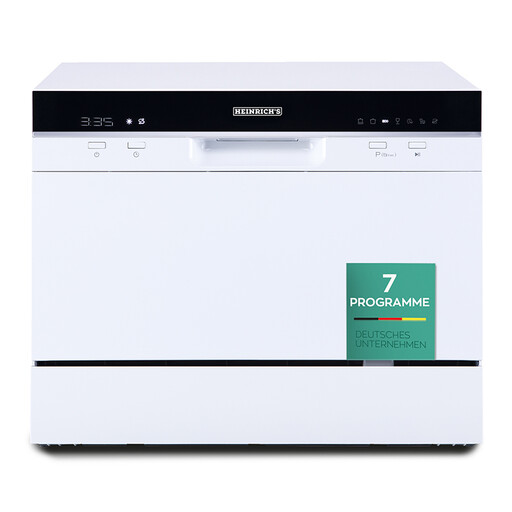 Image unavailable
Worth considering if you’re looking for a countertop appliance with a stated capacity of 6 place settings. The product title lists 47 dB and a D energy rating. Compare these details with the label for the exact model before deciding whether it’s suitable for an open-plan kitchen. Also check its dimensions and whether you can route the water supply and drainage where you need them.
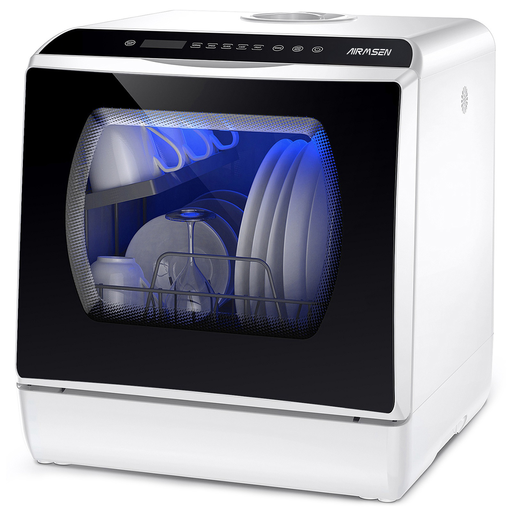 Image unavailable
The stated 5 L built-in tank is worth considering if there’s no fixed water supply where you plan to install the appliance. However, check the manual for filling, drainage and the space it needs. If your kitchen is open-plan, also check the model’s noise rating.
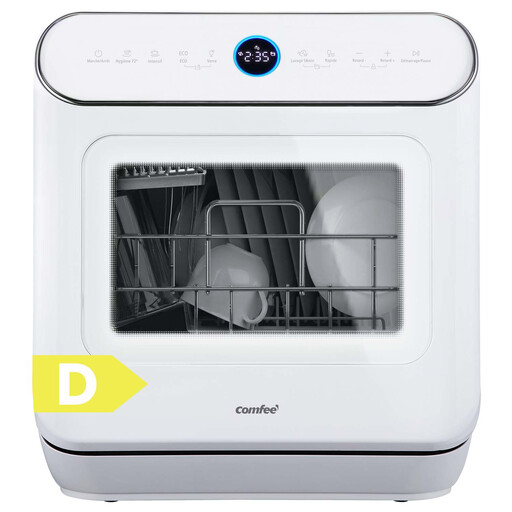 Image unavailable
This tabletop format may be worth considering if space is limited and a small capacity will do. The product title lists 7 programmes and a D energy rating. Before choosing it, check that its capacity suits your dishes and consult the manual for drainage and noise information.
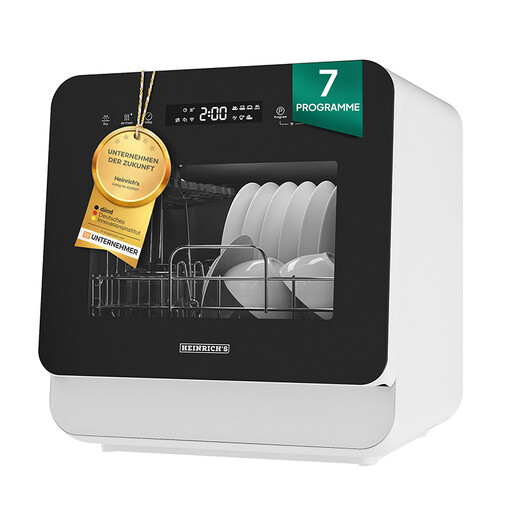 Image unavailable
Worth a look if a stated capacity of 3 place settings suits your dishes and you want to compare the water supply options. The product title suggests it can be used with or without a water connection. Check the manual to find out how the appliance is filled and drained, and confirm its dimensions and noise information.
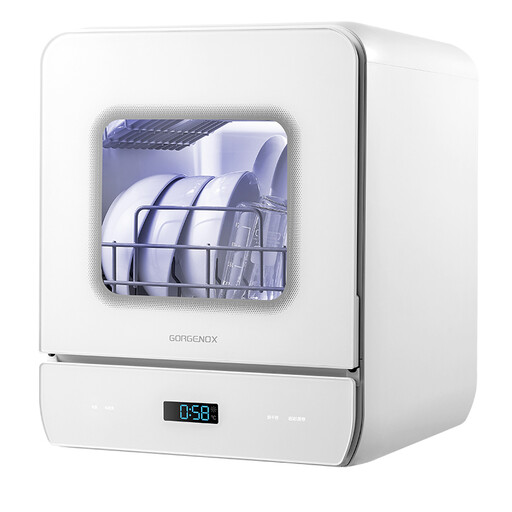 Image unavailable
Its countertop format is designed for kitchens with limited space. The product title lists a capacity of 3 place settings and hot-air drying. Compare this capacity with your dishes, then consult the manual for dimensions, water supply and drainage. If your kitchen opens onto the living room, also check its noise rating.
For the dishwashers you’re considering, compare the energy rating, kWh per 100 cycles, litres per cycle, eco programme duration, capacity and noise level. ADEME lists these as factors to consider when choosing an appliance. The figures for the reference programme don’t necessarily reflect your other programmes or your own usage habits.
No. The model must specifically support this type of water supply. The manufacturer Daan Tech’s guide says Bob has a built-in 4 L tank as an alternative to a water connection, but it still needs wastewater drainage. Check both points in the manual for the compact model you’re interested in.
Measure the housing unit and compare its width, height and depth with the installation diagram for the exact model. Also check the door front, hinges and the clearance needed to open the door. Bosch Home Appliances points out that general dimensions alone aren’t enough to confirm that a model will fit.
Follow your model’s manual for cleaning the filters and spray arms, which products are suitable and how often to carry out maintenance. These appliance-specific instructions take precedence over general maintenance advice.