Households with lots of washing up every day
If you want to avoid running several small cycles, compare the stated capacity with the space actually available in the racks for your plates, pans and containers.


To cut down on washing up by hand, choose a capacity that suits the amount of washing up you get through each day—but only from appliances your kitchen can accommodate and connect. A 60 cm model offers more capacity than a 45 cm one; with a compact model, check that its smaller capacity won’t mean running more cycles. For an integrated model, also check the housing space and door panel, then compare energy use and noise levels on the energy label.
If you want to avoid running several small cycles, compare the stated capacity with the space actually available in the racks for your plates, pans and containers.
Your dishwasher needs to fit in the space available without making you run cycles too often. Measure the space and compare the capacity with the amount of washing up you usually have before choosing a 45 cm or compact model.
As well as the appliance itself, factor in the electricity, water and products it needs to run. Also check the connections, delivery arrangements and, for an integrated model, the door panel and its installation.
Start by comparing how much washing up you have with the available space and connections. Then narrow down the compatible sizes by checking the energy label and installation requirements.
| Factor | What to check | Who it matters to |
|---|---|---|
| Capacity and frequency | Compare the stated place settings with your plates, pans and containers, then check the rack layout. UFC-Que Choisir gives a capacity of 12 to 17 place settings for 60 cm freestanding models and 9 to 10 for 45 cm models. | When washing up builds up every day, I want to avoid running lots of cycles or finishing the job by hand. Around 36% of consumers put this need for capacity first. |
| Space and positioning | Measure the space, the door opening and the route for delivery; for an integrated model, also check the housing space and door panel. Make sure there is a water supply, a drain and an electrical supply. | In a small or fitted kitchen, I first need to find an appliance that can be installed where I want it. Around 29% of consumers put this need for a suitable fit first. |
| Consumption and installation | ADEME explains that the energy label shows electricity use in kWh per 100 cycles and water use in litres per cycle. Compare these figures with how often you’ll use the dishwasher, and budget for the necessary products and installation services. | If the appliance runs often, I want to plan for water, electricity and consumables, without forgetting what installation involves. Around 21% of consumers prioritise these factors. |
| Noise and results | Check the noise level on the energy label and look for test results for the exact model when comparing washing and drying performance. Pay particular attention to these factors if the appliance will run in a room people use. | In an open-plan kitchen, I want to be able to start a cycle without too much disturbance and find the dishes clean without needing to finish them by hand. Around 14% of consumers prioritise this ease of use. |
The countertop compact models cited by UFC-Que Choisir hold 6 place settings. If your pans and containers quickly fill the appliance, you may still have some washing up to do by hand.
Measure the available space, then keep track of how much washing up you have over several days before choosing this size.
A capacity of 6 place settings may also mean running cycles more often.
UFC-Que Choisir says installation requires a water supply, an electrical supply and a waste-water drain. These connections need to be suitable for the chosen location.
Measure the appliance and the route into your kitchen, then check which jobs are included with delivery and installation.
If connection work is needed, you may have to wait for it to be completed before the appliance can be installed.
The energy rating doesn’t tell you the full story about consumption or the Eco programme’s duration. ADEME also says the label shows capacity and noise levels, which can help you compare appliances suited to different needs.
Compare the kWh per 100 cycles and litres per cycle, taking into account how many cycles you expect to run.
UFC-Que Choisir explains that an integrated model is designed to fit into a housing unit and cannot simply stand on the floor like a freestanding appliance.
Before ordering, check the housing dimensions, whether the furniture door is compatible, the plinth and the fitting instructions for your chosen model.
These brands are a starting point for comparing specific models, not a verdict on their entire ranges: UFC-Que Choisir cites individual models among the dishwashers it has tested.
The SMS25AW09F and SMS4EVW36F are among the models cited by UFC-Que Choisir.
UFC-Que Choisir cites the BDFN15D431W and BDIN28470C among others.
The W3FD634, WH3FC14BN71X and WH6IB14BN7S1S are among the appliances tested by UFC-Que Choisir.
The BF3424CX is among the models cited by UFC-Que Choisir.
UFC-Que Choisir cites the I0FD641A among the appliances it has tested.
These appliances are listed as 60 cm wide and offer 14 place settings, making them suitable for regular loads of washing up. Choose between freestanding and integrated models to suit your kitchen, then confirm the actual dimensions before buying.
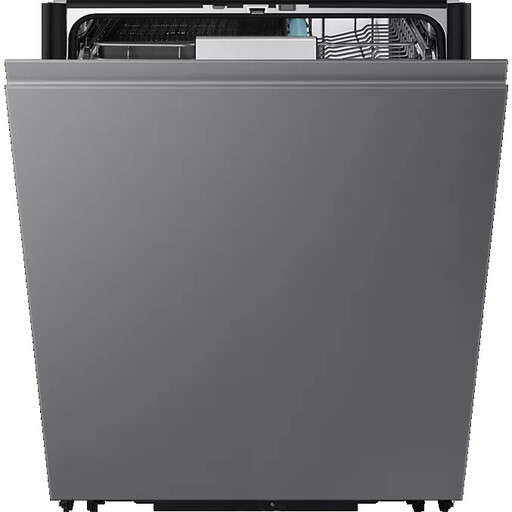 Image unavailable
Worth considering if you have a suitable housing unit and need capacity for 14 place settings.
Listed with an A energy rating. Check the instructions for the required housing dimensions, door panel and connections.
 Image unavailable
Worth considering for a fitted kitchen that can accommodate an integrated dishwasher with 14 place settings.
Listed with a C energy rating. The title says 60 cm, but the dimensions give a width of 68 cm: confirm the actual measurement and check that the housing unit and door panel are compatible before ordering.
 Image unavailable
A freestanding option to consider if a capacity of 14 place settings suits the amount of washing up you have.
Listed with a stainless steel finish and a C energy rating. The title says 60 cm, but the dimensions give a width of 67.5 cm: check the actual measurement and the space available.
 Image unavailable
Worth considering for larger everyday loads if a 60 cm freestanding appliance suits your kitchen.
Listed with a grey finish and an E energy rating. To compare electricity use with other models, check the kWh per 100 cycles figure on the energy label.
 Image unavailable
A freestanding option for households looking for a stated capacity of 14 place settings.
Listed with a white finish, a C energy rating and a noise level of 41 dB. Check the energy label to compare kWh per 100 cycles, and confirm the dimensions and connections before installation.
You’ll need a water supply, an electrical supply and a waste-water drain, as UFC-Que Choisir points out. Before buying, check that they’re accessible and review the distances and installation requirements in the instructions for the exact model.
Compare the kWh per 100 cycles and litres of water per cycle shown on their energy labels, then consider how many cycles you expect to run. ADEME specifies these units; also remember to factor in the products each appliance needs.
Check the energy use per 100 cycles, water use per cycle, Eco programme duration, capacity and noise level. ADEME includes these details on dishwasher labels, helping you compare models to suit how often you use your appliance and your kitchen.
Ask the retailer whether they’ll take away an old appliance of the same type when you buy a new one. The French Ministry for Ecological Transition describes this as a ‘one-for-one’ take-back service; confirm the collection arrangements and access to your home before delivery.