For everyday washing up, a 60 cm freestanding model is worth considering if you have the space and regularly fill a large load. A 45 cm or compact model takes up less room, but typically has a lower capacity, according to GIFAM. If you have a suitable kitchen unit, an integrated model could be the right choice. Washing up by hand is also an option if you don’t have a suitable connection point or don’t produce enough dirty dishes to fill a machine regularly. Then compare the Eco programme figures and check the connections you’ll need before choosing.
Who is this guide for?
Households looking to leave the washing up until after meals
If plates, glasses and dishes pile up every day, start by thinking about how much you need to wash. Then consider whether you’ll be able to fill the appliance as often as you’d like. Place settings make it easier to compare sizes, but don’t tell you on their own how much room there is for saucepans.
Small kitchens or spaces with awkward dimensions
Measure the space before choosing between a freestanding, slimline or integrated model. GIFAM’s guidelines suggest that 45 cm and compact models generally hold fewer place settings than 60 cm models. For an integrated dishwasher, the space and kitchen door must also be suitable for the specific model.
Households mindful of noise and energy use
When comparing appliances, ADEME recommends checking the capacity, electricity use per 100 cycles and water use per cycle on the energy label. If your kitchen opens onto a living area, check the noise level too; don’t assume it from the size alone.
What should you look for before choosing?
Start with the amount of washing up you produce and the space available. Check that installation is possible, then compare the features of the models that suit your needs.
| What to consider | What to check | My needs |
|---|
| Capacity and size |
Measure the space and check the number of place settings and the basket layout. GIFAM’s guidelines are 12 to 15 place settings for 60 cm models, 9 to 10 for 45 cm models and 6 for compact models. Check the capacity of the model you’re considering. |
I want to fit the dishes from my usual meals without choosing a machine that’s difficult to fill. If my loads are very small, I could also carry on washing up by hand. |
| Installation and connections |
Check the appliance dimensions, water supply, electrical supply and drainage. For an integrated model, also check that the space, fixings and kitchen door meet the model’s requirements. |
Is there a suitable space with the necessary connections in my kitchen? If I want an integrated appliance, the unit and its door must also be compatible. |
| Water and electricity use |
Check the energy label for kWh per 100 cycles and litres per Eco cycle, as recommended by ADEME. Compare figures for the same reference programme, taking capacity into account. |
I want to compare the declared energy and water use, without assuming that a machine will always use less than my way of washing up by hand. |
| Noise |
Compare the declared noise level in dB for the models you’re considering. If a Silence programme interests you, check its own figures and conditions rather than assuming they’re the same as the figure on the energy label. |
In an open-plan kitchen, I want to know whether the stated noise level will suit the times I plan to run a cycle. |
| Programmes and timing |
Check how long the Eco programme takes. If you often need clean dishes quickly, look separately at the conditions and energy and water use of any quick programme. |
The cycle needs to fit around my mealtimes and how long I can leave the dishes in the machine. |
Mistakes to avoid
-
Choosing based on width alone
A 45 cm or compact model takes up less space, but GIFAM’s guidelines indicate that it has a lower capacity than a 60 cm model. The number of place settings also won’t tell you whether your large saucepans will fit easily.
Measure the space and keep track of how much washing up you produce over a week. Then compare the capacity and interior layout of the specific model.
-
Looking only at the energy rating
The rating doesn’t replace the declared energy and water use figures or the length of the reference cycle. Compare two models using the same indicators before deciding which is better for your needs.
Look at the rating alongside the kWh per 100 cycles, litres per Eco cycle, Eco programme duration, capacity and noise level for the exact model.
-
Ordering an integrated model before measuring the kitchen unit
The stated width isn’t enough: the height and depth of the space, the door fixings and access to connections can all determine whether installation is possible. For example, the Beko DIS35020 product details specify an installation height of 82 to 87 cm and a compatible kitchen door weight of 2,5 to 5,5 kg. These figures apply to this model only.
Measure the unit and kitchen door, then compare the dimensions with the instructions for the dishwasher you’re planning to buy.
-
Assuming a dishwasher will always save you money compared with washing up by hand
Any comparison depends on how you wash up by hand, how full the dishwasher is and how often you run it. A general result won’t predict how much your household will use.
Consider whether you can wait until you have a full load. ADEME recommends waiting until the dishwasher is full and not pre-rinsing the dishes.
Brands to compare, model by model
These examples highlight sizes and features to consider. A model’s specifications won’t necessarily apply to the rest of the brand’s range.
Bosch
Bosch offers a range of 60 cm freestanding and integrated dishwashers.
- Bosch’s product details for the SMS4ECI28F state an A energy rating and 9,0 L of water for the Eco programme.
- For an integrated model, check the space and kitchen door separately: the SMS4ECI28F specifications don’t describe other models.
Whirlpool
The range includes freestanding and integrated models, including 45 cm and 60 cm options.
- Whirlpool’s product details for the WSFO3T223P describe a 45 cm freestanding model with 10 place settings, a noise level of 43 dB and water use of 9 L.
- To compare its electricity use, check the current energy label for the exact model.
Beko
Beko offers slimline dishwashers in freestanding and integrated styles.
- Beko’s product details for the DIS35020 specify an installation height of 82 to 87 cm and a compatible kitchen door weight of 2,5 to 5,5 kg.
- These dimensions and kitchen door requirements apply to the DIS35020 only. Check the specifications of any other model against your kitchen unit.
Miele
Miele offers, among other options, fully integrated 45 cm models.
- Miele’s product details for the G 5990 SCVi SL state a capacity of 9 place settings and water use of 7,9 L for the Eco programme.
- Check the capacity, energy and water use, and dimensions of the model you’re considering rather than assuming this model’s specifications apply to others.
Dishwashers available on Joybuy
These models cover two options for everyday washing up: a freestanding dishwasher and an integrated model for a fitted kitchen with a suitable space. Compare their capacity with your usual loads and check the dimensions before choosing.
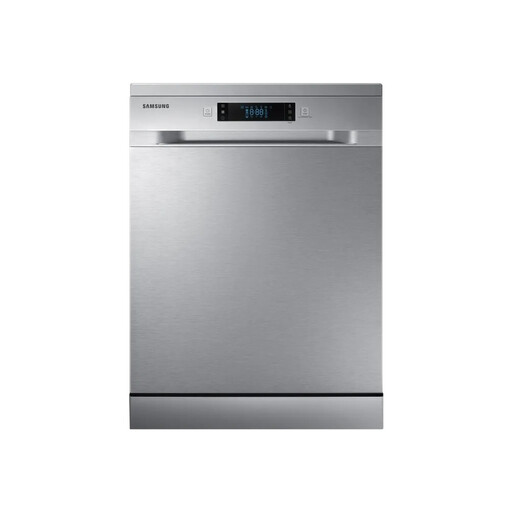 Image unavailable
Samsung DW60M6050FS, freestanding, 14 place settings
Worth considering if you regularly produce a large load after meals and have space for a freestanding appliance.
The product details list 7 programmes, a noise level of 44 dB, 95 kWh per 100 cycles and 10,5 L per cycle. Check the dimensions and connections needed in your kitchen. The energy and noise figures are declared values, not results from an independent test presented here.
View on Joybuy
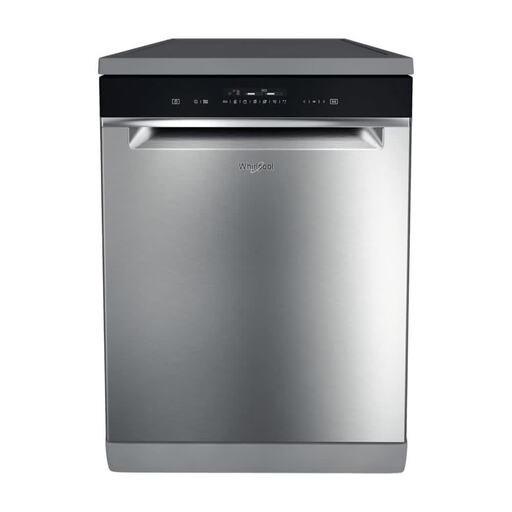 Image unavailable
Whirlpool WFP5O41PLGX, freestanding, 14 place settings
Its stated capacity could suit regular loads, as long as the appliance fits the space you have available.
The product details list 11 programmes, a C energy rating, a noise level of 41 dB, 75 kWh per 100 cycles and 9,5 L per Eco cycle. They give both a width of 60 cm and a dimension of 67,5 cm. Have the external dimensions confirmed before buying.
View on Joybuy
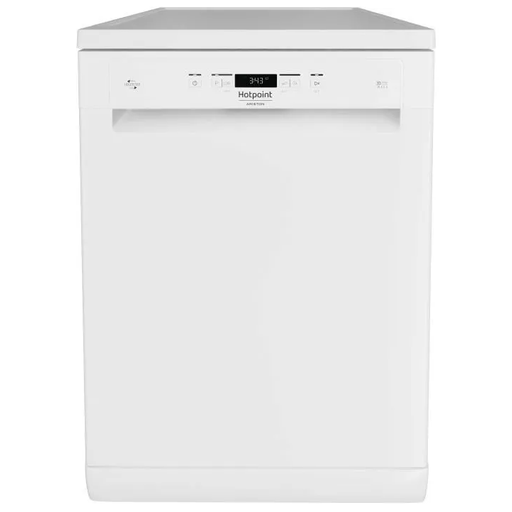 Image unavailable
Hotpoint H4FD641A, freestanding, 60 cm, 14 place settings
This freestanding model is worth considering for regular loads if you have enough space.
Its listing states a C energy rating and a noise level of 41 dB. The product details include Eco, Auto, Intensive and Rapid programmes, as well as an automatic door-opening feature. Check the kWh per 100 cycles on the energy label. Follow the instructions about steam when opening the door after a hot cycle.
View on Joybuy
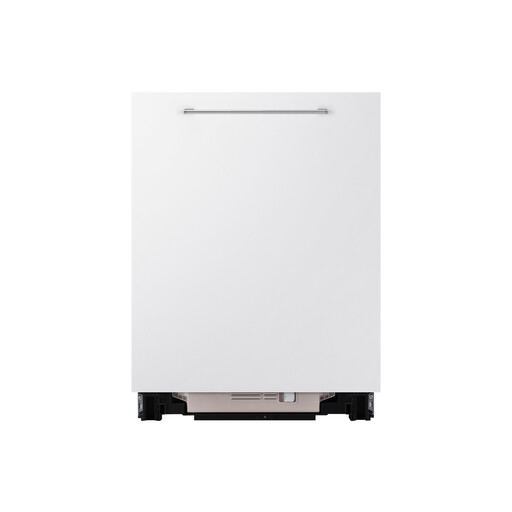 Image unavailable
Samsung DW80H72YBB0U1, integrated, 60 cm, 13 place settings
Consider this model if your kitchen has a suitable space and door for a fully integrated dishwasher.
The model is listed with a B energy rating, a noise level of 44 dB and an appliance width of 595 mm. Check the full dimensions of the space and the installation requirements against your kitchen. See the energy label for its energy and water use and Eco programme duration.
View on Joybuy
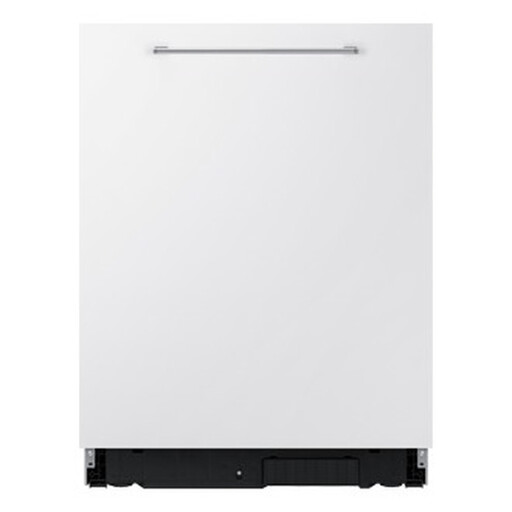 Image unavailable
Samsung DW70H72WCB0U1, integrated, 60 cm, 13 place settings
This model is suited to a kitchen designed for an integrated dishwasher, where 13 place settings match your usual loads.
Its listing states a C energy rating and a 60 cm size. Before choosing it, check the exact appliance and space dimensions, as well as the kitchen door requirements, against your unit.
View on Joybuy
Frequently asked questions
Which connections should I check before buying a dishwasher?
Check that a suitable water supply, electrical supply and drain are accessible where you plan to install it. Bosch lists all three in its installation guidance. Then check the instructions for the specific model to see its requirements, and measure the available space.
How do I read energy use on the energy label?
Compare the capacity, kWh per 100 cycles and litres of water per Eco cycle shown for each dishwasher. ADEME recommends using these figures to help you choose, but they won’t tell you how many cycles your household will run.
Is the Eco programme suitable if I need my dishes quickly?
First check how long it takes: an Eco programme can be long and may not suit your mealtimes. If you’re considering a quick programme, check its duration and energy and water use separately in the product details. Don’t apply the Eco cycle figures to it.
Should I rinse plates before putting them in the dishwasher?
ADEME recommends not pre-rinsing dishes and waiting until the dishwasher is full before running it. Remove any large food scraps in line with the appliance instructions, and consider how long the dirty dishes will be sitting in your home.


