Households with washing up every day
If meals also leave you with plates and pans to wash, estimate how much washing up builds up between cycles. The stated number of place settings alone doesn’t tell you how much room there is for these items.


A dishwasher is most worthwhile if your meals regularly create a load that suits its capacity and you want to spend less time washing up by hand. First, choose a size that fits in your kitchen and can be connected up, then compare its capacity with the plates and pans you usually use. Energy and water use, noise, detergents and maintenance also matter when choosing.
If meals also leave you with plates and pans to wash, estimate how much washing up builds up between cycles. The stated number of place settings alone doesn’t tell you how much room there is for these items.
If you have fewer dishes or limited space, compare the room an appliance takes up with how often you’ll run a cycle. Que Choisir describes compact models with 6 place settings and 45 cm freestanding models rated for 9 to 10 place settings.
If you already have an appliance space, check its dimensions and that the door panel is compatible before choosing a built-in model. Que Choisir notes that this type of dishwasher must be installed in a purpose-built housing unit.
When choosing your first dishwasher, start with the washing up you actually produce and the space available. Then compare the usage information for models that could work for you.
| Criteria | What to check | Who is it for? |
|---|---|---|
| Capacity and loading | Compare the stated number of place settings with your plates and pans, and look at how the racks are laid out. Que Choisir gives a capacity of 12 to 17 place settings for 60 cm freestanding models and 9 to 10 for 45 cm models. | If meals quickly fill the sink, I want to be able to load larger utensils too, without running several cycles. Around 29% of consumers rank capacity as their top priority. |
| Space and connections | Measure the space and check the water inlet, drainage and electrical supply. For a built-in model, also check the housing unit and door panel details in the model’s instructions. | In a fitted or narrow kitchen, I need to know whether the appliance will fit and connect up without unexpected alterations. Installation compatibility is the top priority for around 29% of consumers. |
| Energy and cleaning products | On the European energy label, compare energy use per 100 Eco cycles and water use per Eco cycle. You’ll also need to budget for detergent, rinse aid, salt and maintenance. | If I run regular washes, I want to understand the costs of each use, as well as the cost of the appliance itself. Around 24% of consumers prioritise these running costs. |
| Noise and routine maintenance | Check the noise level on the energy label and the model’s maintenance instructions, particularly for the filters. | If my kitchen is open-plan or the appliance runs while I’m at home, noise and maintenance tasks affect my choice. These are the top priorities for around 18% of consumers. |
Two households of the same size can use very different amounts of plates, pans and other dishes between cycles. A smaller model may mean you have to run it more often.
Take stock of the washing up from a typical day or two, then compare it with the capacity and rack layout.
A built-in model needs to fit into a housing unit and have a compatible door panel. Any joinery, plumbing or electrical alterations needed may not be included in the installation service.
Measure the housing unit, check the instructions for the door and hinges, then confirm what work is needed before ordering.
The door panel, its installation and any changes to the connections may need to be arranged separately.
The rating alone doesn’t tell you about capacity, water use per Eco cycle, cycle duration or noise. The European Commission shows this information on the energy label for the dishwashers it covers.
Compare the Eco programme figures for models that suit your dishes, then factor in cleaning products and maintenance.
A protection system may respond to certain leaks, but it can’t prevent them from happening. Bosch makes this clear for its AquaStop system.
Check the connections and taps, then follow the manufacturer’s instructions about the water supply if you’re going to be away for an extended period.
These models are for households considering a freestanding dishwasher or with a housing unit for a fully integrated appliance. Compare the stated capacity with your dishes, and check the dimensions and connections of the model you choose.
 Image unavailable
Worth considering if you want to load the dishes from your meals regularly without needing to install a kitchen door panel. The product title states 14 place settings and 60 cm, but another width is given in the product information. Confirm the exact dimensions before planning where to put it. Also check the model’s energy label and connection requirements.
 Image unavailable
Worth a look if you want a stated capacity of 14 place settings without needing a built-in housing unit. The product title lists seven cycles; check that the interior layout can accommodate your plates and that the dimensions suit the space you have. Check the model’s energy label to compare its consumption.
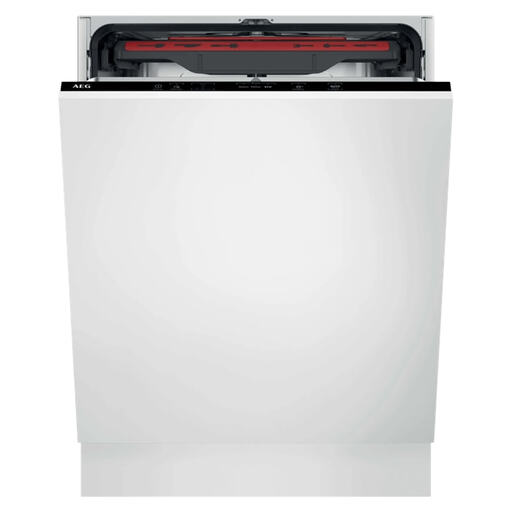 Image unavailable
Worth considering for a fitted kitchen with a compatible housing unit and door panel. The product title states 14 place settings and 60 cm, while another width appears in the product information. Check the actual dimensions, door and hinges before ordering. Confirm the energy use figures on the model’s energy label.
 Image unavailable
Compare this model if your meals leave you with a large load of washing up. The product title states 60 cm and 14 place settings; still, measure the space and check the connections. Check the model’s energy label to compare water and electricity use on the Eco programme.
 Image unavailable
Worth considering if your kitchen has a housing unit and door suitable for a built-in appliance. The product title states 60 cm and 13 place settings; check the dimensions, hinge and installation requirements in the instructions. Use the model’s energy label to compare its Eco cycle consumption.
It’s more useful if your meals regularly create a load that suits the appliance and you want to spend less time washing up by hand. If you don’t have many dishes, compare a compact model with a 45 cm one, and consider how often you’re happy to run a cycle.
Check the dimensions of the housing unit, that the door panel and hinges are compatible, and that there’s access to the water supply, drainage and electricity. Que Choisir notes that a built-in model must fit into a housing unit. Read the model’s instructions and confirm whether any alterations are needed before installation.
No. It doesn’t replace correct installation or checking the taps. Bosch states that its AquaStop system can’t prevent every leak; check the instructions and requirements for the model you choose.
Factor in water, electricity, detergent, rinse aid, dishwasher salt and maintenance. When comparing appliances, the European energy label gives the electricity use per 100 Eco cycles and water use per Eco cycle, among other details. Your costs will also depend on how often you use the dishwasher and which programmes you choose.