If several people get through a lot of dishes every day, start by looking at a standard 60 cm model, if your kitchen has room for one. For example, Candy France lists models with 14 place settings, compared with 9 place settings in UFC-Que Choisir’s comparison of 45 cm models and 4 to 6 place settings for compact models, according to Gifam. If space means you need a smaller appliance, choose its capacity to suit your actual loads. In an open-plan kitchen, compare noise levels and Eco programme duration too, without assuming the label figures apply to other programmes.
Which size is right for you?
A shared home or large household with an open-plan kitchen
If dishes pile up throughout the day, a high-capacity appliance can help you wash them together. However, compare the stated noise levels of the models you’re considering. UFC-Que Choisir highlights how important this is when the kitchen opens onto the living area.
A small household with room for only a 45 cm model
A slimline model is worth considering if space is tight but your loads are too large for a compact dishwasher. UFC-Que Choisir says 9-place-setting models can suit a small family, even if they need to run every day. Beko France also lists a 45 cm model with 10 place settings.
Someone living in a very small kitchen
A compact model can be a practical solution when space is limited and your loads are small: Gifam puts its capacity at 4 to 6 place settings. If several people regularly eat at home, check whether this capacity will really prevent you from running repeated cycles.
What should you compare before choosing?
First, choose a capacity that suits your dishes and the space available. Then compare the noise figures and Eco programme details for the models still on your shortlist.
Standard 60 cm size
Consider it: if several people can regularly fill a high-capacity dishwasher and your kitchen has enough room.
Bear in mind: the stated width alone won’t confirm that the appliance will fit its space or that there’s enough room to open the door.
Slimline 45 cm size
Consider it: if there isn’t room for a standard model, but your daily dishes amount to more than a small load.
Bear in mind: if several people share the appliance, its capacity may mean you need to run it more often.
Compact or tabletop size
Consider it: in a very small kitchen, if loads stay modest between cycles.
Bear in mind: the 4 to 6 place settings listed by Gifam may not be enough for the regular washing-up needs of several people.
| What to compare |
What to check |
Think about your needs |
| Noise |
Compare the stated noise emissions and noise class on the labels of the models you’re considering. Check the Eco programme duration too: according to the European Commission, the label figures apply to this programme. |
“My kitchen opens onto the living room, so I want to compare the noise levels of different appliances on a like-for-like basis.” UFC-Que Choisir considers this especially important for an open-plan kitchen. |
| Capacity |
Match the number of place settings to the meals you eat at home, and check whether the racks have room for larger dishes. UFC-Que Choisir lists 45 cm models with 9 place settings; Beko France features a 45 cm model with 10 place settings, while Gifam puts compact models at 4 to 6 place settings. |
“Several of us eat here, so I’d rather check that a day’s worth of dishes will fit than end up running multiple cycles.” |
| Water, energy and duration |
According to the European Commission, the label shows details including energy use per 100 cycles, water use per cycle and Eco programme duration. EU regulations base these measurements on the Eco programme at rated capacity, so don’t assume the figures apply to a quick programme. |
“I plan to use different programmes, so I need to distinguish between the comparable label figures and what I can expect from my everyday routine.” |
| Fitting the appliance |
Measure the available width, height and depth, as well as the clearance in front of the door. For a built-in model, check the dimensions of the housing space and the door panel required. UFC-Que Choisir points out that it needs to fit into a suitable housing space. |
“Space is limited, so I want to make sure the appliance I choose can be installed and opened in this kitchen.” |
What should you watch out for?
-
Assuming Eco figures apply to every programme
Under EU regulations on energy labelling for household dishwashers, the figures shown are based on the Eco programme at rated capacity. They don’t tell you what to expect from a quick cycle or a different-sized load.
Compare labels on this like-for-like basis, then check the appliance manual for details of the programmes you plan to use.
-
Choosing a compact model just to save space
Gifam puts compact models at 4 to 6 place settings. If several people regularly produce more dishes than that, you may need to run extra cycles.
Think about how many dishes you get through between cycles, then check whether a 45 or 60 cm model could fit in your kitchen.
-
Relying on the stated width alone for a built-in model
As UFC-Que Choisir points out, a built-in dishwasher needs to fit into a suitable housing space. Height, depth and door clearance matter too.
Measure the space and check it against the installation diagram for the exact model before you choose.
Which brands should you consider for these sizes?
Bosch
Worth a look if you’re checking the specifications of a 60 cm built-in model.
- Bosch France lists the SBV6ZB805E as energy class B, with water use of 9,0 l per Eco cycle and noise class B.
- These figures apply to this specific model. If you’re considering it for your kitchen, check its dimensions and energy label.
Beko
One to consider if you’re looking for a slimline dishwasher to fit a narrower space.
- Beko France lists a freestanding 45 cm model with 10 place settings and a half-load function.
- Check that the model you choose has this function, and compare its stated noise and consumption figures on the energy label.
Candy
Worth a look if you’re considering a tabletop appliance for smaller loads.
- Candy France describes the Rapidò CP 6E51LW as a tabletop model with 6 place settings, measuring 550 × 501 × 443 mm, with a half-load option.
- If several people use the kitchen, check that 6 place settings will be enough between cycles.
Joybuy dishwashers for larger loads
These 14-place-setting models offer one option for households sharing a high-capacity appliance. Before choosing, check the space available, noise levels and the label for the exact model.
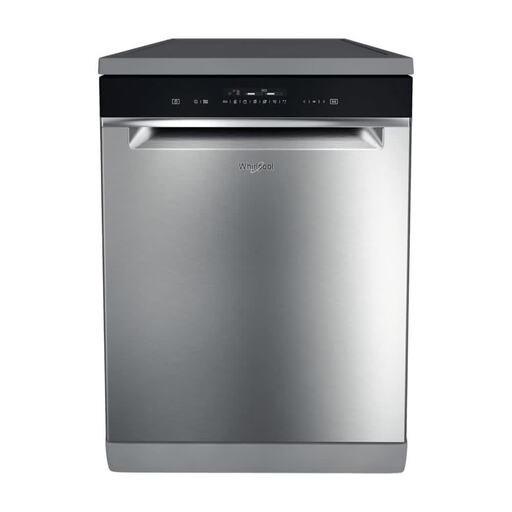 Image unavailable
Whirlpool WFP5O41PLGX, freestanding, 14 place settings
Worth considering if several people want to combine their dishes in a 14-place-setting appliance. The title states 60 cm, but other dimensions listed for this product don’t match, so confirm the exact measurements before planning where to put it. Compare the noise, consumption figures and Eco duration on the model’s energy label.
View on Joybuy
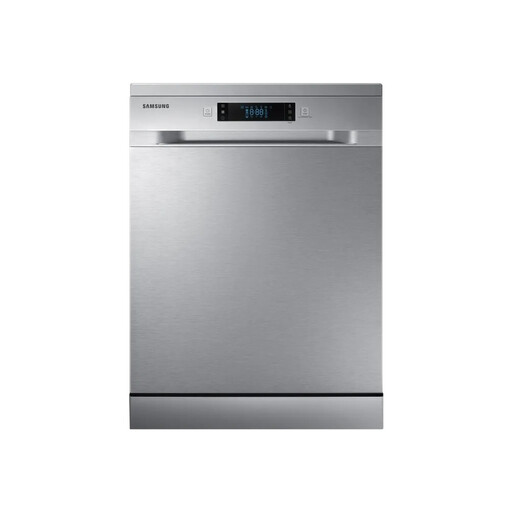 Image unavailable
Samsung DW60M6050FS, freestanding, 14 place settings
Compare its stated capacity of 14 place settings with your household’s daily washing-up. The title mentions seven programmes. For an open-plan kitchen, check the model’s energy label for its noise figures and Eco programme duration.
View on Joybuy
 Image unavailable
Hotpoint H4FD641A, freestanding, 60 cm, 14 place settings
Consider this 14-place-setting model if your kitchen can fit a 60 cm appliance and your daily loads call for it. The title states 41 dB. Check this figure, as well as consumption and Eco programme duration, on the label for the exact model.
View on Joybuy
 Image unavailable
Indesit D2F HK26 S, freestanding, 60 cm, 14 place settings
With its stated capacity of 14 place settings, this model could suit larger daily loads if a 60 cm appliance fits your kitchen. Check the label for the exact model to compare its noise, consumption figures and Eco programme duration with other appliances.
View on Joybuy
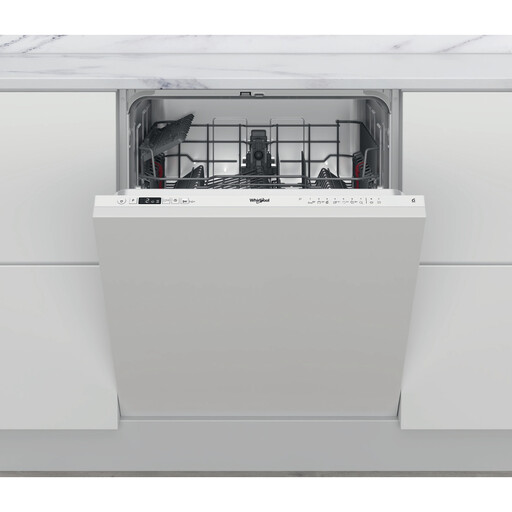 Image unavailable
Whirlpool W2I HD526 A, built-in, 60 cm, 14 place settings
This 14-place-setting model is suited to a kitchen with a housing space that can accommodate a 60 cm built-in appliance. Check the installation diagram, then compare the noise, consumption figures and Eco programme duration on the label for the exact model.
View on Joybuy
Frequently asked questions
Can the energy label help you compare every programme?
No. The figures let you compare household dishwashers based on the Eco programme; they don’t predict the results of every other cycle. The European Commission lists details including energy use per 100 cycles, water use per cycle, Eco programme duration, capacity and noise. EU regulations specify that the measurements are based on the Eco programme at rated capacity. For a quick programme, check the information for the specific model.
Which size should you consider to avoid running repeated cycles in a shared home?
If you have room and several people produce a lot of dishes, start by looking at a high-capacity model: Candy France, for example, lists appliances with 14 place settings. UFC-Que Choisir describes 45 cm models with 9 place settings that may need to run daily, while Gifam puts compact models at 4 to 6 place settings. The right size depends on how many dishes actually build up between cycles.
How do you compare noise levels in an open-plan kitchen?
Compare the noise emissions and noise class on the labels of the models you’re considering, rather than relying on their marketing names. According to the European Commission, these figures relate to the Eco programme. Check its duration too if the appliance will be running near your living area. UFC-Que Choisir highlights how important noise is in an open-plan kitchen.
What does a household dishwasher’s energy label tell you?
For household dishwashers covered by EU energy labelling, the European Commission says the A to G scale has been in use since 1 March 2021. The label includes details such as energy use per 100 cycles, water use, Eco programme duration, capacity and noise emissions. Consider these figures together, taking into account the capacity your household needs.


