Households short on kitchen space
A worktop model, a built-in compact dishwasher and a 45 cm appliance all take up different amounts of space. Compare their dimensions and check that your usual dishes will fit within the stated capacity.


For everyday washing up, choose a dishwasher based on the space available and how much you can fit inside. A compact model suits smaller loads, while a 45 or 60 cm model is worth considering if plates and pans tend to pile up. Washing up by hand remains an option if you have very little to wash or nowhere suitable for an appliance, but it is not necessarily more water- or energy-efficient. To compare dishwashers, check the figures on their energy labels and make sure you can meet the installation requirements.
A worktop model, a built-in compact dishwasher and a 45 cm appliance all take up different amounts of space. Compare their dimensions and check that your usual dishes will fit within the stated capacity.
If plates, pans and dishes pile up between washes, a small-capacity model may mean running several cycles. How much you can actually fit inside matters just as much as the stated place-setting capacity.
To compare appliances that suit your kitchen, ADEME recommends checking factors such as water and energy consumption, noise levels and the length of the eco cycle. In France, the repairability index provides separate information about the model in question.
Start by assessing the space available and how much washing up you need to do, then compare how the remaining options would work for you.
Consider it: if a small load will fit in a worktop model or a built-in compact dishwasher suited to your kitchen.
Bear in mind: bulky dishes may take up space and leave less room for everything else, meaning you may need to run another cycle.
Consider it: if a compact model is too small but you don’t have room for a 60 cm appliance.
Bear in mind: you’ll need a suitable space for this format, and it offers less room than a comparable 60 cm model.
Consider it: if your household regularly builds up enough washing up to fill an appliance of this size.
Bear in mind: it takes up more space and is less suited to frequent small loads.
Consider it: if you have little to wash or only need to wash up occasionally, or if your kitchen cannot accommodate a suitable appliance.
Bear in mind: you’ll still need to wash up after meals, and this option alone does not mean you’ll use less water or energy.
| Factor | What to check | Who is it important to? |
|---|---|---|
| Capacity and dimensions | Measure the space and check the installation type. Compare the place-setting capacity with the space taken up by your dishes and pans. | In a small kitchen, the deciding factor may be whether you can fit the appliance without having to run lots of small loads; around 33% of consumers would prioritise capacity and dimensions. |
| Water and electricity | For models with a capacity that suits your needs, compare the litres per cycle and kWh per 100 reference cycles shown on the energy label. | When there’s washing up every day, I want to compare how much each cycle uses; around 27% of consumers would put managing water and electricity use first. |
| Noise and cycle duration | Check the noise level and the length of the eco programme. See the manual for other programmes that may suit your routine. | If the dishwasher is near a living area, noise and when the cycle finishes matter particularly; around 20% of consumers would make these their priority. |
| Repairability and installation | Check the model’s repairability index and installation diagrams, including the niche dimensions and door panel requirements. | If my kitchen is already fitted, I want an appliance that can be installed there and whose repairability is known; around 20% of consumers would prioritise these two points. |
A compact appliance may fit the space but struggle to accommodate the pans and dishes you use every day. Its limited capacity could mean having to run several cycles.
Measure the available space and picture a load of your usual dishes before comparing a compact model with a 45 cm one.
The rating alone won’t tell you how many litres are used per cycle, how many kWh are used per 100 cycles or how long the eco programme takes. How often you’ll need to run the appliance also matters.
Look at all the standardised figures on the energy label alongside the capacity you’ll actually use.
According to ADEME, the eco programme is generally the most water- and energy-efficient, even though it can take a long time.
Check the duration for the model you’re considering, and consult the manual to choose another programme when your routine calls for it.
In France, this index indicates how easy or difficult a product is to repair; it does not guarantee that the appliance won’t break down or that it will suit your kitchen.
Check the index for the specific model, then look separately at the warranty terms, servicing information and installation requirements.
In France, Bosch offers worktop compact models and 60 cm freestanding dishwashers: two installation types to consider separately.
Electrolux’s French product pages let you compare a built-in compact model with 6 place settings and a 45 cm integrated appliance listed as having 9 place settings.
Whirlpool offers, among other models, a slimline 45 cm dishwasher listed as having 10 place settings and a 60 cm freestanding appliance listed as having 14.
Miele offers 45 cm integrated dishwashers to consider if your kitchen is designed for this type of installation.
These Joybuy models showcase worktop appliances, a freestanding dishwasher and built-in models for everyday washing up. Start by choosing the installation type and capacity that suit your kitchen.
 Image unavailable
Worth considering if you have space for a freestanding appliance and regularly build up a large load. The product name lists 14 place settings, a 60 cm width, 41 dB and a C energy rating. Check the full dimensions, connections and consumption figures on the model’s energy label.
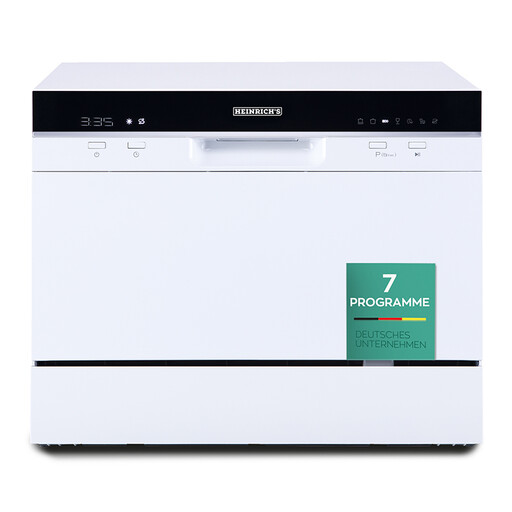 Image unavailable
This format is designed for smaller loads, if a worktop appliance suits your kitchen. The product name lists 6 place settings, 7 programmes, 47 dB and a D energy rating. Before choosing it, measure your worktop and check the water supply and drainage requirements; large dishes may reduce the usable capacity.
 Image unavailable
Worth considering for a kitchen designed to accommodate an integrated dishwasher and a large load. The product name lists 14 place settings and a C energy rating. The dimensions in the description don’t clearly match the 60 cm width in the title, so confirm the installation measurements and niche compatibility before ordering.
 Image unavailable
Worth considering if your kitchen has the right fittings for a 60 cm built-in model. The product name lists 13 place settings and a B energy rating. The product page gives different noise levels in different places and for different programmes, so check the figure that applies to your needs, along with the niche dimensions.
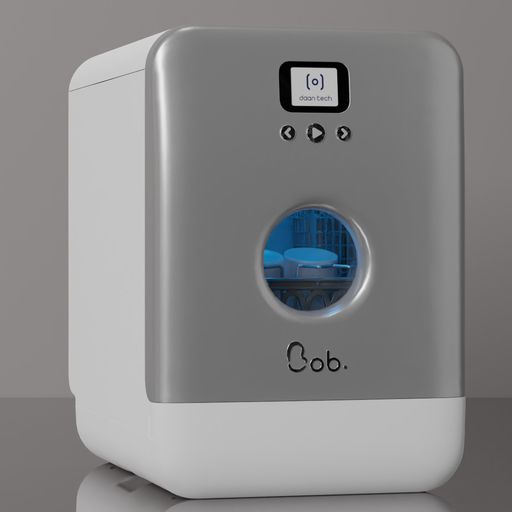 Image unavailable
This compact worktop model is designed for very small loads; the product name lists 3 place settings and a 34 cm width. If you cook often or use large dishes, check what will fit inside. Also make sure there’s enough room on your worktop and check the water supply and drainage requirements.
No. Using less per cycle doesn’t necessarily mean a compact model uses less overall if you need to run it more often. Compare the litres per cycle and kWh per 100 cycles on the labels for the specific models, then estimate how many loads your everyday washing up would require.
An eco cycle can take a long time but, according to ADEME, it is generally the most water- and energy-efficient programme. Check its duration on the label and make sure it fits around the times you can run the appliance.
No. It gives you an idea of the stated capacity, but won’t tell you whether your pans and large dishes will fit alongside your plates. Check the interior layout, external dimensions and installation type before comparing energy use.
It gives an indication of how easy or difficult the product is to repair, with a score out of 10. According to the French Ministry for Ecological Transition, dishwashers are among the categories for which the index must be displayed in shops and online in France. The index does not guarantee a particular lifespan or that the appliance won’t break down.
ADEME advises against pre-rinsing dishes and recommends waiting until the dishwasher is full before starting a cycle. Follow your appliance’s manual for loading instructions too, particularly when you need to remove large food scraps.