Households with crockery building up every day
When meals regularly fill plates, glasses, cutlery and utensils, focus on comparing capacity, basket layout, consumption and noise levels before choosing.


Start by choosing the format based on the space actually available and the amount of crockery you need to wash: a 60 cm model is suitable when you can fill a full load, while a 45 cm model is ideal when width is limited but may require more frequent cycles. To compare models, check the capacity, water consumption per cycle, kWh per 100 cycles, programme duration and noise level on the energy label, as well as the repairability index. ADEME, the European Commission and the French Ministry for Ecological Transition provide these benchmarks for dishwashers.
When meals regularly fill plates, glasses, cutlery and utensils, focus on comparing capacity, basket layout, consumption and noise levels before choosing.
A 45 cm model can free up width in a small kitchen. Que Choisir states that these formats generally hold 9 to 10 place settings, which may mean running cycles more often depending on the number of meals.
To replace an appliance in a fitted kitchen, measure the housing, height beneath the worktop, door panel and control type before choosing a built-in or semi-integrated model.
Start by measuring the space and assessing your typical load of crockery, then compare the Eco programme information on the label for the exact model.
| Priority | What to check | Your needs |
|---|---|---|
| Capacity and loading | Compare the number of place settings, the 45 or 60 cm width, and the layout of the baskets and cutlery drawer. Que Choisir commonly associates 60 cm models with 12 to 17 place settings and 45 cm models with 9 to 10. | I want to be able to load the crockery from several meals without running half-empty cycles. My dishes, pans and utensils also need to fit, not just standard cutlery. |
| Water and electricity | Check the kWh per 100 Eco cycles, litres per Eco cycle and programme duration. ADEME explains that these two consumption figures are displayed respectively for 100 cycles and for one reference cycle. | I prefer to estimate running costs based on my actual washing frequency and local tariffs, rather than comparing the purchase price alone. |
| Installation | Check the installation type, dimensions H × W × D, height beneath the worktop, connections, housing and door-panel compatibility. A freestanding model comes with its own exterior, while a built-in model must match the kitchen unit. | My kitchen needs to remain practical: I need to know whether the appliance will fit the space provided and whether the door can be installed correctly. |
| Noise and maintenance | Compare the noise level in dB(A), noise class, repairability index out of 10 and requirements for salt or rinse aid. The French Ministry for Ecological Transition explains that the index indicates how repairable the product is. | In an open-plan kitchen or if the appliance runs in the evening, I want to take noise levels into account. I also need to budget for consumables and routine maintenance. |
A 45 cm appliance can solve a lack-of-space issue, but its smaller capacity may mean running more cycles. Que Choisir also points out that 9-place-setting models are not necessarily cheaper than larger appliances.
Measure the space, then compare the stated capacity and basket layout with your usual crockery before deciding between 45 and 60 cm.
Add the cost of detergent, dishwasher salt, rinse aid, maintenance and, where necessary, installation.
A freestanding dishwasher already has its own exterior, whereas a built-in model requires a compatible housing and may need a door panel. Some models also have specific installation requirements.
Keep the model’s installation diagram and check the dimensions H × W × D, height beneath the worktop, door fixings and connections before ordering.
Depending on the kitchen, a door panel, unit alterations or professional installation may be required.
ADEME advises against pre-rinsing dishes and recommends waiting until the dishwasher is full. Consumption does, however, depend on the model and programme used.
Remove large food scraps, load the appliance according to the instructions without overfilling it, then choose a programme suited to the level of soiling.
Unnecessary cycles or repeated pre-rinsing increase water and energy use without providing any real benefit.
Worth considering for a 45 or 60 cm freestanding dishwasher; Bosch presents both formats on its French website.
Worth considering if you are looking for a slim 45 cm freestanding model with a stated capacity of 10 place settings on certain French models.
Worth considering for a fitted kitchen requiring a fully integrated 60 cm dishwasher with a generous capacity.
Worth considering for a fully integrated 45 cm model when a kitchen cannot accommodate a 60 cm appliance.
Joybuy options for households looking for a 60 cm freestanding or built-in dishwasher to handle the crockery from regular meals.
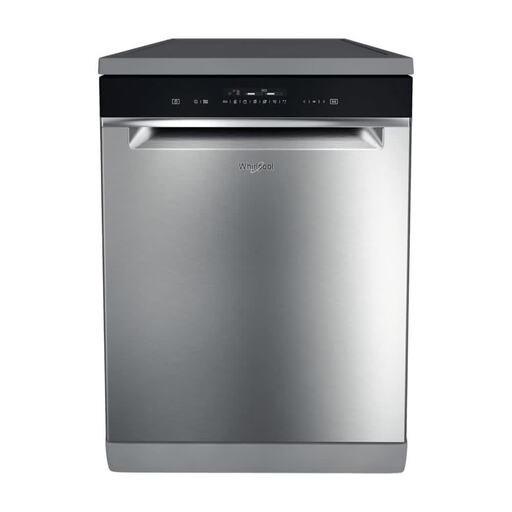 Image unavailable
For regular household meals with a substantial volume of crockery, this model states 14 place settings and 11 programmes.
Declared figures: 9.5 L per Eco cycle, 75 kWh per 100 cycles and 41 dB(A). Check the net dimensions, clearances and space in front of the units before installation.
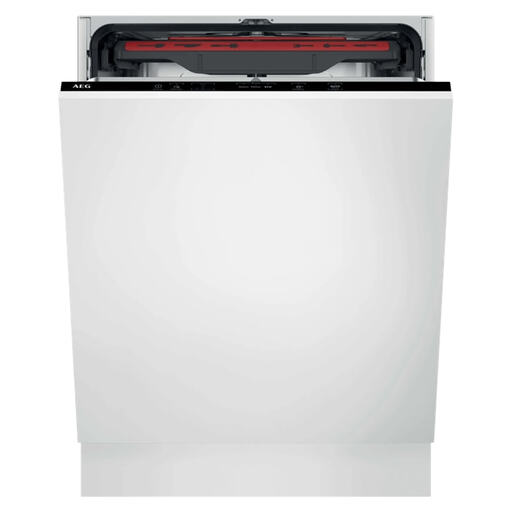 Image unavailable
This fully integrated model may suit a fitted kitchen with a compatible door panel and housing.
It states 14 place settings, a cutlery drawer, 10.5 L per Eco cycle, 0.75 kWh per Eco cycle and 44 dB. Check the housing, sliding hinges, door panel and connections.
 Image unavailable
A model worth considering for a kitchen without a furniture door panel and for daily washing-up loads that vary in size.
The model states 14 place settings, 41 dB(A), approximately 9.5 L on the Eco cycle and a removable worktop. Consult the full energy label and check the height beneath the worktop, door opening and connections.
 Image unavailable
This fully built-in dishwasher is designed for fitted kitchens where the housing and door match the model’s installation diagram.
It states 13 place settings, 44 dB(A), adjustable storage across three levels and fold-down tines. The stated minimum housing size is 820–900 × 600 × 555 mm; also check the door panel and fixed hinge.
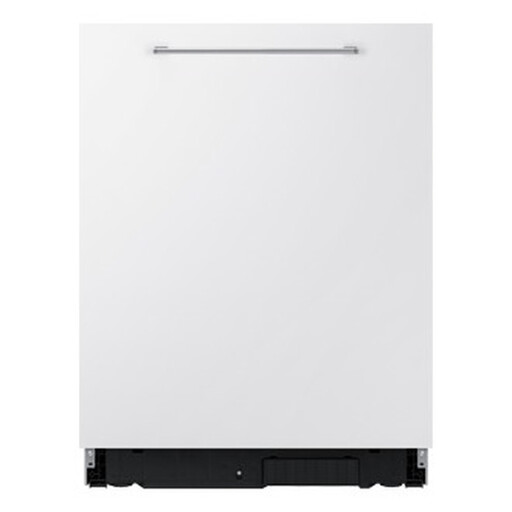 Image unavailable
Worth considering for a fitted kitchen with a plinth constraint and a compatible sliding door.
The model states 13 place settings, 44 dB(A), a height-adjustable middle basket with three settings and flexible tines. Check the housing, Kitchen Fit sliding door, door panel and connections before buying.
Use the figures on the label for the exact model: kWh per 100 Eco cycles and litres of water per Eco cycle. Multiply the kWh per 100 cycles by your annual number of cycles and then by your price per kWh; multiply the litres per cycle by your annual cycles and your water tariff. Add detergent, salt, rinse aid, maintenance and any installation costs separately.
No. A 45 cm model takes up less space and may be sufficient for a small household, but Que Choisir states that 9-place-setting appliances are not necessarily cheaper than larger models. Compare the label for the exact model and the number of cycles your household will actually need to run.
Check the exact dimensions H × W × D, housing, height beneath the worktop, door or door-panel type and the model’s installation diagram. A built-in model requires a compatible kitchen and door panel; on a semi-integrated model, the control panel remains visible on the front.
Yes. The French Ministry for the Economy states that an energy label is compulsory for dishwashers sold both in shops and online in France. The applicable scale runs from A to G; do not compare the former A+++/A++ ratings directly with this scale.
Yes, when comparing the standardised values on the label, as these relate to the Eco programme. For everyday use, also consider the duration, programmes for more heavily soiled dishes, noise, drying performance and ease of loading.