Which criteria should you look at first?
Freestanding
Consider this if: you have a measured space and suitable connections, and don’t need the appliance to blend in with your kitchen units.
Bear in mind: the appliance will remain visible. A 45 cm width takes up less space, but limits the choice of capacity compared with a wider model.
Built-under or integrated
Consider this if: you have a compatible housing unit and want the appliance to fit in with your kitchen.
Bear in mind: installation depends on the model’s instructions and may require a door panel or work that the installation service does not carry out.
Compact
Consider this if: you have fewer dishes to wash and can’t make room for a 45 or 60 cm appliance.
Bear in mind: a smaller capacity may mean running cycles more often.
Washing up by hand
Stick with this if: you have fewer dishes to wash, can get through them quickly or can’t install an appliance without major disruption.
Bear in mind: washing and drying the dishes will still be a chore after meals.
To choose between these options, start with your washing-up routine and the space available, then compare appliances that will work in your kitchen.
| What matters |
What to check |
Who it matters to |
| Time spent washing up |
Time spent washing up by hand after meals and how much you build up before a cycle. |
When the dishes pile up every day, I mainly want to stop having to wash everything after a meal. Around 31% of consumers would put cutting down on this daily chore first. |
| Space and installation |
Available space, connections and, for an integrated model, the housing unit and door panel. |
In a kitchen with limited space, I need to know whether the appliance can actually be installed and connected. This would be the first priority for around 25% of consumers. |
| Capacity and routine |
Number of place settings, room for larger utensils and how often you’re happy to run a cycle. |
If my plates quickly fill the baskets, I want a suitable capacity without having to run lots of cycles. Around 25% of consumers would prioritise this balance between load size and frequency. |
| Energy, water and noise |
kWh per 100 cycles, litres per cycle and noise level, comparing models of similar capacity. |
With an open-plan kitchen or regular cycles, I keep an eye on energy and water use and noise levels first. This would be the main priority for around 19% of consumers. |
Dishwashers for different needs
These Joybuy models include a freestanding option for regular loads, a compact model for smaller loads and a fully integrated model for a kitchen with a suitable housing unit. Choose the format first, then compare the features of each appliance.
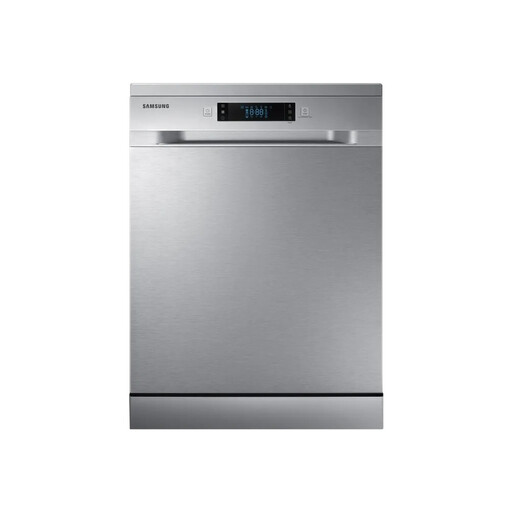 Image unavailable
Samsung DW60M6050FS freestanding dishwasher, 14 place settings
Worth considering if you regularly build up a large load and have space for a freestanding model.
14 place settings, 7 programmes, grey finish. Check the dimensions and connections before ordering.
View on Joybuy
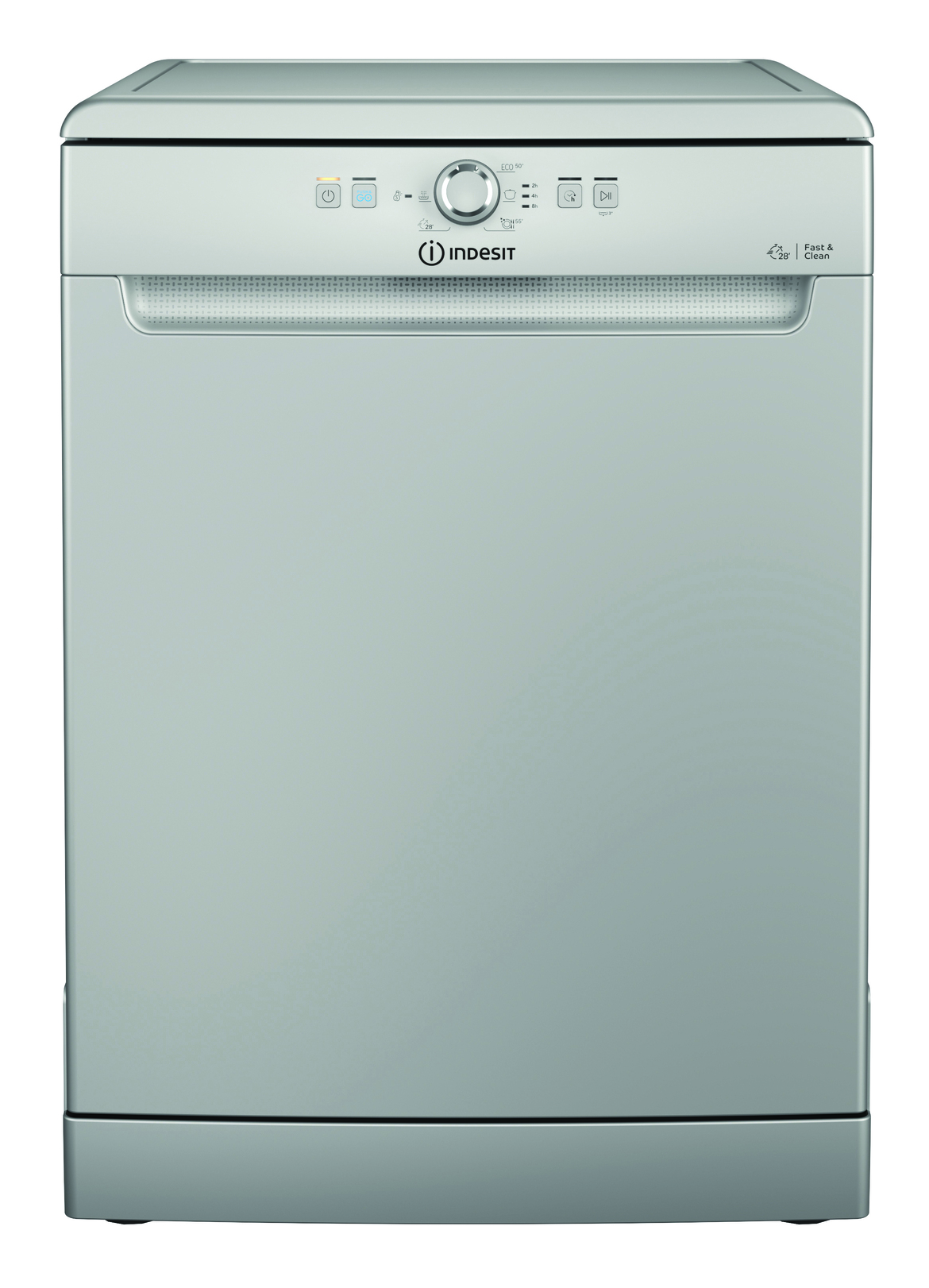 Image unavailable
Indesit D2F HK26 S freestanding dishwasher, 14 place settings
Worth considering for regular loads if your kitchen can accommodate a 60 cm freestanding appliance.
14 place settings, 60 cm wide, energy rating E, grey finish. Check the model’s label to compare its energy and water use and the eco cycle duration.
View on Joybuy
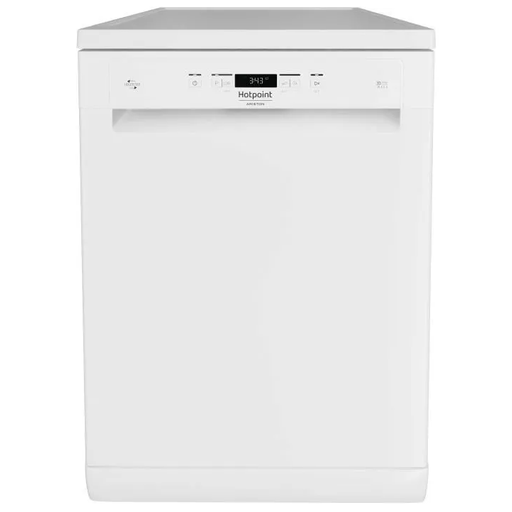 Image unavailable
Hotpoint H4FD641A freestanding dishwasher, 14 place settings
Worth considering if you want to wash regular loads in a 60 cm freestanding appliance.
14 place settings, stated noise level of 41 dB, energy rating C, white finish. Check the available space and consult the label to compare energy and water use for the reference cycle.
View on Joybuy
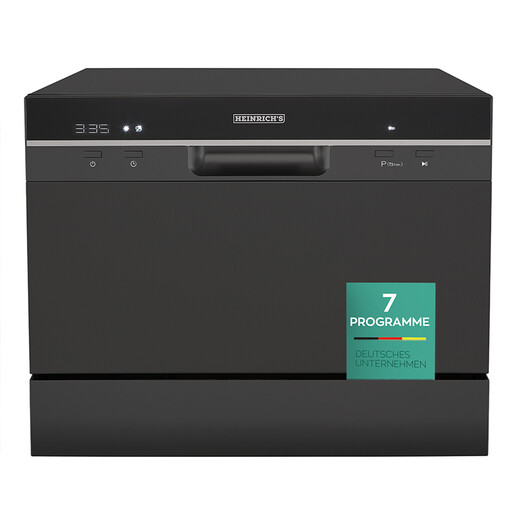 Image unavailable
Heinrich's HTG 8840 Schwarz compact dishwasher, 6 place settings
Worth considering for smaller amounts of washing up, as long as the reduced capacity suits your mealtime routine.
Tabletop model with 6 place settings, 7 programmes, stated noise level of 47 dB and energy rating D. Check its external dimensions and connection method before deciding where to put it.
View on Joybuy
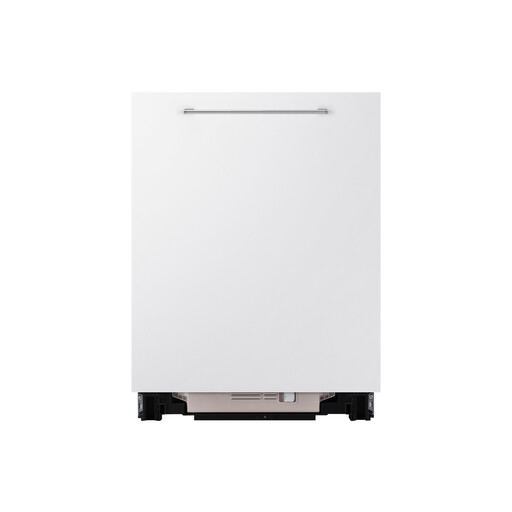 Image unavailable
Samsung DW80H72YBB0U1 integrated dishwasher, 13 place settings
Worth considering if your kitchen has a suitable housing unit and you want the appliance to blend in with your units.
Stated width of 60 cm, 13 place settings and energy rating B. Check the installation instructions, connections and compatibility, as well as whether a door panel is included. Consult the label to compare energy and water use.
View on Joybuy
Frequently asked questions
Which figures should I compare on a dishwasher’s energy label?
Compare the capacity, kWh per 100 cycles, litres per cycle, eco programme duration and the specific model’s noise level, as well as its energy rating. ADEME lists these as factors to consider; a single letter isn’t enough to compare models with different capacities or usage patterns.
Should I wait until the dishwasher is completely full?
Wait until you have a reasonably full load, but don’t pack the dishes in so tightly that the water can’t circulate. ADEME also advises against pre-rinsing; follow the model’s manual for loading utensils and choosing a programme.
What should I check before buying an integrated model?
Before ordering, check the dimensions of the housing unit and the installation instructions for the model you’ve chosen. Also check the connections and ask whether a compatible door panel is needed or included. Depending on the service you choose, carpentry, plumbing or electrical work may need to be arranged separately.
Does a dishwasher always use less than washing up by hand?
No. The result depends on how you wash up by hand, how much you have to wash and how you use the appliance. To decide, compare your washing-up routine with the figures on the model’s energy label. Take energy, detergents and maintenance into account rather than assuming every household will make the same savings.


