Which size is right for you?

Households with large daily loads

If you need to fit plates, utensils and dishes into one load, look at the capacity as well as the basket layout. UFC-Que Choisir’s guide describes 60 cm built-in models as holding 12 to 17 place settings, depending on the model.

Smaller households with limited kitchen space

If you’re short on width or worktop space, compare the load a compact model can handle with that of a 45 cm dishwasher before deciding where to put it. UFC-Que Choisir describes worktop compact models that hold 6 place settings and 45 cm models that hold 9 to 10.

Households mindful of noise and energy use

If you run the dishwasher often, particularly near a living area, check the noise level, water and energy use, and the Eco cycle duration. ADEME lists these among the details to check on the energy label. You’ll also need to factor in dishwasher detergents for regular use.

How do the models compare?

Compact worktop dishwasher

Consider one if: space is very limited and your daily load is small; UFC-Que Choisir describes models that hold 6 place settings.

Bear in mind: large dishes or saucepans may mean you need to arrange your washing-up differently or run more cycles.

45 cm dishwasher

Consider one if: width is limited, but you need a dishwasher for daily use that can hold more than a compact model. UFC-Que Choisir lists capacities of 9 to 10 place settings for built-in models, depending on the model.

Bear in mind: larger loads may mean running more frequent cycles.

60 cm dishwasher

Consider one if: your kitchen has room for this width and dishes, saucepans and cutlery pile up every day. UFC-Que Choisir’s guide lists capacities of 12 to 17 place settings for built-in models of this size.

Bear in mind: the extra width doesn’t mean you can skip measuring the entire space or comparing the energy use of the model you choose.

Factor What to check What matters to consumers
Daily capacity Compare the stated place-setting capacity with the space actually available in the baskets for your dishes and saucepans. When washing-up piles up every day, I want one load to fit bulky utensils too. Capacity would be the top priority for around 33% of consumers.
Space and installation type Measure the width, height, depth and door clearance. For a built-in model, check the niche and door-front fixings too. In a small kitchen, the dishwasher needs to fit in its space first. If it’s integrated, it also needs to work with the kitchen door front. Around 27% of consumers would prioritise the space it takes up and how well it integrates.
Energy use and noise On the energy label, compare kWh per 100 cycles, litres per Eco cycle and the noise level in dB. If the dishwasher runs often near a living area, I want to keep noise and energy use under control. This would be the main concern for around 20% of consumers.
Washing, drying and maintenance Look at the available washing and drying test results, then check the basket layout and the model’s repairability index. I want to avoid having to wash things again and choose a dishwasher that could be repaired if needed. Results and repairability would come ahead of other factors for around 20% of consumers.

Mistakes to avoid before buying

  • Going by width or stated place settings alone

    Two dishwashers of the same width can differ in depth, height and basket layout. A stated capacity doesn’t guarantee that your large dishes will fit.

    Measure the whole space and check the baskets against your usual load, including saucepans and dishes. For a built-in model, measure the niche too.

  • Comparing energy ratings alone

    The energy rating letter doesn’t tell you everything about water and energy use, the Eco cycle duration or noise. ADEME explains that the label shows energy use per 100 cycles and water use per reference cycle.

    Compare the same Eco programme details for each model you’re considering, then factor in the capacity your household needs.

  • Forgetting what installation involves

    A built-in dishwasher needs to fit its niche and door, and work with the available connections. You may also need a door front or an installation service.

    Before ordering, confirm the dimensions, fixing system and services actually included with your installation.

    Remember to budget for detergent too, as well as rinse aid and dishwasher salt, depending on the products you use, as noted by UFC-Que Choisir.

  • Assuming a drying feature guarantees a particular result

    Washing and drying results can vary depending on the model, programme and dishes. A feature described by the manufacturer isn’t enough to prove what results you’ll get.

    If drying performance matters to you, look for independent test results where available and check the programmes and baskets on the exact model you’re considering.

A few brands to consider

Bosch

A brand to consider if you’re comparing 45 and 60 cm models, freestanding or built-in. Check each model individually.

  • According to Bosch’s product details for the SPV4EMX17E built-in model, it is 45 cm wide and uses 8,7 l per Eco cycle. The details also describe an automatic door-opening feature for drying.
  • These features apply to the SPV4EMX17E, not the entire range. Check the full model number and niche dimensions.

Beko

A brand to consider for a 45 cm model when width is your main constraint.

  • Beko’s French range includes 45 cm models listed as holding 10 place settings, either freestanding or integrated, depending on the model.
  • SilentWash and Selfdry features are available on selected models only. Check the dimensions, noise level and drying performance of the model you choose; don’t assume what it can do based on the feature names.

Miele

A brand to consider if you’re comparing different basket layouts and integrated or freestanding models.

  • Depending on the model, Miele’s catalogue includes a cutlery drawer and features called AutoOpen or AutoDos.
  • These features aren’t available on every model and don’t, by themselves, prove that washing results will be better. Check the specifications and consumables for the model you choose.

60 cm dishwashers for regular loads

These 60 cm models, listed as holding 13 or 14 place settings, let you compare freestanding and fully integrated dishwashers for everyday washing-up. First choose an installation type that suits your kitchen, then compare the specifications of each model.
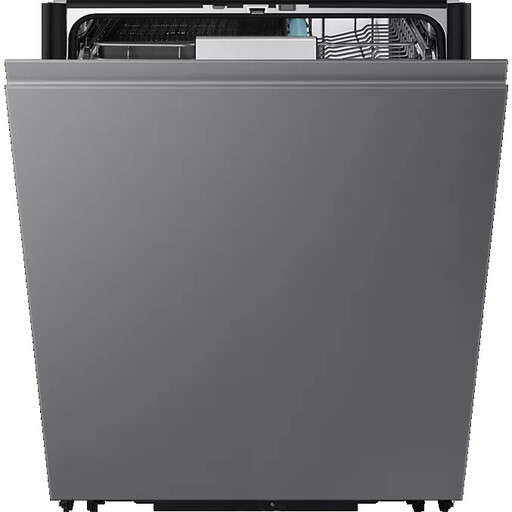
Samsung DW90H79JAI0U1 Bespoke AI dishwasher

Samsung DW90H79JAI0U1 Bespoke AI, fully integrated 60 cm, 14 place settings

Worth considering for larger daily loads if your kitchen has a niche that’s suitable for a fully integrated dishwasher.

The product name states that it holds 14 place settings and has an A energy rating. Check the niche dimensions, door front and fitting requirements before choosing this model.

View on Joybuy
Hotpoint H4FD641A dishwasher

Hotpoint H4FD641A, freestanding 60 cm, 14 place settings

Worth considering for regular loads if you’re looking for a freestanding dishwasher rather than a model hidden behind a kitchen door front.

The product name states that it operates at 41 dB and has a C energy rating. Check the available space if you plan to fit it under a worktop.

View on Joybuy
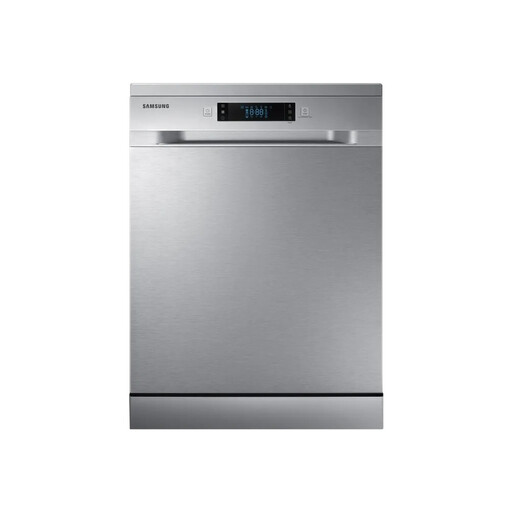
Samsung DW60M6050FS dishwasher

Samsung DW60M6050FS, freestanding, 14 place settings

Worth considering if washing-up piles up and your kitchen doesn’t have a niche for a fully integrated model.

The product name states that it has seven programmes. Check the dimensions, connections and Eco cycle figures to compare it with other models.

View on Joybuy

Indesit D2F HK26 S dishwasher

Indesit D2F HK26 S, freestanding 60 cm, 14 place settings

Worth considering for regular loads if a freestanding dishwasher suits your kitchen layout.

The product name states that it has an E energy rating. Measure the whole space, particularly if you’re thinking of installing it under a worktop.

View on Joybuy
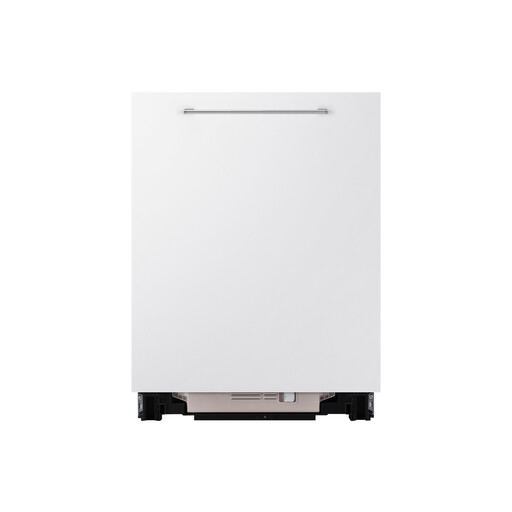
Samsung DW80H72YBB0U1 dishwasher

Samsung DW80H72YBB0U1, fully integrated 60 cm, 13 place settings

Worth considering if you want to fit the dishwasher into a fitted kitchen while still accommodating a daily load of washing-up.

The product name states that it has a B energy rating. Before ordering, confirm the niche dimensions and that the door front and hinges are compatible.

View on Joybuy

Frequently asked questions

What should I compare on the energy labels of two dishwashers?

Compare figures for the same Eco programme: energy rating, kWh per 100 cycles, litres per cycle, duration, capacity and noise. ADEME explains these details; also check the stated capacity against the washing-up you usually load.

Is a 45 cm dishwasher big enough for everyday use?

Yes, if your usual load and larger dishes fit in the baskets without making you run the dishwasher more often than you’d like. UFC-Que Choisir says that 45 cm built-in models generally hold 9 to 10 place settings. If dishes pile up, compare a 60 cm model too.

What should I budget for when using a dishwasher regularly?

Allow for water, electricity and detergent, as well as rinse aid and dishwasher salt, depending on the products you use. UFC-Que Choisir lists these consumables. To compare two dishwashers, start with the Eco cycle figures on their energy labels.

What is a dishwasher repairability index for?

It helps you compare how easy it is to repair the models covered. ADEME says dishwashers are among the appliances that must display this information in France. Check the score out of 10 for the model you choose, along with details about spare parts.

What protection applies if a dishwasher bought in France is faulty or not as described?

According to the French Ministry of the Economy, the legal guarantee of conformity applies to new, used and refurbished goods sold by a business to a private individual. It covers cases such as an appliance not matching its description. Some installation problems may also be covered if installation is the seller’s responsibility or the instructions provided are inadequate.