What should you look for first?
First rule out models that won’t fit the available space or connections. Then compare appliances that can keep up with the amount of washing-up you produce.
| Criteria |
What to check |
Who is this for? |
| Size and capacity |
Measure the width, height and depth. Check the place-setting capacity and, for an integrated model, its installation diagram. |
If your kitchen is narrow or dishes pile up before each cycle, you’ll need an appliance that fits and can handle your usual load. Around 36% of consumers would prioritise finding the right balance between space and capacity. |
| Water and electricity use |
Among models with suitable capacities, compare the kWh per 100 cycles and litres per cycle shown on the energy label. |
If you run frequent cycles, you may want to compare water and electricity use separately rather than choosing on the energy rating alone. Around 29% of consumers would make this their priority. |
| Eco programme duration |
Check its duration on the energy label, as well as the programmes available for occasional needs. |
If you need to use your dishes again between closely spaced meals, the Eco programme duration can affect your day-to-day routine. Around 21% of consumers would make this their main consideration. |
| Noise |
Compare the dB level and noise class of models that are suitable for your kitchen. |
In an open-plan kitchen, running a cycle while people are in the room can disrupt what they’re doing. Quiet operation would be the top priority for around 14% of consumers. |
Dishwashers available on Joybuy
These 14-place-setting models include freestanding appliances and one integrated model. Before choosing, compare how they’ll fit in your kitchen, the consumption information available and the installation requirements.
 Image unavailable
Samsung DW60M6050FS, freestanding, 14 place settings
Worth considering if you have enough space and regularly wash a load of 14 place settings. The product listing gives a width of 59.8 cm, water use of 10.5 L per cycle, energy use of 95 kWh per 100 cycles and a noise level of 44 dB. Check the Eco programme duration on the energy label for this model, as well as the connections it requires.
View on Joybuy
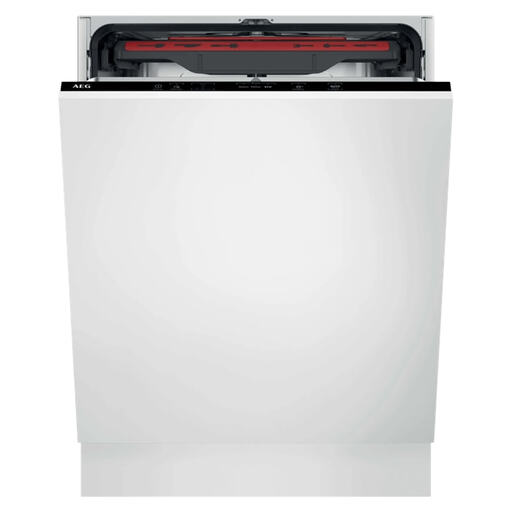 Image unavailable
AEG FSB34707Z integrated, 14 place settings, listed as 60 cm
Consider this model if your kitchen has a suitable space for an integrated dishwasher, but confirm the dimensions before ordering: the title says 60 cm, while the product listing gives a width of 68 cm. It also lists water use of 10.5 L per Eco cycle, energy use of 0.75 kWh per cycle, an Eco programme duration of 240 minutes and a noise level of 44 dB. Check the installation diagram and the kWh per 100 cycles on the energy label for the exact model.
View on Joybuy
 Image unavailable
Whirlpool WFP5O41PLGX, freestanding, 14 place settings, listed as 60 cm
This model may suit regular loads of 14 place settings if you have enough space for it. The title says 60 cm, while the product listing gives a width of 67.5 cm, so confirm the exact measurement before buying. The listing gives water use of 9.5 L per Eco cycle, energy use of 75 kWh per 100 cycles and a noise level of 41 dB. Check the Eco programme duration too.
View on Joybuy
 Image unavailable
Indesit D2F HK26 S, freestanding, 60 cm, 14 place settings
Worth comparing if a 60 cm model with a capacity of 14 place settings suits your space and usual loads. The product listing gives water use of 9.5 L per cycle and a noise level of 46 dB. To compare electricity use and how long you’ll need between meals, check the kWh per 100 cycles and Eco programme duration on the energy label for this model.
View on Joybuy
 Image unavailable
Hotpoint H4FD641A, freestanding, 60 cm, 14 place settings
This model is worth a look if you need a capacity of 14 place settings and want to keep noise to a minimum while it’s running. Its product listing gives water use of around 9.5 L per Eco cycle and a noise level of 41 dB. Measure the space and check the energy label for the kWh per 100 cycles and Eco programme duration.
View on Joybuy
Frequently asked questions
What should you look for on a dishwasher energy label?
The energy rating is only one part of the comparison. ADEME and the European Commission say the label also shows information such as kWh per 100 cycles, litres per cycle, capacity in place settings, Eco programme duration and noise level. Compare these figures after narrowing down your options to appliances that suit your space and typical loads.
Should a small household choose a 45 cm dishwasher?
Not necessarily. Start with the space available and the amount of washing-up you produce between cycles. A 45 cm model is a good fit when space is limited, while a 60 cm model may suit you if you regularly use its full capacity. Check the place-setting capacity and basket layout of the model you’re considering.
Will the Eco programme fit around mealtimes?
It will if the cycle finishes in time for you to use your dishes again. The Eco programme is the basis for the energy-label figures, so check its duration before buying. For occasional needs, consult the information for other programmes separately.
What should you check before installing an integrated dishwasher?
Measure the space in width, height and depth, then compare it with the installation diagram for the exact model. Also check whether a door panel is needed and how it should be fitted, along with the water inlet, drain and electrical supply specified in the instructions.
When should noise be a priority?
Noise is more important if you have an open-plan kitchen or run the appliance while you’re in the room. UFC-Que Choisir includes noise among the factors to consider. Compare the dB levels and noise classes of suitable models, while also taking capacity and consumption into account.


