What should you check before choosing?
Start with your installation requirements, then check that the stated capacity suits your usual meals before comparing the Eco programme figures.
| Feature |
What to check |
Think about your needs |
| Size and installation |
Measure the width, height and depth, and check the clearance needed for the door to open. For an integrated model, check the housing unit, cabinet door and instructions for the exact model. |
My kitchen only has room for a slimline machine, or it already has a housing unit for an integrated appliance. |
| Connections |
Locate the water supply, waste outlet and electricity supply. Check the requirements and positioning in the installation instructions. |
I want to know whether the appliance can be installed where I plan to put it before choosing its programmes. |
| Capacity and loading |
Compare the place settings with the number and size of your dishes and pans. Check how the racks are arranged to see whether they can accommodate taller items. |
My meals leave a lot of washing-up, but I don’t want to run extra cycles because there isn’t enough room for my dishes. |
| Water and energy |
Compare litres per reference cycle and kWh per 100 cycles on the energy labels. ADEME specifies both units; how often you run the machine also affects real-world use. |
I want to compare figures measured on the same basis, rather than choosing on energy rating alone. |
| Programme duration and noise |
Check the Eco programme duration and noise level in dB. Look at the available programmes and choose according to how dirty your dishes are and how much time you have. |
Noise matters in my open-plan kitchen, and I also need to find a time in my day for a long Eco cycle. |
| Use and maintenance |
Check which consumables and maintenance tasks are specified in the instructions. UFC-Que Choisir lists detergent, dishwasher salt and rinse aid among the products used, depending on the appliance. |
I’d rather factor in maintenance and the products I’ll need, not just the stated capacity. |
Which branded models can you use as a guide?
These specifications apply to the models listed, not to every appliance from each brand.
Bosch
The SMS4EVW36F is a useful reference for a 60 cm freestanding dishwasher.
- According to Bosch Electroménager France, the SMS4EVW36F measures 845 × 600 × 600 mm and uses 9,0 L of water per reference cycle.
- Check that its depth and door clearance suit your space. These specifications don’t apply to other Bosch models.
Beko
The BDFN16431W gives you a freestanding model rated for 14 place settings to consider.
- According to Beko France, this model uses 9,9 L of water per cycle, consumes 85 kWh per 100 cycles and has a noise level of 44 dB.
- These figures alone don’t tell you how well it washes or how reliable other Beko appliances are.
Whirlpool
Whirlpool’s French range includes 45 cm and 60 cm models, including options designed to fit into a fitted kitchen.
- According to Whirlpool France, the W3PFD636W is a 60 cm semi-integrated model with 14 place settings, a noise level of 46 dB and water use of 11,5 L per Eco cycle.
- The specifications for this model show two different energy ratings in separate sections. Check the rating on the appliance’s energy label before comparing it.
Electrolux
The EES42210L shows what to consider if you need a 45 cm fully integrated model for a narrow fitted kitchen.
- According to Electrolux France, this model holds 9 place settings and uses 9,9 L of water per cycle.
- It’s supplied without a cabinet door, so check that your housing unit and door are suitable before choosing this model.
Dishwashers to explore on Joybuy
This selection includes 60 cm freestanding and fully integrated models for everyday meals. Check that the capacity suits your washing-up and, for each model, confirm that it can be installed in your kitchen.
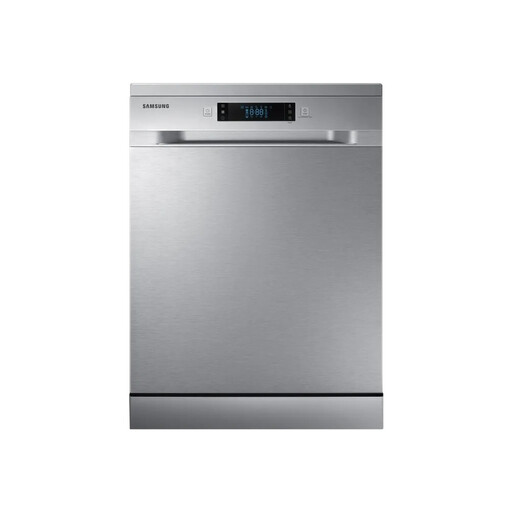 Image unavailable
Samsung DW60M6050FS, freestanding, 14 place settings
With 14 place settings and 7 programmes, this model could suit a household with plenty of washing-up. Check the Eco programme duration, connections and door clearance before deciding where to put it.
View on Joybuy
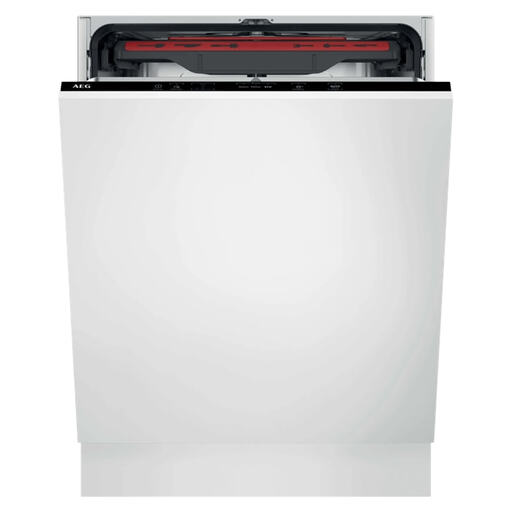 Image unavailable
AEG FSB34707Z, fully integrated, 60 cm, 14 place settings
This option is for a kitchen designed to accommodate a fully integrated machine. The title states 60 cm and 14 place settings, but the dimensions in the product details don’t clearly match this size. Confirm the appliance and housing unit measurements, as well as cabinet door compatibility.
View on Joybuy
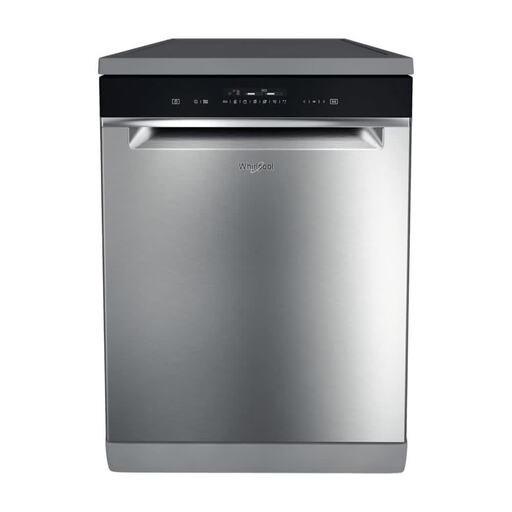 Image unavailable
Whirlpool WFP5O41PLGX, freestanding, 14 place settings
This model is rated for 14 place settings and may be worth considering if you’re looking for a freestanding machine for larger loads. The title states 60 cm, but the product details give a width of 67,5 cm. Confirm the exact measurements before checking whether it will fit in your kitchen.
View on Joybuy
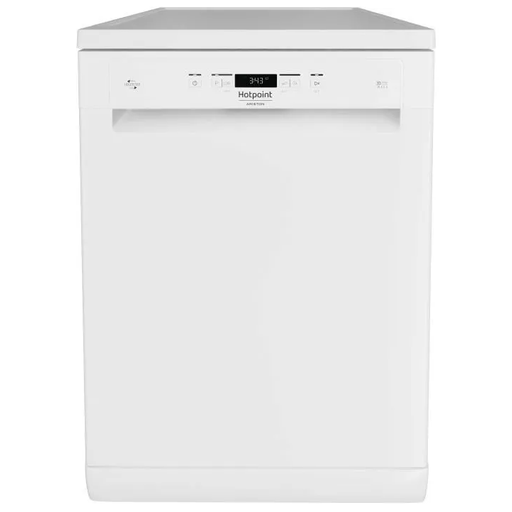 Image unavailable
Hotpoint H4FD641A, freestanding, 60 cm, 14 place settings
With 14 place settings and a noise level of 41 dB, this model could suit households with plenty of everyday washing-up. Before comparing it with other appliances, check its energy consumption figures and Eco programme duration. The product details note that automatic opening after a hot cycle may release steam. Keep the area around the door clear and children at a safe distance.
View on Joybuy
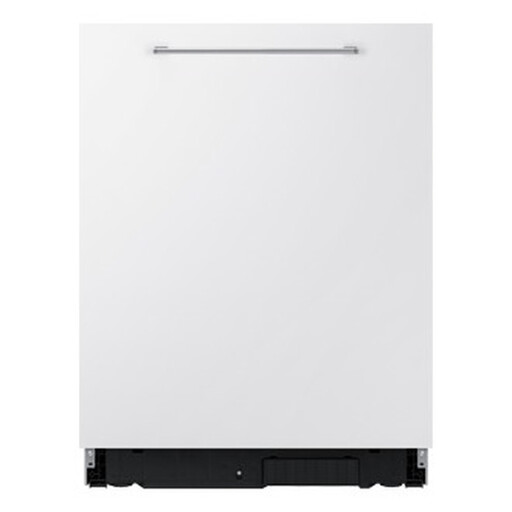 Image unavailable
Samsung DW70H72WCB0U1, fully integrated, 60 cm, 13 place settings
This model is rated for 13 place settings and is intended for a fitted kitchen with space for a fully integrated appliance. Confirm that the housing unit, cabinet door and hinge are compatible. Also check water use per cycle, kWh per 100 cycles and Eco programme duration so you can compare it on a like-for-like basis.
View on Joybuy
Frequently asked questions
Which figures should I compare on the energy label?
Compare the energy rating, kWh per 100 cycles, litres of water per reference cycle, capacity, Eco programme duration and noise level in dB. ADEME explains that energy and water use are measured on different bases, so compare the same figures for each appliance rather than looking at the rating alone.
Is a 45 cm dishwasher big enough for everyday meals?
It could be, as long as its capacity suits the dishes and cookware you produce between cycles. UFC-Que Choisir puts the capacity of 45 cm built-in models at between 9 and 10 place settings. Also check whether there’s room for your pans, as a very full load might mean you need to run more cycles.
What should I check before buying an integrated dishwasher?
Check the dimensions of the housing unit and appliance, door clearance, cabinet door compatibility and connections. Read the instructions for the exact model: fixing and fitting requirements are just as important as the stated width.
Which products and maintenance tasks should I factor in?
You’ll need detergent. Depending on the appliance and how you use it, you may also need dishwasher salt and rinse aid. UFC-Que Choisir lists these consumables as part of how a dishwasher works. The instructions will also explain how to maintain your chosen model.
Should I rinse dishes before loading them?
ADEME advises against pre-rinsing dishes as a matter of course. Scrape off large food scraps, follow the loading instructions and wait until the dishwasher is sufficiently full before choosing a suitable programme.


