What should you look for?
First decide whether the amount of washing up you have and your kitchen layout make an appliance a better choice than washing up by hand. If you choose a dishwasher, check the space available and the capacity, then compare suitable models using the eco programme figures on the energy label.
| Criteria |
What to check |
Who this matters to |
| Capacity |
Place setting capacity shown on the energy label and space in the baskets for larger items. |
I want to load the washing up from several meals without having to run lots of lightly loaded cycles. Around 31% of consumers prioritise a capacity that matches the amount of washing up they have. |
| Size and installation |
Dimensions of the space and the appliance; for an integrated model, check that the housing, door panel and hinges are compatible, as set out in the instructions. |
In a narrow or already fitted kitchen, I need to be able to fit the appliance without assuming that the stated width is all I need to know. This is a priority for around 25% of consumers. |
| Water and electricity |
Energy class, kWh per 100 cycles and litres per cycle on the label, for a capacity that suits you. |
If I wash up regularly, I want to compare water and electricity use using the same units, rather than looking at the energy class alone. Around 25% of consumers prioritise these usage figures. |
| Noise and duration |
Noise level and class, then the eco programme duration shown on the label. |
If the kitchen is close to my living space, I also need to find a time when the cycle can run without disrupting my routine. Noise and duration come first for around 19% of consumers. |
Dishwashers available on Joybuy
These models are for households considering a high-capacity dishwasher for regular meals: the first is fully integrated, while the others are freestanding. Before choosing, check that the size suits your space and the capacity suits your usual loads.
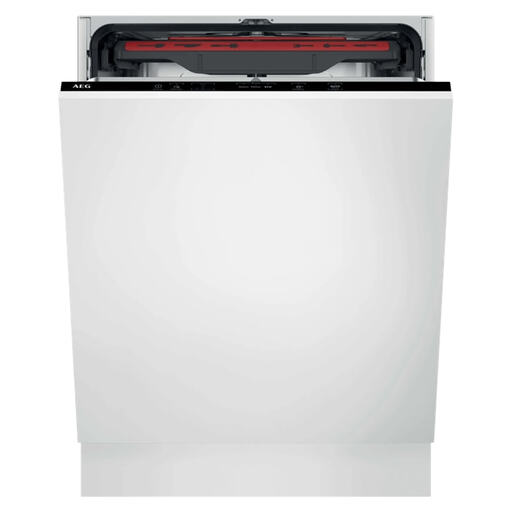 Image unavailable
AEG FSB34707Z fully integrated, 14 place settings, 60 cm
Worth considering if you want to integrate a 14-place-setting appliance into a fitted kitchen. The title states 60 cm and energy class C, but the model information lists a different width. Check the dimensions in the instructions before planning the housing, door panel and door clearance.
View on Joybuy
 Image unavailable
Whirlpool WFP5O41PLGX freestanding, 14 place settings, 60 cm
Worth considering if you’re looking for a freestanding appliance with 14 place settings. The title states 60 cm, a stainless steel finish and energy class C; however, the model information lists a different width. Check the exact dimensions before confirming where it will go.
View on Joybuy
 Image unavailable
Samsung DW60M6050FS freestanding, 14 place settings, 7 programmes
Worth considering if the amount of washing up you have calls for 14 place settings in a freestanding model. The title lists 7 programmes and a grey finish. To compare energy use and plan your cycles, check the energy label for the exact model, particularly the eco programme duration.
View on Joybuy
 Image unavailable
Hotpoint H4FD641A freestanding, 14 place settings, 60 cm
Worth considering if you’re looking for 14 place settings in a freestanding model and noise is a priority. The title states 41 dB, energy class C and a white finish. If the appliance needs to fit under a worktop, check the dimensions and installation requirements in the instructions too.
View on Joybuy
 Image unavailable
Indesit D2F HK26 S freestanding, 14 place settings, 60 cm
Worth considering if you want a freestanding appliance with 14 place settings. The title states 60 cm, energy class E and a grey finish. To compare it with other models, check its kWh per 100 cycles and eco programme duration on the energy label, rather than the duration of a different cycle.
View on Joybuy
Frequently asked questions
Which figures should I compare on a dishwasher’s energy label?
Compare the place setting capacity, energy class, kWh per 100 cycles, litres per cycle, eco programme duration, and noise level and class. ADEME and the European Commission show these figures on the label. Start by choosing appliances with a capacity and size that suit your household.
Why check the eco programme duration if the appliance has a quick cycle?
The eco programme duration lets you compare models on the same basis as the energy use shown on their labels, as the European Commission explains. If you plan to use a quick cycle, also check its duration and the model-specific instructions for using it. Do not confuse these with the reference figures.
What should I check before choosing an integrated dishwasher?
Measure the space and check the model’s instructions for the housing dimensions, clearance beneath the worktop, door panel and door or hinge system. Bosch notes that integrated models differ in their installation and panel requirements; the stated width alone does not confirm that a model will fit your kitchen.
Should I wait until the dishwasher is full before starting it?
ADEME recommends waiting until the dishwasher is full and avoiding pre-rinsing. However, load it according to the manufacturer’s instructions without blocking the flow of water, and take your hygiene needs and daily routine into account.


