Housemates who often cook together
If shared meals mean several courses, pans and serving dishes, look at the usable capacity and basket layout. You want to be able to fit everything in without having to run multiple cycles.


Before choosing a dishwasher for shared accommodation, check the available space, plumbing and how much washing-up builds up between cycles. A 60 cm model could suit frequent shared meals if your kitchen can accommodate it. A 45 cm or tabletop model takes up less room, but its capacity needs to be large enough for your household’s dishes and pans. Then compare energy and water consumption, Eco programme duration and noise levels, rather than looking at the energy rating alone.
The number of people in your household isn’t the only factor when choosing a dishwasher size. How often you eat together, the cookware you use and the space available in your kitchen all make a difference.
If shared meals mean several courses, pans and serving dishes, look at the usable capacity and basket layout. You want to be able to fit everything in without having to run multiple cycles.
A narrow alcove, a busy worktop or existing plumbing can limit your choice of size. Measure the space and check the proposed installation. If the work would alter the rented property or its fixtures, ANIL advises that you get the landlord’s written consent.
If your kitchen is open-plan or close to a living space, compare the noise level and noise class shown on the label. The Eco programme duration also matters if everyone needs to be able to start and unload the appliance at a time that suits their routine.
First rule out any sizes that can’t be installed, then compare capacity with a typical load for your household. The energy label can then help you compare the energy and water consumption, as well as the noise levels, of the models you’re considering, as explained by ADEME and the European Commission.
| Factor | What to check before buying | What matters to shoppers |
|---|---|---|
| Capacity and loading | Include the pans, bowls and serving dishes from a shared meal in your calculations. Look at the basket layout as well as the place-setting capacity. | When several people cook together, I want to fit all their dishes in without having to start another cycle straight away. Around 29% of consumers would make loading capacity their top priority. |
| Installation | Measure the space and the clearance needed for the door. Check the water inlet, drain and plug against the model’s instructions. | In a small rented kitchen, I need to know whether the appliance will fit and can be connected before choosing its capacity. Around 29% of consumers would be most concerned about whether it can be installed. |
| Noise and programme duration | Compare the dB rating, noise class and Eco programme duration shown on the label. | With an open-plan kitchen or different household schedules, I want a cycle that won’t disturb the others and whose finish time I can plan around. Around 24% of consumers would put this convenience first. |
| Water and electricity | Check the kWh per 100 cycles and litres per cycle on the label, then estimate how many cycles your household will actually run. | If the machine is used often, I want to compare how much water and electricity repeated washes will need. Around 18% of consumers would put these consumption figures first. |
You shouldn’t choose between two appliances on their energy rating alone. Water use per cycle, Eco programme duration, capacity and noise all matter when the dishwasher is shared.
For models you can install, compare all these details as well as the kWh per 100 cycles. ADEME and the European Commission confirm that they’re shown on dishwasher energy labels.
A tabletop appliance may not have enough room when several people use pans and large serving dishes. For example, Daan Tech states that Bob holds two place settings under the European standard. This capacity doesn’t apply to every compact model.
Before choosing, put together a typical load: plates, glasses, utensils and serving dishes should all fit in the baskets of the model you’re considering.
If everything won’t fit, you’ll need to run more cycles and spend more time loading and unloading.
An integrated appliance needs a suitable housing unit and, depending on the model, a matching door panel. A standard dishwasher also needs suitable plumbing connections.
Check the measurements and available connections against the instructions for the exact model. If installation means altering the rented property or its fixtures, get the landlord’s written consent first, as ANIL advises.
Everyday habits can matter just as much as the size you choose. ADEME advises against pre-rinsing dishes and recommends waiting until the dishwasher is full before starting it.
Agree with your housemates to scrape off food scraps, load the dishes without blocking the wash and start a cycle when there’s a full enough load.
These ranges offer examples to compare by size. Check the specifications and installation requirements for each individual model.
Bosch’s range includes 45 cm freestanding dishwashers and integrated models in 45 or 60 cm.
Whirlpool offers freestanding and integrated models in 45 and 60 cm.
The BDFS26120XQ featured by Beko is a 45 cm freestanding dishwasher.
Bob is a worktop appliance to consider if you have a small amount of washing-up.
The models below include freestanding dishwashers for shared household loads and a tabletop appliance for smaller loads. Compare their stated capacity with the dishes you usually use, then check the available space and connections before choosing.
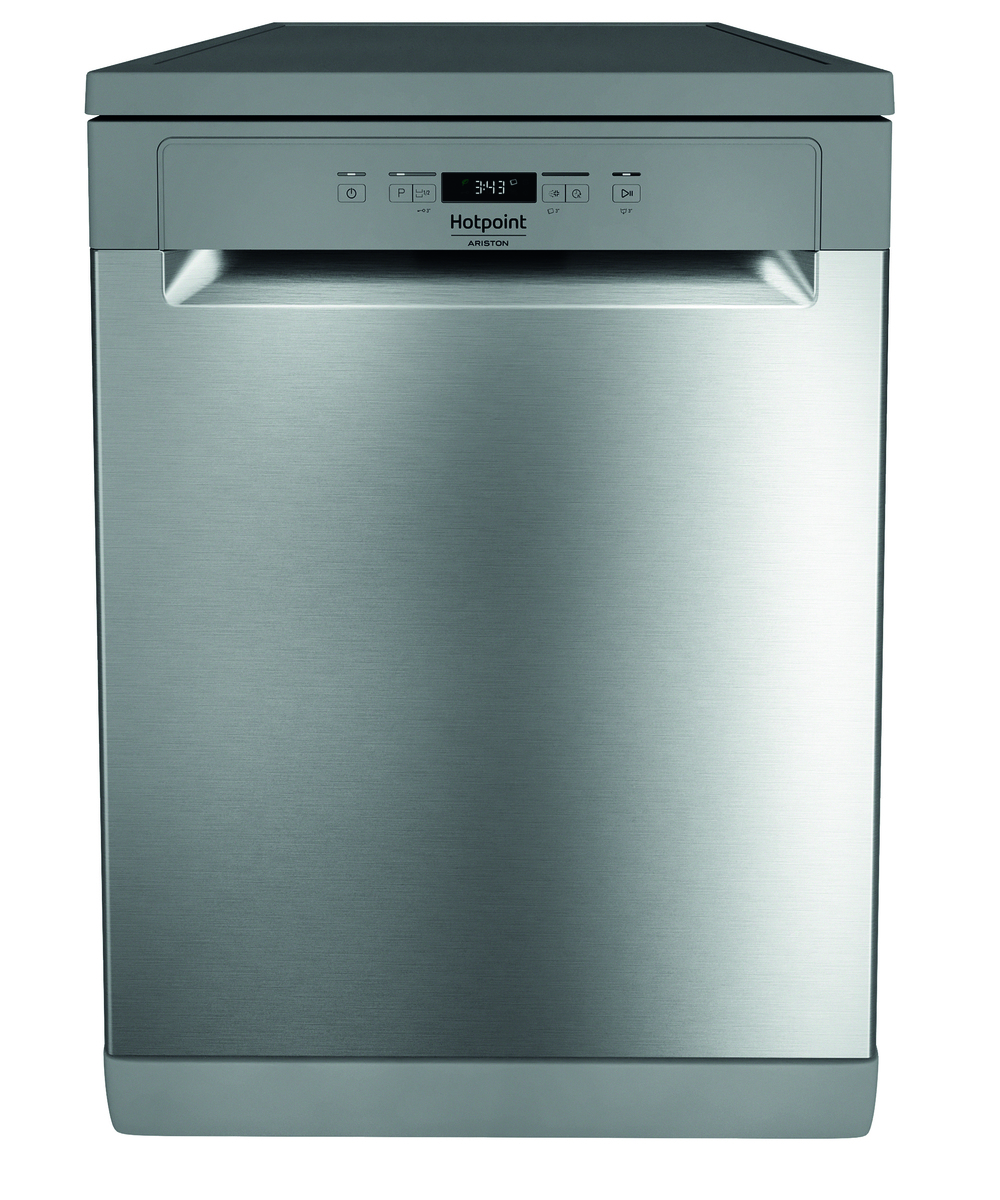 Image unavailable
Worth considering if shared meals regularly create a large load, provided the dishes and pans fit in the baskets.
Stated capacity of 14 place settings; energy rating D. Check the space and connections needed for a 60 cm freestanding appliance.
 Image unavailable
Consider this model for a large shared load if the basket capacity suits the cookware used in your household.
Stated capacity of 14 place settings; energy rating C. The product is described as a 60 cm model: confirm its exact dimensions before checking the available space, and check the Eco programme duration if it matters to your household routine.
 Image unavailable
Its stated capacity is worth comparing with a typical shared meal load, especially if your household uses large serving dishes.
Stated capacity of 14 place settings and seven programmes. Check the basket layout, Eco programme duration and installation dimensions.
 Image unavailable
This size is suited to a household with space for a 60 cm freestanding appliance that regularly builds up a large load.
Stated capacity of 14 place settings; energy rating E. Compare the consumption figures and Eco programme duration on the label, then measure the clearance needed for the door.
 Image unavailable
Worth considering if space is limited and the washing-up between cycles is modest. Six place settings may not be enough for several shared meals.
Stated capacity of six place settings, seven programmes, a 24-hour delay start, 47 dB and energy rating D. Check the dimensions, water inlet and drain before making space for it on your worktop.
Check the available space, door clearance, water inlet, drain and plug against the instructions for the model you’ve chosen. For an integrated model, also measure the housing unit and check whether a door panel is required.
If the work would alter the rented property or its fixtures, get the landlord’s written consent first: ANIL advises that this is required. Check what work needs to be done in your home before drilling into a unit or altering the plumbing.
Compare capacity, kWh per 100 cycles, litres per cycle, Eco programme duration and noise level and class, as well as the energy rating. ADEME and the European Commission state that these details appear on dishwasher labels. Consider them alongside how many cycles your household expects to run.
It may work if your load is small, but it won’t necessarily suit meals shared by several people. Daan Tech states that Bob holds two place settings under the European standard and has a 3.9 L tank. You’ll also need to drain the wastewater. Compare these requirements with how much washing-up you actually produce between cycles.
ADEME advises against pre-rinsing dishes and recommends waiting until the dishwasher is full before starting a cycle. Scrape off food scraps and load the dishwasher without blocking the flow of water.