Start by considering the available space, connections and amount of washing-up. A compact worktop model may suit lighter use, while a 45 or 60 cm appliance is worth considering if several people regularly fill the baskets. Some models have a water tank, so they may not need a fixed water supply, but you’ll still need to deal with wastewater. If installation isn’t practical, washing up by hand is another option.
Who are the different options suited to?
One person in a studio flat or kitchenette
If worktop space is limited or you can’t alter the plumbing, compare the space a compact worktop model takes up with what you need for washing and drying by hand. If you choose an appliance with a water tank, check where the wastewater will go: Daan Tech’s Bob model still needs to drain away.
A couple in a small kitchen
If a mini model would mean running too many cycles, look at the capacity and baskets of a 45 cm freestanding dishwasher once you’ve measured the space. It will also need suitable water, drainage and electrical connections, as Bosch Home Appliances points out.
A household sharing a narrow kitchen
Before choosing a capacity, estimate how much washing-up builds up between washes, including dishes and saucepans. Noise and the space taken up by the sink or worktop also matter when several people use the kitchen.
What should you check before choosing?
Start with the available space and installation options, then compare capacity and energy label figures with how often you wash up.
Compact worktop model
Worth considering: for a small amount of washing-up, if you have a stable spot available on your worktop.
Bear in mind: capacity is limited and you’ll need a way to drain wastewater, even with a model that has a tank, such as the Bob described by Daan Tech.
45 or 60 cm freestanding model
Worth considering: if the connections are accessible and a floor-standing appliance can handle your household’s washing-up. Bosch Home Appliances presents a 45 cm model as an option when there isn’t room for a 60 cm one.
Bear in mind: a 45 cm model won’t necessarily have enough room for large utensils, while a 60 cm model needs more width.
Integrated model
Worth considering: if your kitchen already has a compatible space and the necessary connections.
Bear in mind: the furniture door and any carpentry, plumbing or electrical work you may need. Electrolux notes that these jobs may not be included in its installation services.
Washing up by hand
Worth considering: if there’s no suitable space or connection, or if you don’t yet have enough washing-up to justify an appliance.
Bear in mind: you’ll need time to wash, dry and put everything away without tying up the shared sink. How much water you use will depend on your washing-up habits.
| Priority |
What to check |
What I need |
| Space and installation |
Measure the appliance, any recess and the clearances specified in its instructions. Check the water supply or tank, drainage route and electrical supply required for that model. |
I need to keep enough space for preparing meals and be able to use the appliance without unexpected work. |
| Usable capacity |
Compare the stated place settings with your plates, dishes and saucepans. Check the basket layout and estimate how many cycles you’ll need between uses. |
In a shared kitchen, I’d rather check whether the baskets can fit everyone’s washing-up than choose based on the appliance’s width alone. |
| Water and energy |
ADEME says the energy label shows energy use in kWh per 100 reference cycles and water use in litres per reference cycle. Check the capacity and Eco programme duration too before comparing models. |
A low figure per cycle isn’t enough to guide my choice if the capacity means I have to run the appliance more often. |
| Noise |
Check the noise level in dB and the noise class on the energy label, as ADEME recommends. Consider these alongside the times you’d run the appliance at home. |
In a studio flat or open-plan kitchen, I want to take noise into account during meals and when spending time in the room. |
What mistakes should you avoid in a small kitchen?
-
Assuming a water tank takes care of the whole installation
A tank may mean you don’t need a fixed water supply, but you still need to manage the wastewater. Daan Tech’s connection guide specifies a drainage hose for its Bob model.
Check where the water will drain, measure the hose route and read the model’s instructions before ordering.
Depending on your existing installation, you may need connection accessories or a plumber.
-
Assuming one model’s dimensions are standard
A compact appliance won’t necessarily have the same dimensions, door clearance or fitting requirements as another model.
Measure the space and compare it with the dimensions and clearances required in the instructions for the exact model, especially if you need to fit a furniture door.
-
Comparing energy use per cycle alone
Capacity affects how many cycles your household will need. The figures on the label described by ADEME are based on reference cycles, not your personal energy use over a year.
Estimate how much washing-up you have, then compare capacity, litres per cycle, kWh per 100 cycles and the Eco programme duration.
-
Relying on the word ‘quiet’ alone
In a single living space, noise may limit when you want to run a cycle. ADEME explains that a 3 dB increase represents an almost doubling of noise.
Compare the dB level and noise class on the label, taking the appliance’s location and your usual schedule into account.
A guide to the brands
There’s no brand information to display in this section.
Compact worktop dishwashers on Joybuy
These models are for anyone considering a dishwasher to sit on a worktop. To compare them with a wider freestanding model, an integrated appliance or washing up by hand, start with your available space, drainage options and amount of washing-up.
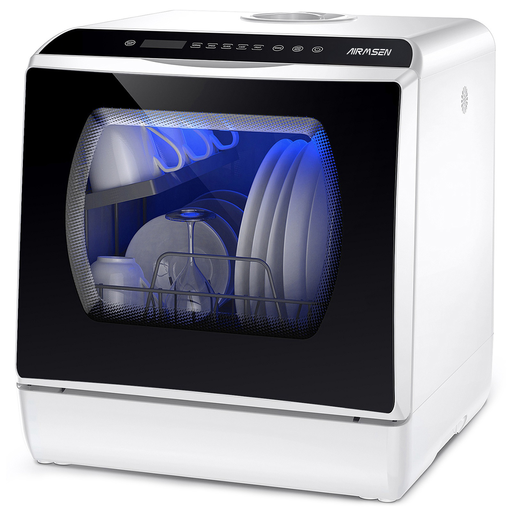 Image unavailable
AIRMSEN, 5+1-programme worktop dishwasher with 5 L tank
Worth considering if you’re looking for a worktop appliance with a built-in 5 L tank. Check that its capacity suits your washing-up and that you can arrange for wastewater to drain away from your chosen spot.
View on Joybuy
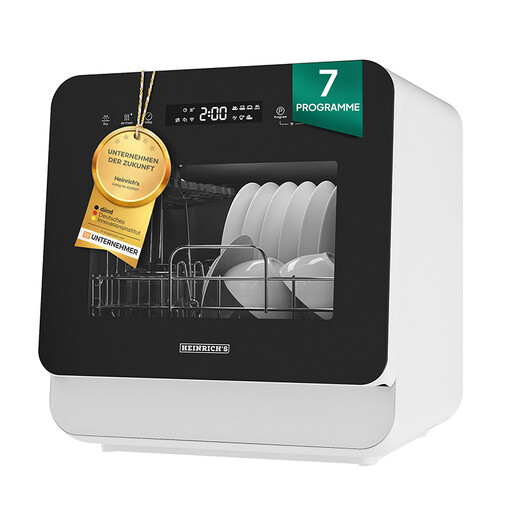 Image unavailable
Heinrich's HTG 8855, table-top dishwasher for 3 place settings
With a stated capacity of 3 place settings, this model is suited to a small amount of washing-up. The title also lists 7 programmes, 56.3 dB and energy class C. Measure the space and check the drainage requirements before choosing this option.
View on Joybuy
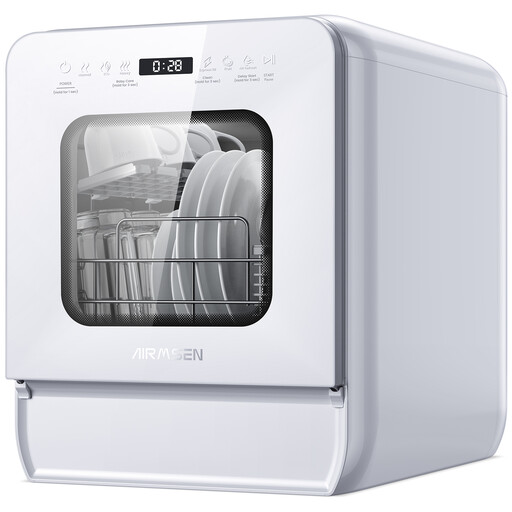 Image unavailable
White AIRMSEN, 37 × 50 cm worktop dishwasher with 5 L tank
The stated width and depth give you a starting point for checking whether it’ll fit on a narrow worktop. The title also lists 9 programmes and energy class D. Check the height, clearances and drainage arrangements in the model’s instructions.
View on Joybuy
 Image unavailable
Heinrich's HTG 8840 Black, table-top dishwasher for 6 place settings
With a stated capacity of 6 place settings, this model may be worth considering if several people share the kitchen. The title lists 7 programmes, 47 dB and energy class D. Check the dimensions, water supply and drainage route for your installation.
View on Joybuy
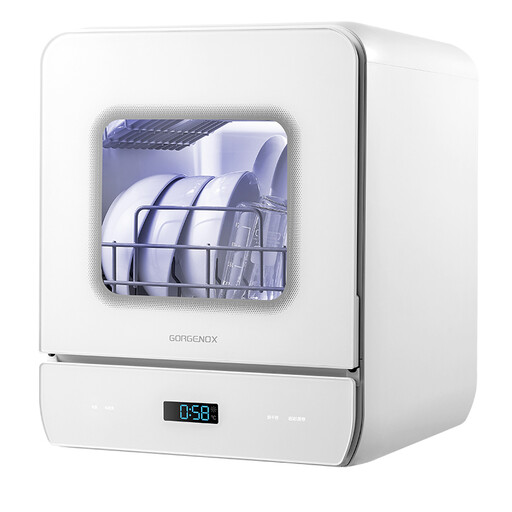 Image unavailable
GORGENOX DW5-D40A, worktop dishwasher for 3 place settings
With a stated capacity of 3 place settings, this model is suited to a small amount of washing-up. The title also mentions drying and storage. Check the dimensions, water supply options and drainage arrangements before deciding where to put it.
View on Joybuy
Frequently asked questions
Does a dishwasher with a water tank avoid the need for all connections?
No. A tank may mean you don’t need a fixed water supply, but wastewater still needs to drain away. Daan Tech says its Bob model has a 4 L tank and a drainage hose. Check the requirements in the instructions for the model you’re considering.
What should you measure before buying a freestanding or integrated appliance?
Measure the space, then note the positions of the water supply, drain and electrical socket so you can check them against the model’s instructions. For an integrated appliance, check the recess and furniture door too. Electrolux notes that some carpentry, plumbing and electrical work isn’t included in its installation services.
How can you compare energy use for a compact model and a larger appliance?
Compare the energy label figures with the capacity and the number of cycles you’re likely to need. ADEME says the label shows energy use in kWh per 100 reference cycles and water use in litres per reference cycle. These figures alone won’t tell you your annual consumption.
Does noise level matter in a studio flat or open-plan kitchen?
Yes, especially if the appliance will be running while you’re in the room. Compare the dB level and noise class on the label rather than relying on a marketing claim. ADEME says a 3 dB increase represents an almost doubling of noise.


