Regular shared meals
You tend to gather plates, glasses and serving dishes after meals. Capacity and rack layout matter more than extra features. Bosch’s loading advice recommends not stacking dishes or blocking the spray arms.


If you tend to have a large pile of washing-up after meals, start by looking at a standard model, provided your kitchen has room for one. A slimline model may suit a narrower space, while a compact countertop dishwasher is better for smaller loads. In every case, check that the racks suit your dishes, and compare noise levels, consumption and cycle options.
You tend to gather plates, glasses and serving dishes after meals. Capacity and rack layout matter more than extra features. Bosch’s loading advice recommends not stacking dishes or blocking the spray arms.
You use the kitchen or an adjoining room while the dishwasher is running. Compare the noise level shown on the energy label and the available delay-start options. Then agree with the other people in your household when to start and unload it.
You’re deciding between a slimline model and a compact countertop dishwasher. Compare the capacity with the dishes you usually use, and check the space and connections required. Even a compact dishwasher may need a water supply.
Consider this: if several meals or shared dishes create a large load, and the dimensions suit your kitchen.
Weigh this up: the stated capacity doesn’t guarantee that your dishes will fit without overlapping. Check the overall dimensions and connections too.
Consider this: if there isn’t enough width for a standard model and the racks can accommodate the dishes you use every day.
Weigh this up: the documented examples have a lower stated capacity than the 14-place-setting standard model. If you have a large load, you may need to organise it differently or run more than one cycle.
Consider this: if you usually have smaller loads and have a suitable space for it.
Weigh this up: the Candy CP 6E51LW is stated to hold 6 place settings. Check its dimensions and connections before deciding exactly where to put it.
If you’re choosing a dishwasher for shared meals, the energy label can help you compare models. The European Commission says it includes information such as energy consumption per 100 eco cycles, water use per cycle, capacity and the duration of the eco programme.
| What matters | What to check before buying | Who it matters most to |
|---|---|---|
| Shared loads | Put together a typical load and compare the capacity and rack layout with your plates and dishes. Don’t stack them or block the spray arms. | When several meals’ worth of dishes pile up, I want to load them without overfilling the racks. Around 25% of consumers put shared loads first. |
| Noise in shared spaces | Compare the stated noise emissions and check the model’s delay-start options. | If the kitchen is in use while the dishwasher is running, I want to be able to consider the noise and timing. Around 20% of consumers prioritise a quieter home. |
| Water and electricity | Compare consumption on the eco programme using the same basis, and take into account how many cycles your load will need. | To keep track of what our actual washing-up uses, I compare consumption per cycle with how often we use the dishwasher. Around 20% of consumers prioritise using fewer resources. |
| Dishwasher turnaround | Check the duration of the eco programme and the conditions for quick programmes. Agree who will start and unload the dishwasher. | Between meals, I want to know when the dishes will be ready and who will take care of the appliance. Around 15% of consumers prioritise this turnaround. |
| Space and installation | Measure the space, check that the door can open fully and confirm the connections required in the model’s manual. | In a kitchen with limited space, I first need to know which size and connections will work. Around 20% of consumers prioritise fitting a dishwasher into their existing space. |
The stated capacity doesn’t guarantee that your household’s dishes will fit without overlapping. How you arrange them matters too: water needs to circulate and the spray arms must be able to turn.
Try fitting a representative load inside the dishwasher without stacking the dishes.
If the load doesn’t fit well, you may have to wash some items by hand or run extra cycles.
Cycle duration and consumption are two different things. Bosch says its eco programme can take longer while using less electricity. However, you can’t assume the same will be true of every model and programme.
Compare the information given for the programmes you’re considering, then choose according to your load and the time available.
Candy describes the CP 6E51LW as connecting directly to the water supply, so its compact size doesn’t mean it works without a connection.
Check the manual for the exact model and make sure you have the required water supply, drainage and electricity, as well as enough room for the door to open, before buying.
The connections and space must suit your kitchen layout.
Loading, starting, unloading and maintaining the dishwasher are all tasks that the people in your household will still need to share.
Agree who is responsible for what, and add filter cleaning to your shared schedule. For its dishwashers, Bosch recommends cleaning the filter after every wash or at least once a week.
The SMS4EMI06E is a standard model to consider if noise levels and flexible racks matter in a shared kitchen.
The DVS05030X is an example of a slimline model to consider when width is your main concern.
The CF 4C6F0W and CP 6E51LW illustrate a standard 14-place-setting model and a compact countertop model for 6 place settings, respectively.
These dishwashers are suited to household use with shared loads. Before choosing, check the installation type and the layout required for your kitchen.
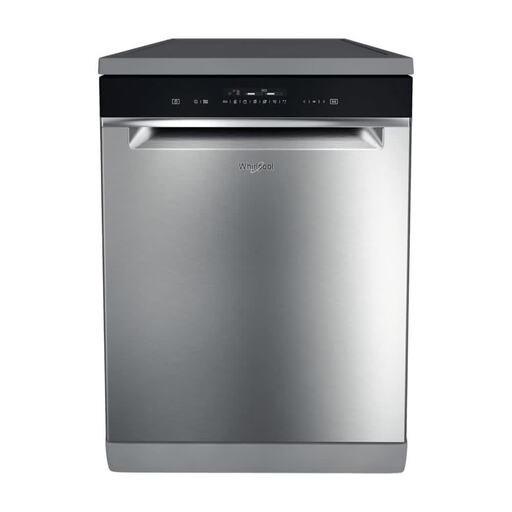 Image unavailable
Worth considering if you tend to have large loads and want to schedule cycles around your household’s routine.
The product information lists 14 place settings, an adjustable upper rack, 41 dB, 9,5 L per eco cycle and a delay start of up to 24 hours.
 Image unavailable
Worth considering if you need a stated capacity of 14 place settings and a delay start to help coordinate wash cycles.
The product information lists an adjustable upper rack, 46 dB, 9,5 L of water and a delay start of 1 to 8 hours. It also mentions the 85-minute Push&Go programme.
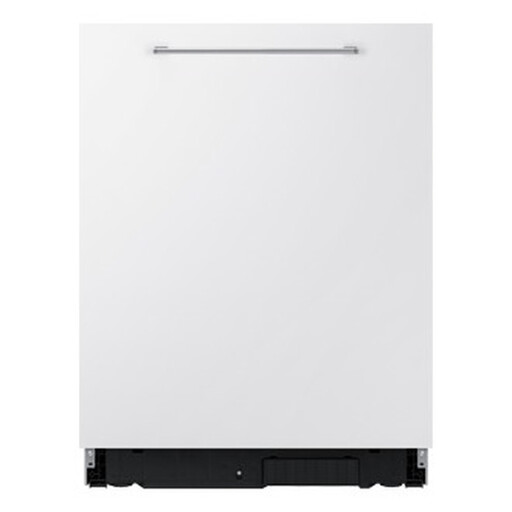 Image unavailable
Consider this if your kitchen can accommodate a fully integrated installation and you want to organise a shared load using an adjustable rack.
The product information lists 13 place settings, a noise level of 44 dB(A), a middle rack adjustable to three heights and flexible supports. Installation by a qualified professional is specified.
 Image unavailable
Worth considering if you want to compare a stated capacity of 14 place settings with a choice of programmes for different loads.
The product information lists a noise level of 41 dB and around 9,5 L per eco cycle. The top panel is described as removable for under-counter installation up to 82 cm.
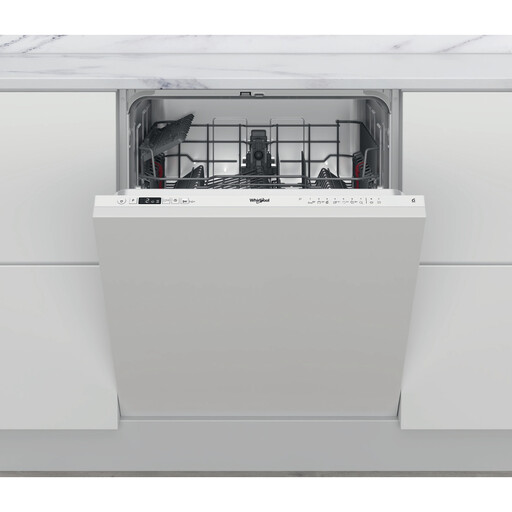 Image unavailable
Worth considering if you have a suitable appliance space and want to adapt the load using an adjustable rack.
The product information lists 14 place settings, 46 dB, a delay start and an adjustable upper rack. This model needs to be installed in a suitable integrated appliance space.
There’s no one-size-fits-all frequency for every shared household. See how much washing-up you produce between meals and check that it fits without stacking. Then agree together on when to start and unload the dishwasher.
No. Bosch explains that its eco programme can take longer while using less electricity. Compare the duration and consumption figures for the reference programme, and don’t assume they also apply to a quick cycle or every appliance.
Not necessarily. Candy describes the CP 6E51LW as connecting directly to the water supply. Check the manual for the exact model, as well as the drainage and electricity requirements, before choosing where to put it.
Add this task to your shared schedule rather than leaving it to chance. Bosch recommends cleaning the filter in its dishwashers after every wash or at least once a week. Check this against the manual for your appliance.
Use the consumption figures shown and the number of cycles you expect to run. For electricity, scale the figure for 100 cycles to match your usage. For water, multiply the figure per cycle by the number of washes, then apply your local rates.