Housemates who often cook together
If several meals add to the same pile of washing-up, look at the capacity as well as the basket space for pans, dishes and containers. A small appliance may need several cycles to handle one shared load.


In a shared home, start by considering how much washing-up builds up between cycles. A compact model may be suitable if loads are small and space is limited, while a standard-sized dishwasher is worth considering if shared meals quickly fill the baskets. Then check the space, connections and noise level, and compare the figures on the energy label rather than looking at its rating alone.
If several meals add to the same pile of washing-up, look at the capacity as well as the basket space for pans, dishes and containers. A small appliance may need several cycles to handle one shared load.
A compact table-top model or a narrower appliance can free up space. The right choice still depends on how much you need to wash and whether the model can be connected to your water supply and waste pipe.
If a cycle could disturb someone in the next room, compare the noise level shown on the energy label. A delay-start function can help you plan when to run a cycle, if the model you choose has one.
Work out the size of your shared load before choosing between a compact and standard model, then check whether your preferred size can actually be installed. According to ADEME, the energy label helps you compare capacity, water use per cycle, kWh per 100 cycles, Eco programme duration and noise level.
| Consideration | What to check | Who might prioritise it? |
|---|---|---|
| Shared capacity | Place settings and basket layout for the dishes and utensils you use together. | If several people cook on the same day, I want to avoid leaving pans waiting or having to run another cycle straight away. Around 33% of consumers may put capacity at the top of their list. |
| Space and installation | Overall dimensions, door clearance, water supply and waste connections; check the housing and door panel if the model requires them. | In a narrow or already-fitted kitchen, the appliance needs to fit and be connectable. For around 27% of consumers, this compatibility may be the main priority. |
| Noise | The dB rating and noise class for the exact model. | With an open-plan kitchen or different household schedules, I need to be able to run a cycle without disturbing others. A quieter home may be the top priority for around 20% of consumers. |
| Regular use | Litres per cycle, kWh per 100 cycles and Eco programme duration; check for a half-load option if it would be useful. | If loads vary from one meal to the next, I want to compare the stated consumption figures and scheduling options before choosing. Around 20% of consumers may prioritise this flexibility. |
Capacity varies by model: Candy lists 6 place settings for its CP 6E51LS table-top compact dishwasher, compared with 14 for the 60 cm Beko BDFN26460G. In a home where people often cook together, the smaller model may leave some of the washing-up for another cycle.
Before deciding on the capacity you need, see what builds up between your usual washes, including frying pans and dishes.
Width alone doesn’t tell you the full depth required, whether there’s room for the hoses or if a door panel will need adapting. Electrolux explains in its pre-installation guide that its installers don’t carry out plumbing, electrical or carpentry work.
Measure the space and door clearance, then check the connections and any work required against the instructions for your chosen model.
Two appliances may be suited to different-sized loads. ADEME also lists capacity, water use per cycle, kWh per 100 cycles, Eco programme duration and noise on the energy label. The rating alone doesn’t tell you about these day-to-day factors.
Compare the full figures for the models you’re considering, and think about whether their capacity matches how often you share meals.
Que Choisir highlights the importance of noise levels in open-plan kitchens. Check the rating for each model rather than assuming a particular size or brand will always be quiet.
Check the dB rating and noise class on the energy label, as well as whether there’s a quiet programme if you need to run cycles at times when others may be resting.
Candy’s range in France includes several sizes to consider when limited space narrows your options.
Several standard-sized models let you compare capacity and programmes for shared loads.
Freestanding and integrated 45 cm models can be compared to suit your kitchen layout.
The freestanding range includes models to compare if capacity, energy labelling and noise are key considerations.
These options include freestanding dishwashers and one integrated model for a shared kitchen. Compare their capacity with the washing-up that builds up between cycles, then check the installation requirements for each appliance.
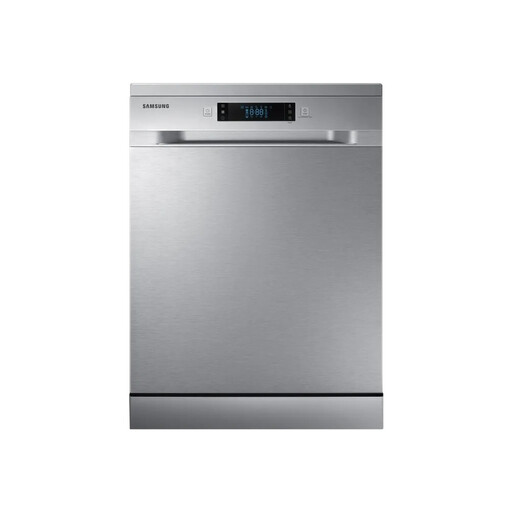 Image unavailable
Worth considering if several people regularly fill a shared load and you’re looking for a freestanding appliance. The product name lists 14 place settings and 7 programmes. Check the dimensions, connections and Eco cycle duration to make sure it suits your needs.
 Image unavailable
This freestanding model is worth comparing if shared meals create large loads. The product name lists 14 place settings, a width of 60 cm and an E energy rating. Check the available depth, as well as the consumption figures and Eco programme duration on the energy label.
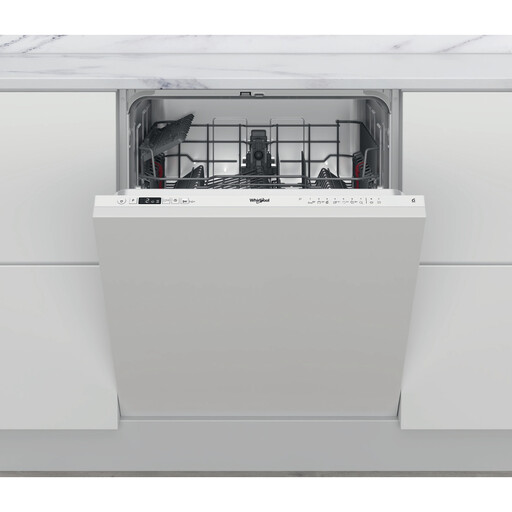 Image unavailable
Consider this integrated model if your kitchen has a suitable space for handling a large shared load. The product name lists 14 place settings, 60 cm and an E energy rating. Before ordering, check the housing dimensions, door panel requirements and connections.
 Image unavailable
Worth comparing if your household wants a large capacity in a freestanding model. The product name lists 14 place settings, 60 cm, 41 dB and a C energy rating. If you’re considering installing it under a worktop, check the dimensions and whether the top can be removed. When opening the door after a hot cycle, keep clear of the steam and keep children at a safe distance.
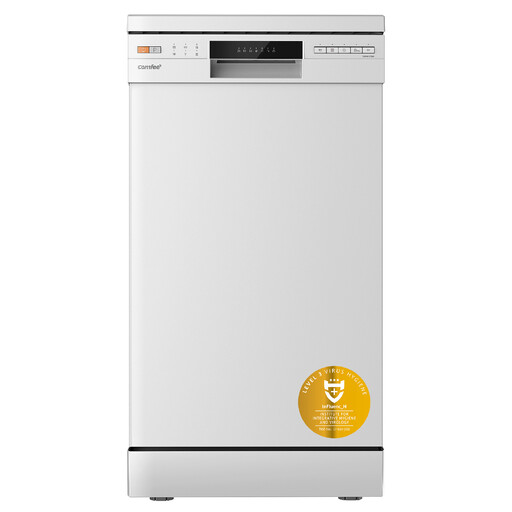 Image unavailable
Consider this model if shared loads are fairly small and you need a narrower appliance to fit your space. The product name lists 10 place settings, a half-load function, an adjustable basket and an E energy rating. Measure the available space and compare the noise and consumption figures for this model before deciding.
Base your choice on how much washing-up builds up between cycles, not just the number of people in the household. Count pans, containers and dishes used together as well as plates. As a guide to specific models, Candy lists 6 place settings for the compact CP 6E51LS, while Beko lists 14 for the 60 cm BDFN26460G.
Compare capacity, kWh per 100 cycles, litres per cycle, Eco programme duration and noise in dB, along with its class. ADEME explains that these figures are based on a reference cycle, often Eco, so they may not reflect every programme your household uses.
For goods bought in France by a private individual from a professional seller, the statutory legal guarantee of conformity is compulsory. The French Ministry of the Economy says it applies to new, second-hand and refurbished goods. Any commercial warranty offered does not replace it.
Yes. According to the French ministry responsible for the ecological transition, dishwashers are among the product categories covered in France. Compare the index shown for the model you’re considering, but don’t mistake it for a promise of reliability or an indication of repair costs.