
Livraison le jour même ou le lendemain

Qualité garantie

Débloquez vos offres de bienvenue: Livraison GRATUITE | Jusqu'à -80 % | 30 jours d'essai gratuits à JoyPlus
Téléchargez l'application
By the Joybuy Team, Your Everyday ExpertsPublished: August 26, 2026
Finding your dishes covered in a dull film or white streaks straight out of the dishwasher? It's a frustration we all know. The culprit is often not the appliance or the detergent, but simply the limescale present in your water. Using a dishwasher regenerating salt is therefore a crucial step to guarantee impeccable results and extend the life of your machine.
But be warned, not all salts are created equal. Before you choose, you need to be aware of two common mistakes that can not only ruin your wash cycles but also damage your appliance:
This guide is here to help you make an informed decision and choose the right product, focusing on the criteria that truly make a difference for effective dishwasher maintenance.
For optimal protection, there are three technical criteria to watch closely. This is what separates a truly effective salt from a low-quality product.
The role of regenerating salt is to recharge the resins in your dishwasher's built-in water softener with sodium ions. For this process to work perfectly, the salt must be of impeccable purity.
The grain size has a direct impact on the salt's effectiveness and the safety of your appliance.
An effective regenerating salt is one that contains... nothing but salt.
Rather than a simple list, we've selected products that meet specific needs. It's up to you to find the one that fits your daily routine.
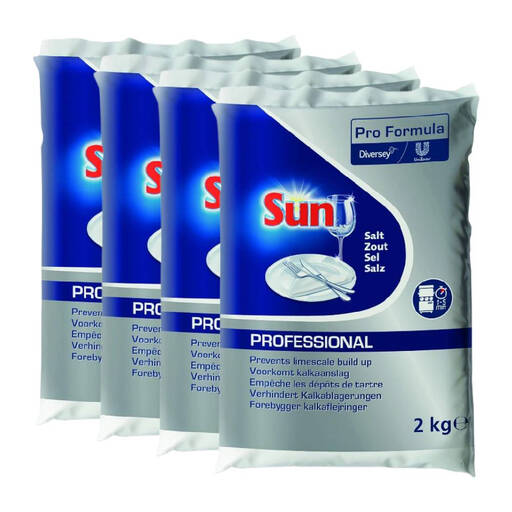
Why it's the right format: Perfect for large families, small businesses (cafés, offices), or simply for those who like to stock up for peace of mind. This 8 kg bulk pack of regenerating salt offers excellent value and saves you from having to buy more all the time.
This pure salt, specially formulated for water softeners, prevents the damage caused by table salt and takes over where all-in-one tablets fall short in very hard water.
The economical 8 kg format provides long-lasting peace of mind. Its high purity ensures reliable protection for your machine.
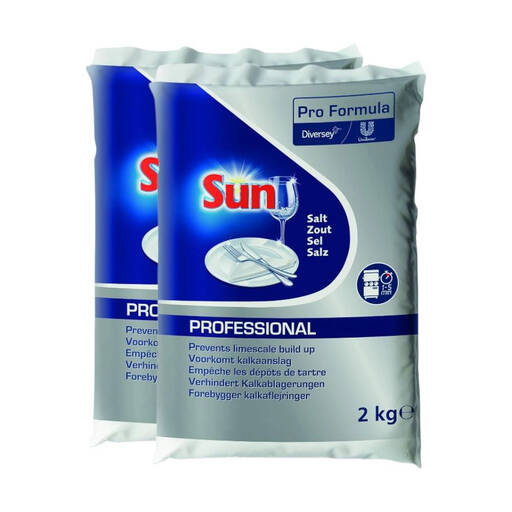
Why it's the right format: For a typical household, this 4 kg pack is the perfect middle ground. Enough stock to last several months without cluttering your cupboards. It's the ultimate practical choice for regular dishwasher maintenance.
Thanks to its high purity, this dedicated salt ensures the softener functions correctly, picking up where all-in-one tablets reach their limit. The result: spotless dishes, wash after wash.
A convenient 4 kg package, ideal for regular household use. It provides constant protection against limescale deposits.
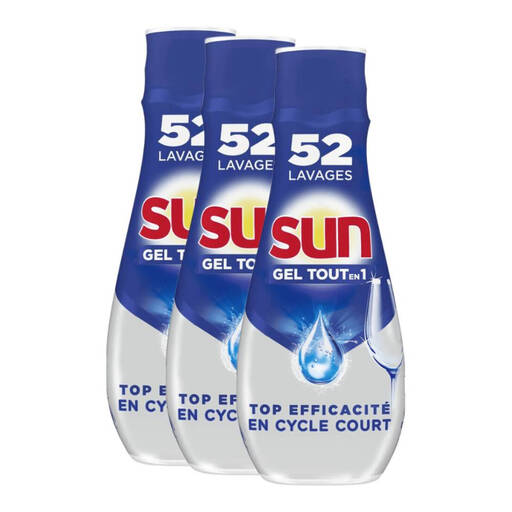
Why it's the right format: For those who live in an area with soft to medium-hard water and primarily want to simplify their routine. This gel combines detergent, rinse aid, and a salt function for an ultra-simple wash process.
It's an effective all-in-one solution for standard water hardness. The manufacturer (Unilever) itself specifies that for very hard water (>35°fH), adding regenerating salt is still recommended for perfect results.
A complete formula for maximum simplicity. Its dosage is flexible, and it remains effective even in short and low-temperature cycles.
We have compiled a complete and up-to-date selection of products that meet our selection criteria and current standards.
1. Can you put kitchen salt in the dishwasher? Absolutely not! Never use table salt, fine salt, or coarse food-grade salt. These salts contain impurities and additives (iodine, anti-caking agents) that can irreversibly damage your appliance's water softener. Their unsuitable grain size can also cause blockages. Only use a regenerating salt labelled "for dishwasher use".
2. How often should you add salt? Most modern dishwashers have an indicator light that turns on when the reservoir is nearly empty. There's no need to add it with every wash. Only refill the reservoir when the indicator tells you to. The refilling frequency depends on your water hardness and how many cycles you run: it can range from every few weeks to several months.
3. I use all-in-one tablets, do I still need salt? It all depends on the hardness of your water. All-in-one tablets are effective if your water is soft to medium-hard (generally up to 20-25°fH). If you live in an area with very hard water, the amount of salt in the tablet will be insufficient. In this case, it is highly recommended to continue filling the salt reservoir to ensure streak-free dishes and protect your dishwasher from limescale.