
Livraison le jour même ou le lendemain

Qualité garantie

Débloquez vos offres de bienvenue: Livraison GRATUITE | Jusqu'à -80 % | 30 jours d'essai gratuits à JoyPlus
Téléchargez l'application
Between washing up by hand, family dishwashers and professional equipment, dishwasher products and washing-up liquids don't all meet the same requirements. A powerful degreaser isn't necessarily suitable for an automatic machine, while a gentle liquid can struggle against a heavily soiled pan.
Before you head to the checkout, three common mistakes keep cropping up:
For hand-washed dishes, go for a degreasing washing-up liquid designed for use on a sponge or diluted in a bowl. A concentrated formula can reduce the amount needed, but plates, glasses and utensils should always be rinsed thoroughly with clean drinking water.
For a domestic dishwasher, choose a detergent specially formulated for the appliance's compartment: gel, powder or tablet. An "all-in-one" product can combine washing and protective functions, but check whether adding dishwasher salt or dishwasher rinse aid is still necessary, particularly depending on your water hardness.
Professional kitchens, meanwhile, use products compatible with automatic dosing and short cycles. A professional dishwasher product sold in bulk isn't necessarily suitable for a household machine.
People prone to irritation can look for a washing-up liquid for sensitive skin, a formula described as hypoallergenic or a fragrance-free washing-up liquid. These claims give an indication of the formulation, but they don't guarantee no reaction for every user.
Check in particular:
Even a hypoallergenic washing-up liquid should be kept out of reach of children. If irritation occurs, stop using it immediately and follow the instructions on the label.
A large bottle isn't necessarily the most economical. To compare offers, look instead at the volume, the recommended dosage and, where stated, the number of washes indicated. Concentrated washing-up liquid can be handy for everyday use, as long as you don't over-dose.
In a dishwasher, white marks on glasses and deposits can be caused by hard water, incorrect appliance settings or insufficient rinse aid. An anti-mark and anti-limescale dishwasher solution should be poured into the designated compartment, not directly into the tub.
To reduce your environmental impact, choose recyclable packaging, refills and formulas with a clearly identifiable certification. An eco-friendly washing-up liquid is still a detergent, so dosage and rinsing remain essential.
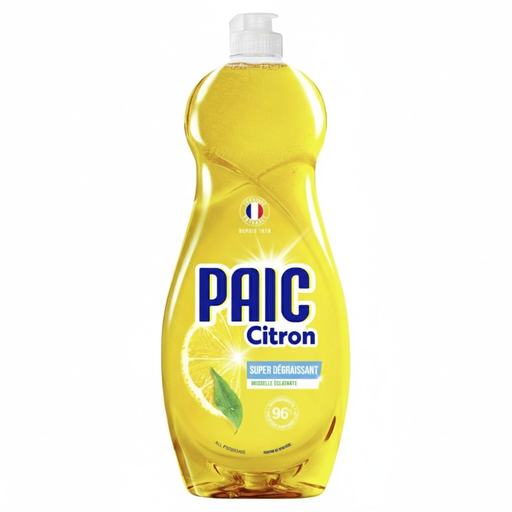
Why this pick suits this profile: with its 750 ml, this liquid is perfect for everyday hand washing of plates, pans and pots. The product page mentions a concentrated formula that can also be used with cold water.
Its use is clearly limited to hand washing, not automatic dishwashers. The risk of misuse is therefore low.
A family-sized 750 ml bottle, a lemon fragrance and a degreasing action claimed by the manufacturer to tackle stubborn residue.
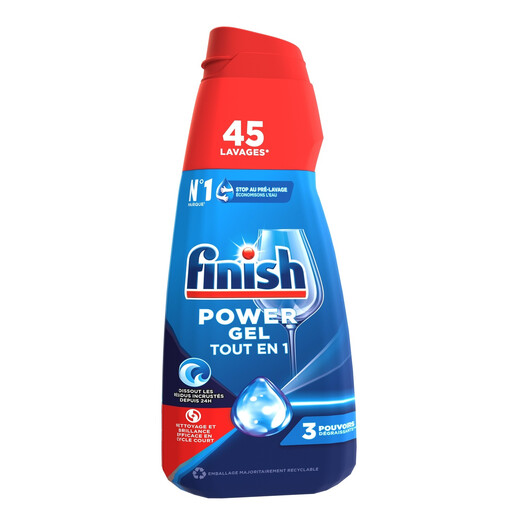
Why this pick suits this profile: this product is aimed at households that want to simplify dishwasher maintenance with a detergent described as all-in-one.
The product page states it should be placed in the detergent compartment and advises following the dosage indicated on the packaging.
A 900 ml format and a formula claimed to combine washing, glass protection and a rinse function.
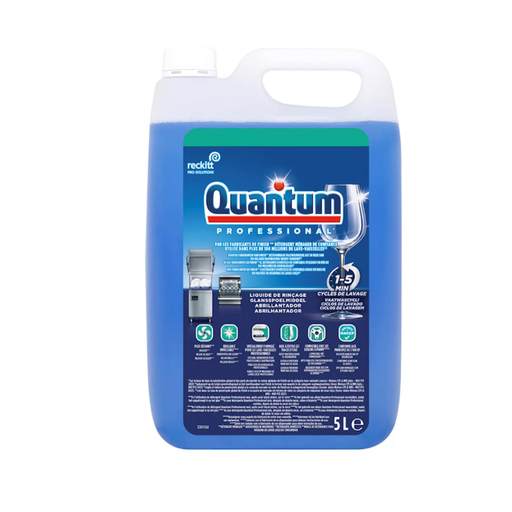
Why this pick suits this profile: its 5-litre container and claimed compatibility with automatic dosing systems make it ideal for restaurants, catering facilities and kitchens that run wash cycle after wash cycle.
It does not replace the washing detergent: it is poured into the rinse compartment and dosed according to water hardness and the machine model.
Designed for short cycles of 1 to 5 minutes, with a stated dosage of 0.2 to 0.5 ml per litre of rinse water.
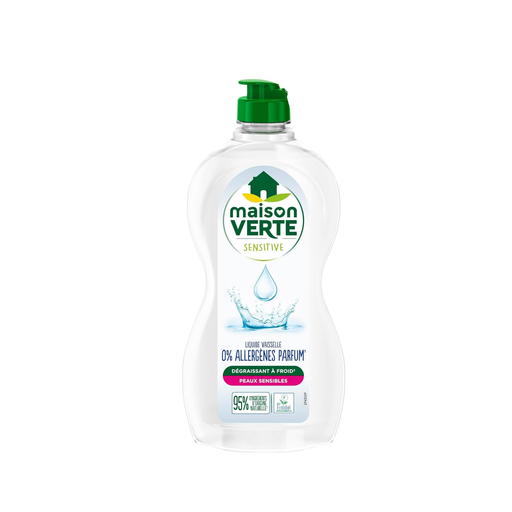
Why this pick suits this profile: the product page presents a fragrance-free formula, designed for sensitive skin and suitable for hand washing, including with cold water.
The absence of fragrance may suit consumers who want to limit fragrancing agents, without constituting a medical guarantee.
A formula claimed to be fragrance-free, the EU Ecolabel indicated on the product page and a degreasing effectiveness stated at 20 °C.
We've put together a comprehensive, real-time updated selection of products that meet these demanding criteria and European safety regulations.
No. Washing-up liquid intended for hand washing produces abundant foam that can overflow from the machine. Only use a detergent formulated for dishwashers, placed in the designated compartment.
Not necessarily. Some all-in-one formulas claim to include a rinse function. However, results vary depending on the machine, water hardness and the programme used. If you notice marks or insufficient drying, check the dispenser setting and consult your appliance's manual.
Start by finding out your water hardness from your local council or supplier. Then adjust the dishwasher's water softener and choose a dishwasher rinse aid that claims to act against marks or limescale. Follow the dosage recommended by the manufacturer to avoid both deposits and waste.