First, choose a format that suits the available space, your kitchen units and your connections: freestanding if you’re happy for the appliance to be on show, integrated if you have a suitable housing unit and door, or compact if space is limited and you have fewer dishes to wash. Then compare capacity, water and electricity use, Eco programme duration and noise levels using the information for the specific model. A smaller appliance may need to run more cycles, while an Eco programme can take longer.
Which option is right for you?
Households with lots of washing up
If plates, cutlery and dishes pile up between washes, check the number of place settings, as well as the basket layout and the space available in your kitchen. The stated capacity doesn’t tell you on its own how much room there is for large dishes.
People with an open-plan kitchen or a small home
Cycle noise can matter just as much as the space an appliance takes up. Compare the stated noise level in dB, then measure the space you have: a slimline appliance and a compact model that sits on your worktop solve different space constraints.
Households mindful of ongoing running costs
To compare regular use, ADEME recommends checking the kWh per 100 cycles and litres per cycle. Also look at capacity and Eco programme duration: an energy rating letter doesn’t tell you everything you need to know.
What should you check before buying?
Start by measuring the space and checking which connections are available. The energy label, as described by ADEME and the European Commission, then lets you compare the Eco programme data, capacity and noise levels of the models you’re considering.
Freestanding
Consider it: if you have a measured space and don’t want to fit a kitchen unit door to the appliance.
Bear in mind: the appliance will be on show. Don’t assume it will fit under a worktop without checking the dimensions and the model’s instructions.
Integrated
Consider it: if your kitchen has a suitable housing unit and you want the appliance to blend in with your kitchen furniture.
Bear in mind: the housing unit, door and connections must all be suitable for the model you choose. Bosch explains that a fully integrated model needs a kitchen unit door.
Compact
Consider it: when space is limited and you have relatively few dishes to wash between cycles.
Bear in mind: check that your pans and dishes will actually fit inside. Que Choisir features some worktop models with a capacity of 6 place settings, but that doesn’t apply to every model.
| Factor |
What to check |
Who it matters to |
| Capacity and space |
Number of place settings and basket layout; width, height and depth of the space available. |
If dishes pile up after meals, I want to avoid running another cycle without choosing an appliance that’s too large for my kitchen. Around 33% of consumers might make this their top priority. |
| Water and electricity |
kWh per 100 cycles and litres per reference cycle, compared for suitable capacities and usage patterns. |
With regular washes, I want to limit the water and electricity used in each cycle. This could be the top priority for around 25% of consumers. |
| Noise |
Noise level in dB and noise class on the model’s label. |
In an open-plan kitchen, I want to be able to run a wash without the appliance disturbing everyone at home. Nearly 25% of consumers might prioritise a quieter appliance above all else. |
| Cycle duration |
Stated duration of the Eco programme and the conditions for any other programmes you plan to use. |
After a meal, I need clean dishes to be ready at a time that fits my daily routine. For around 17% of consumers, this could take priority over other factors. |
Mistakes to avoid
-
Choosing based on the energy rating alone
Two appliances may not suit the same needs in terms of capacity or cycle duration. ADEME and the European Commission also point out that the label shows reference consumption, Eco programme duration and noise levels.
Compare these details across models that suit your dishes and available space, rather than looking at the letter alone.
-
Ordering an integrated model before measuring the housing unit
An incompatible housing unit or door can prevent installation, even if the stated width seems right.
Measure the width, height and depth, then compare them with the installation diagram and the model’s door requirements.
If the kitchen units or connections need altering, budget for this work separately: Electrolux states that its pre-installation service doesn’t include carpentry, plumbing or electrical work.
-
Assuming all compact models have the same capacity
Que Choisir features worktop models with a capacity of 6 place settings, while the Joybuy product listing for the Bob compact model states 2 place settings. So the word ‘compact’ doesn’t tell you how many dishes your model can hold.
Think about what builds up between washes, including large dishes, then check the capacity and internal space of the model you’re considering.
-
Forgetting about routine maintenance
Regular use involves more than loading the appliance and starting a cycle: consumables and maintenance also need attention.
Check the model’s instructions to find out which products you’ll need and how to care for the appliance.
Detergent, and depending on the model and how you use it, dishwasher salt and rinse aid all need replenishing.
Brands to know when comparing formats
Bosch
A brand worth looking at if you’re deciding between freestanding and integrated: its French-language pages cover both installation types.
- Bosch features freestanding models that are 45 or 60 cm wide and explains that its fully integrated models need a kitchen unit door.
- Check the dimensions, consumption and noise levels for the model you choose; don’t assume they apply to the whole range.
Electrolux
A useful reference when planning an integrated installation and distinguishing the appliance connections from other work needed in the kitchen.
- Its pre-installation guide reminds you that the connections must meet the requirements for the service described.
- This service doesn’t include carpentry, plumbing or electrical work; check the conditions that apply to your installation.
Bob
A compact model to consider when available space matters more than the amount of washing up you can do in one go.
- The Joybuy product listing for the Bob model states a capacity of 2 place settings and dimensions of 49 × 34 × 49 cm.
- Check that the capacity suits your everyday washing up; the listing for one model doesn’t describe all compact dishwashers.
Joybuy models to suit your space
These models let you compare the three formats covered here: integrated, compact worktop and freestanding. First choose one that can be installed in your home, then compare its capacity and energy label details with your washing-up routine.
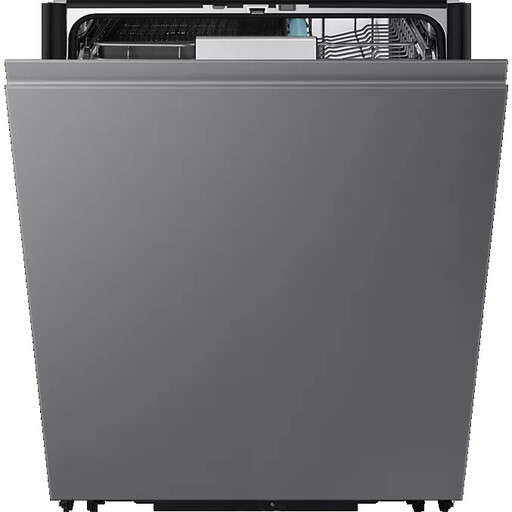 Image unavailable
Samsung DW90H79JAI0U1 Bespoke AI integrated dishwasher, 60 cm, 14 place settings
Worth considering for a fitted kitchen with a suitable housing unit and a household that wants to wash a large load in one go. The model name indicates an A energy rating; check the housing unit, door and noise levels for the programme you plan to use.
View on Joybuy
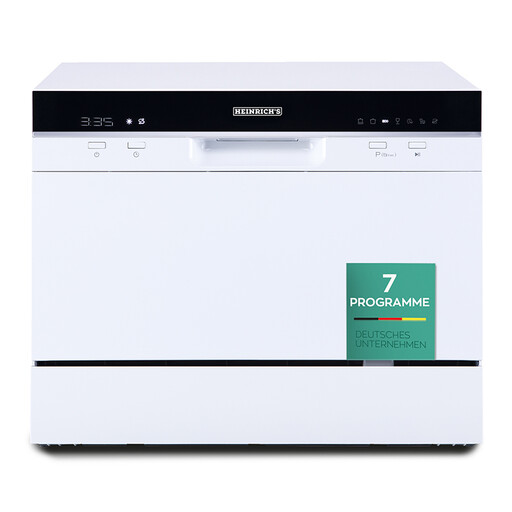 Image unavailable
Heinrich's HTG 8840 Weiss worktop dishwasher, 6 place settings
Consider it if you have a suitable worktop and your washing-up load is right for a capacity of 6 place settings. The product name lists 7 programmes, 47 dB and a D energy rating; check its full dimensions and connections, and make sure there’s room inside for your larger dishes.
View on Joybuy
 Image unavailable
Samsung DW60M6050FS freestanding dishwasher, 14 place settings
Worth considering if you have space for a freestanding model and want to fit in a large everyday load. The product name lists 7 cycles; check the model’s label for the Eco programme duration, then measure the space available.
View on Joybuy
 Image unavailable
Indesit D2F HK26 S freestanding dishwasher, 60 cm, 14 place settings
Worth comparing if you want to wash a full load in a space that suits a 60 cm freestanding model. The model name indicates an E energy rating; check the consumption figures and Eco programme duration on its label before deciding whether it suits regular use.
View on Joybuy
 Image unavailable
Samsung DW80H72YBB0U1 integrated dishwasher, 60 cm, 13 place settings
Worth considering for a kitchen with a compatible housing unit and door, if a capacity of 13 place settings suits your washing-up load. The model name indicates a B energy rating; check the installation dimensions, hinge and Eco programme details in the model documentation.
View on Joybuy
Frequently asked questions
What should you look for on a dishwasher energy label?
For a domestic dishwasher sold in the European Union, the label includes the A to G energy rating, kWh per 100 cycles, litres per cycle, capacity, Eco programme duration and noise levels, according to the European Commission. Compare these details for models that suit the amount of washing up you have: the rating alone won’t tell you how much space you need or how long a wash will take.
Is a long Eco programme suitable for everyday washing up?
Yes, as long as the programme finishes in time for you to have clean dishes when you need them. Check the duration stated for the specific model, and don’t assume that the Eco programme’s consumption figures apply to its other programmes.
What should you check before ordering an integrated dishwasher?
Measure the width, height and depth of the housing unit, then compare them with the model’s installation diagram and check which door it needs. Also check your existing connections; Electrolux’s pre-installation guide distinguishes connecting the appliance from carpentry, plumbing and electrical work.
Should you wait until the dishwasher is full?
ADEME recommends waiting until it’s full and avoiding a prewash to reduce water use. However, load it according to the model’s instructions, making sure nothing blocks the spray arms, and consider when you’ll need clean dishes again.


