Households that regularly share meals
You want to spend less time washing up and deal with a regular volume of plates, glasses, cutlery and dishes. Actual capacity, cleaning performance and consumption therefore become important factors.


A dishwasher becomes worthwhile when the regular volume of crockery and the time spent washing up by hand justify the purchase, provided your kitchen can accommodate the required connections and chosen format. A standard model is suitable for larger loads, while a 45 cm model makes better use of limited space but may mean running cycles more often. For very small loads washed straight after meals, handwashing may still be the most suitable option.
You want to spend less time washing up and deal with a regular volume of plates, glasses, cutlery and dishes. Actual capacity, cleaning performance and consumption therefore become important factors.
You are short on width or space but still want to automate the washing-up. Que Choisir states that 9-place-setting models can suit a small family; however, you will need to accept a more limited capacity and possibly more frequent cycles.
If the appliance runs during meals, conversations, working from home or at night, compare the stated noise level in dB and the noise class alongside its capacity and consumption.
Choose this when: your kitchen can accommodate a standard format and your regular loads are larger than a compact model can handle without very frequent washing cycles.
Check: dimensions, usable basket capacity, connections and noise levels, particularly in an open-plan kitchen.
Choose this when: the available width is the deciding factor and the daily volume suits a small household.
Plan for: comparing the stated capacity with the dishes and saucepans you normally use. A narrow format is not automatically cheaper to run.
Keep this option when: you have very small loads that are washed straight after meals, or when there is no realistic space or connection available.
Bear in mind: water usage depends on the volume, flow rate and your rinsing habits.
| Priority | What to check | Your needs |
|---|---|---|
| Capacity and positioning | Compare the number of place settings with the volume that actually builds up. Check the width, installation type, basket layout and storage space for dishes and saucepans. | I want to reduce handwashing without choosing an appliance that is too large or too small for the household’s meals. |
| Water and energy | Check the kWh per 100 cycles, litres per cycle, duration of the Eco programme and capacity on the same label. Do not compare appliances with different capacities as though they offered the same level of service. | I want to keep consumption under control without relying solely on the energy class. |
| Noise comfort | Compare the noise level in dB and the noise class. If independent tests are available for the exact model, they can supplement the stated figures. | Cycles should not cause too much disruption during meals, conversations, working from home or at night. |
| Installation | Confirm the water inlet, waste outlet, power supply and exact dimensions. For an integrated model, also check the housing, ventilation and door-panel compatibility. | I want to avoid choosing a format that cannot be installed correctly in the kitchen. |
The class does not tell you the capacity, litres per cycle, kWh per 100 cycles, Eco programme duration or noise level. Two appliances with similar classes may therefore suit very different uses.
Compare the complete label for models with a capacity and installation type compatible with your kitchen.
A narrow model may suit a small family, but Que Choisir points out that it may need to run every day and is not necessarily cheaper than a wider appliance.
Assess how much crockery builds up between washes and consider how you will fit the dishes, saucepans and containers you use every day.
More frequent cycles can also increase the use of consumables and energy and water consumption when the capacity is insufficient.
A dishwasher needs water, electricity and a waste outlet. An integrated model also brings housing and door-panel requirements, even when its capacity suits the household.
Measure the space, consult the installation plan and check the connections before ordering.
An unprepared installation may require plumbing, electrical or cabinet work.
Consumption also depends on how you use the appliance. ADEME advises against pre-rinsing and recommends waiting until the dishwasher is sufficiently full before starting a cycle.
Choose the right programme, load the baskets without overfilling them and set aside space for crockery until there is enough for an effective wash.
Worth considering for a 45 cm freestanding dishwasher with an adjustable basket, automatic door opening during drying, leak protection and connectivity, as featured on the SPS4EMW17E model.
Worth considering for a 60 cm integrated installation requiring automatic dosing, as featured on the G 7673 SCVi AutoDos Excellence model.
Worth considering when a fully integrated 45 cm appliance is required; the KDIS28122 illustrates this compact configuration.
Joybuy 60 cm standard dishwasher options for households that want to handle a regular volume of crockery after meals.
 Image unavailable
For a household that regularly builds up crockery and has space for a freestanding appliance.
14 place settings, 9.5 L per Eco cycle, 75 kWh per 100 cycles and a stated noise level of 41 dB(A). Third cutlery drawer, adjustable upper basket and half-load option.
Check the overall dimensions and clearances: the detailed dimensions provided do not clearly correspond to the 60 cm designation.
 Image unavailable
Worth considering for family loads containing plates, dishes, saucepans and cutlery.
14 place settings, 7 cycles, 95 kWh per 100 cycles, 10.5 L per cycle and a stated noise level of 44 dB. Third basket, adjustable basket and half-load option.
A freestanding installation requires suitable space and connections in the kitchen.
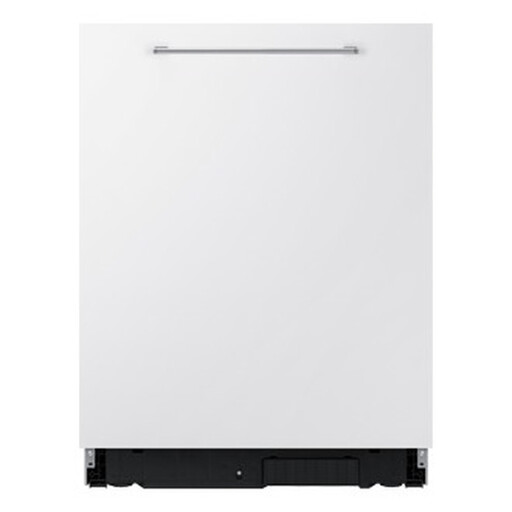 Image unavailable
For a fitted kitchen requiring a fully integrated dishwasher with family-sized capacity.
13 place settings and a stated noise level of 44 dB(A). Height-adjustable middle basket with three levels, flexible tines, AutoRelease door opening and Wi-Fi connectivity listed.
Confirm the housing, door panel, fixed-hinge installation, connections and app compatibility before choosing.
 Image unavailable
A freestanding option for shared meals that generate a large load of crockery.
14 place settings, stated water consumption of 9.5 L and a stated noise level of 46 dB. Adjustable upper basket, six programmes and delayed start.
Compare the complete energy label, particularly the kWh per 100 cycles and Eco duration, then check the space and connections.
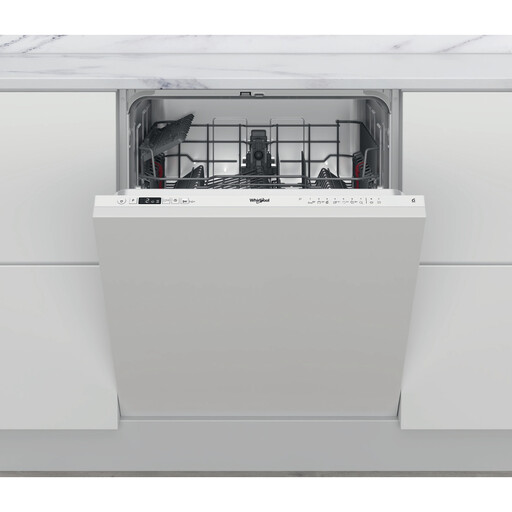 Image unavailable
Worth considering for a kitchen with an integrated door panel and a need for family-sized capacity.
14 place settings and a stated noise level of 46 dB. Adjustable upper basket, cutlery basket, delayed start, stainless-steel tub and adjustable feet.
Check the housing plan, ventilation, door-panel compatibility, connections and complete energy label.
Confirm the water inlet, power supply, waste outlet and space required for the exact model. Bosch identifies these three connections as essential for installation; for a built-in appliance, follow the model’s manual and installation plan precisely, or use a professional installer if necessary.
Compare the A to G class, kWh per 100 cycles, litres per cycle, Eco programme duration, capacity and noise level. ADEME and the European Commission state that this information appears on the label; above all, compare appliances suited to the same capacity and installation requirements.
The Eco programme is designed to limit water and electricity consumption, but it can take a long time, as shown on the label. To reduce consumption, ADEME recommends not pre-rinsing and waiting until there is a sufficiently full load, without overfilling the appliance to the point that cleaning is affected.
No. Que Choisir states that 45 cm models are not necessarily cheaper than models with a larger capacity. Compare the label’s consumption figures, any installation requirements, consumables and the likely cycle frequency for your household.