First, choose a dishwasher with enough capacity for the dishes that build up between cycles, and dimensions that suit your kitchen. A 45 cm or compact model may be a good fit when space is tight, but size alone doesn’t guarantee enough capacity or low noise. In an open-plan kitchen, compare the energy label and installation requirements for the specific model. If you don’t have many dishes and don’t mind washing them by hand, you could stick with handwashing.
Who is this advice for?
Small households with limited space
If you don’t run the dishwasher after every meal, compare the dishes that build up between cycles with the stated place-setting capacity. Width, depth and installation type matter just as much as capacity. Bosch, Electrolux and Miele all offer ranges designed for compact kitchens, with features that vary by model.
People who are sensitive to noise in their living space
If your kitchen opens onto the living room, check the noise level before you buy. The ADEME recommends looking at the dB(A) rating and noise class on the energy label rather than relying on the word “quiet”.
People replacing an appliance or fitting out a kitchen
An integrated model needs to fit the housing unit, door panel and planned connections. Electrolux support also highlights the importance of levelling the appliance and checking the condition of the hoses. If leak protection is a priority, check exactly what the model’s documentation says and what conditions apply.
Which features should you prioritise?
If you want to spend less time washing up by hand, start by comparing the amount of washing-up you have with the space available. A freestanding model leaves the surrounding cabinetry visible, while an integrated one needs a compatible housing unit and installation. A compact model can also be integrated; if you have few dishes and don’t mind washing them by hand, you may not need to buy an appliance at all.
| Feature |
What to check |
Who it matters to |
| Noise in your living space |
Compare the dB(A) ratings and noise classes on the energy labels of the models you’re considering, ideally at similar capacities. |
I want to run a cycle without the appliance disturbing what’s going on in the living room; around 31% of consumers put acoustic comfort at the top of their list of needs. |
| Capacity and dimensions |
Compare the place-setting capacity and dimensions with the dishes you have between cycles; if it’s an integrated model, check the housing unit too. |
In a small kitchen, I want enough room for the dishes from my meals without giving up a disproportionate amount of space. For around 25% of consumers, getting this balance right is their top priority. |
| Installation and leak protection |
Check the connections, installation instructions and exact wording of any leak protection advertised for the model. |
If I’m replacing an appliance or having an integrated model installed, I want to avoid a setup that doesn’t suit the cabinetry or water connections. Installation and leak prevention come ahead of other features for around 25% of consumers. |
| Running costs |
Check the kWh per 100 cycles, litres per cycle and Eco programme duration, taking capacity into account. |
I plan to use the appliance regularly and want to compare its consumption using the same reference programme. Running costs are the main concern for around 19% of consumers. |
Mistakes to avoid
-
Choosing a model because it’s described as “quiet”
In an open-plan kitchen, this description doesn’t help you compare two appliances. The ADEME says that an increase of three decibels corresponds to almost twice the noise.
Check the dB(A) ratings and noise classes on the energy labels of the specific models you’re comparing, ideally at similar capacities.
-
Assuming a compact model is always enough for a small household
A smaller format takes up less space, but it won’t necessarily reduce the number of cycles you need to run. For example, Electrolux lists its integrated compact ESL2500RO as having 6 place settings and a noise level of 49 dB(A); these figures don’t apply to other compact models.
Work out how many dishes build up between washes, then compare capacity, dimensions and noise before choosing this format.
-
Relying on a leak-protection label instead of correct installation
Even if a model is advertised as having leak protection, you still need to follow its instructions. Electrolux support lists incorrect levelling, a badly fitted panel and blocked hoses among the possible causes of leaks.
Check the scope of the protection in the model’s documentation, along with the installation, connection and levelling instructions.
-
Assuming Eco programme figures apply to every cycle
The consumption figures used on dishwasher energy labels are based on the Eco programme under the conditions set out in European regulations. A quick or intensive programme won’t necessarily use the same amount.
Use the label to compare models on a like-for-like basis, then check the manual for the programmes you plan to use.
Brands to consider
Bosch
Bosch offers 45 cm and 60 cm freestanding dishwashers, with the 45 cm format potentially suiting kitchens where space is limited.
- Bosch lists an energy efficiency class B, 8.7 L per Eco cycle and noise class B for its SPS4EMW17E.
- These figures apply to the SPS4EMW17E. Check the energy label for the specific Bosch model you’re considering.
Electrolux
Electrolux offers integrated compact models, among other options, and publishes installation instructions.
- The brand lists 6 place settings, a width of 55 cm and a noise level of 49 dB(A) for its compact ESL2500RO.
- A compact format doesn’t guarantee low noise. Check the capacity and energy label for the model you choose too.
Beko
Beko offers freestanding dishwashers, some of which are described as having overflow and leak protection.
- Beko’s published range includes the 60 cm BDFN26531X, with a stated capacity of 15 place settings.
- The protection listed for this model shouldn’t be assumed to apply across the whole range. Check the product details and manual for each model.
Miele
Miele offers a fully integrated 45 cm dishwasher, among other options, for a space designed to fit this format.
- Miele lists a noise level of 45 dB and mentions an “AquaSécurité System” for the G 5590 SCVi SL Active.
- These specifications are for this model, according to Miele. They don’t demonstrate how effective the protection is or whether it applies to every appliance from the brand.
Dishwashers to consider on Joybuy
Consider these freestanding or integrated models if you’re looking to equip an open-plan kitchen for regular meals. Their capacity and format are listed below; then compare the energy label, noise level and installation instructions with your priorities.
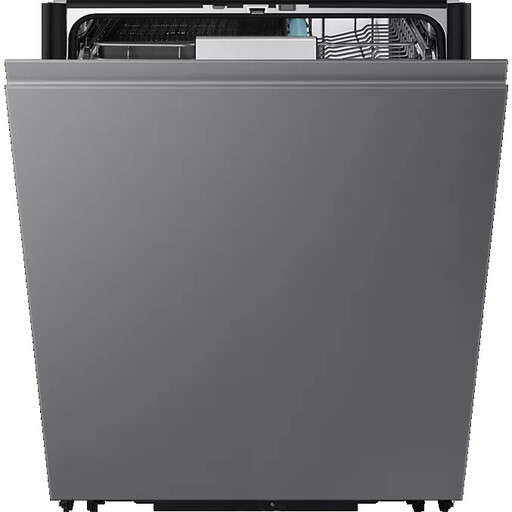 Image unavailable
Samsung DW90H79JAI0U1 Bespoke AI, integrated, 60 cm, 14 place settings
Worth considering if you want to fit a 14-place-setting appliance into your kitchen cabinetry.
The title lists a width of 60 cm and energy efficiency class A. Check the required housing unit dimensions, connections and noise level in the model documentation.
View on Joybuy
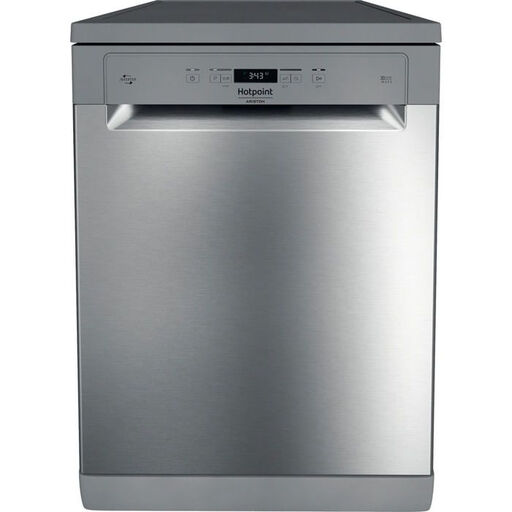 Image unavailable
Hotpoint HFC3C32WX, freestanding, grey, 14 place settings
Consider this if you have a suitable space and connections for a freestanding appliance with 14 place settings.
The title lists energy efficiency class D. Check the energy label to compare noise and consumption, and consult the manual for connection requirements.
View on Joybuy
 Image unavailable
Samsung DW60M6050FS, freestanding, grey, 14 place settings
Worth considering if the dishes that build up between cycles justify a stated capacity of 14 place settings.
The title mentions seven programmes. Compare the noise and consumption figures on the energy label, then check the space and connections required.
View on Joybuy
 Image unavailable
Samsung DW80H72YBB0U1, integrated, 60 cm, 13 place settings
Consider this if you’re looking for an integrated dishwasher with 13 place settings for regular meals.
The title lists a width of 60 cm and energy efficiency class B. Check the housing unit, door fitting and noise level of the programme you plan to use.
View on Joybuy
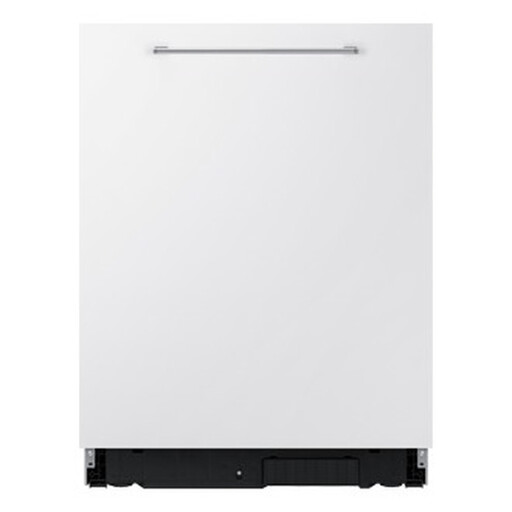 Image unavailable
Samsung DW70H72WCB0U1, integrated, 60 cm, 13 place settings
Worth considering if a stated capacity of 13 place settings suits your meals and you want to integrate the appliance into your kitchen cabinetry.
The title lists a width of 60 cm and energy efficiency class C. Check the housing unit dimensions, door fitting, energy label and leak-related instructions.
View on Joybuy
Frequently asked questions
What should you look for on the energy label for an open-plan kitchen?
Compare the energy efficiency class, kWh per 100 cycles, litres per cycle, capacity, Eco programme duration, dB(A) rating and noise class. European regulations on dishwasher energy labelling use the Eco programme to establish the reference figures. These are useful for comparing models, but don’t automatically describe a quick or intensive cycle.
Is a compact dishwasher always suitable for one person or a couple?
No. Check how many dishes build up between cycles, as well as the capacity and noise level of the specific model. Electrolux lists 6 place settings and a noise level of 49 dB(A) for its compact ESL2500RO, while Bosch also presents the 45 cm format as an option when space is limited. These examples aren’t enough to compare every model.
How do you choose a dishwasher with leak protection?
Look for the exact wording of the protection and its operating conditions in the product details and manual for the model you choose. Beko and Miele mention systems on some models, but their names don’t prove that the protection is equivalent. You should also follow the levelling and connection instructions highlighted by Electrolux support.


