First, choose a dishwasher that fits the available space. A freestanding model doesn’t need a furniture door, while an integrated model requires a suitable housing space and, depending on its design, a compatible door panel. Then compare capacity, noise, energy and water consumption, and Eco programme duration across the models you’re considering. In an open-plan kitchen, a quiet model won’t make up for insufficient capacity or unsuitable dimensions.
Who is this guide for?
Households sensitive to noise in the living space
If your kitchen opens onto the living room, where you work, eat or spend your evenings, compare the noise level in decibels and the noise class. ADEME lists both as useful points of reference when choosing a dishwasher.
House shares and households with lots of washing-up
When several people use the kitchen, estimate how much washing-up builds up between cycles. The number of place settings helps you compare capacity; also look at the basket layout and when a cycle can run.
Small or already-fitted kitchens
If the appliance needs to fit in a specific space, measure the available dimensions before choosing between a freestanding, integrated or compact model. Bosch’s guides, for example, distinguish between these formats based on their installation and fitting requirements.
Which criteria should you compare?
A suitable housing space and door panel point towards an integrated model; if there’s no furniture door, consider a freestanding model. A compact model suits smaller loads and limited space, while hand-washing remains an option if no appliance fits the space or your usage habits.
| Criteria |
What to check |
Who is it for? |
| Capacity |
Compare the number of place settings with the amount of washing-up between cycles, then check that the appliance will fit in the available space. |
In a kitchen used by several people, I want to avoid washing-up piling up before the next cycle; around 28% of consumers prioritise capacity. |
| Noise |
Compare the decibel rating and noise class shown on the label, bearing in mind when the living space is in use. |
When the dishwasher is running near the living room, I want to be able to work or chat there; quiet operation is the top priority for around 28% of consumers. |
| Installation |
Measure the width, height and depth; for an integrated model, also check the installation diagram and door panel compatibility. |
With a fitted kitchen, my first priority is finding an appliance that fits in the space; around 22% of consumers prioritise this compatibility. |
| Programmes and consumption |
Compare the kWh per 100 cycles, litres per cycle and duration of the Eco programme, without confusing these figures with those for a short programme. |
If several people need to share washing-up times, I’m looking for a cycle that fits their routine and keeping an eye on the stated consumption; this is the top consideration for around 22% of consumers. |
Mistakes to avoid
-
Overlooking differences in noise without checking the label
In an open-plan kitchen, you can hear the cycle from the living space too. Choosing based only on the format or range name won’t help you find a noise level that suits you.
Compare the dB ratings and noise classes of the models on your shortlist, then think about when you’ll run the dishwasher.
-
Choosing based on the energy class alone
The energy class doesn’t tell you everything about water consumption or the duration of the Eco programme. A long cycle can make it harder to organise a shared kitchen, even if the stated consumption figures appeal to you.
According to ADEME, the label also shows consumption figures and the duration of the Eco cycle. Compare these figures for every model you’re considering.
-
Ordering an integrated model before measuring the housing space
The stated width alone doesn’t confirm that a dishwasher will fit or that its door panel will suit your kitchen units.
Measure the available width, height and depth, then compare them with the installation diagram for the exact model. Also check which door panel is required.
Depending on the model and kitchen, you may need to buy an additional door panel.
-
Assuming a compact model will be enough for several people
A smaller footprint can mean limited capacity. For example, Electrolux lists one built-in compact model with 6 place settings: that figure applies to this model, not all compact dishwashers.
Work out how much washing-up builds up between cycles before choosing a smaller format; compare its capacity with other appliances that will fit in your kitchen.
Brands to know when comparing formats
Bosch
Bosch’s French website features freestanding, integrated and compact dishwashers.
- Its guides explain the differences in installation and what to measure in an existing kitchen.
- This general guidance doesn’t replace checking the label and installation diagram for your chosen model.
Miele
Miele also offers 45 cm integrated models, worth considering when width is limited.
- Miele’s product page for the G 5790 SCVi SL gives a noise level of 44 dB, a useful figure to include when comparing this model.
- This figure doesn’t represent the noise level of every Miele dishwasher; check the capacity and dimensions too.
Electrolux
Electrolux offers both 60 cm freestanding appliances and compact integrated models.
- Its product pages let you compare different capacities: 14 place settings for the ESG88600SX and 6 for the compact ESL2500RO, according to Electrolux.
- These examples aren’t enough to compare the programmes or draw conclusions about the brand as a whole.
Beko
Beko offers freestanding and integrated appliances, including models with a reduced width.
- Beko states that its 45 cm BDFS26040X freestanding model has 10 place settings, making it a useful point of comparison for a narrow space.
- Check the full dimensions, noise level and label for the model you choose rather than assuming the same features apply to other models.
Models to consider on Joybuy
These appliances illustrate two options for your kitchen: 14-place-setting freestanding models for larger everyday loads, and a tabletop compact model for smaller loads. Compare their features with your available space and schedule before choosing.
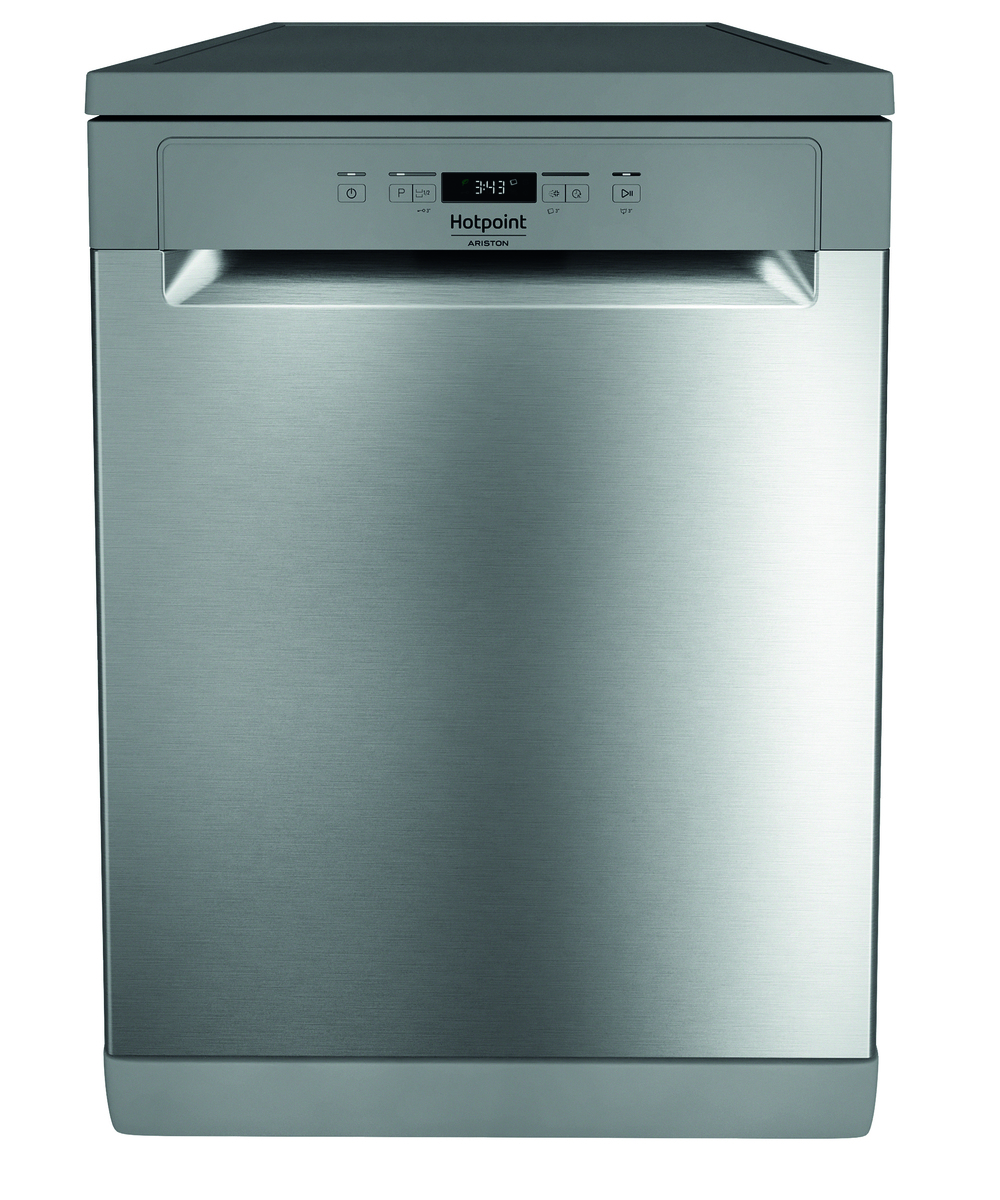 Image unavailable
Hotpoint H3FFD636X, 60 cm freestanding, 14 place settings
If your household gets through a lot of washing-up between cycles, compare its 14 place settings with your usual load. The model name indicates a width of 60 cm and energy class D; also check that the Eco programme duration fits your schedule.
View on Joybuy
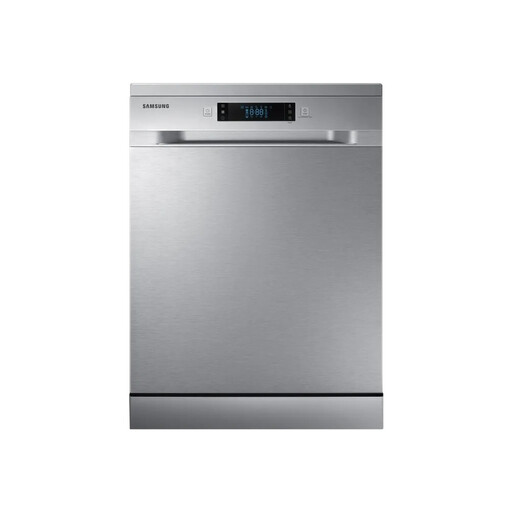 Image unavailable
Samsung DW60M6050FS, freestanding, 14 place settings
If several people will share the dishwasher, consider whether its capacity of 14 place settings matches the amount of washing-up between cycles. The product name lists seven programmes; compare the Eco cycle duration and dimensions with your requirements.
View on Joybuy
 Image unavailable
Indesit D2F HK26 S, 60 cm freestanding, 14 place settings
If several people fill the dishwasher quickly, compare its stated 14 place settings with your usual loads. The product name specifies a width of 60 cm and energy class E; check the kWh per 100 cycles and Eco programme duration to compare its running requirements with other models.
View on Joybuy
 Image unavailable
Hotpoint H4FD641A, 60 cm freestanding, 14 place settings
In an open-plan kitchen, its stated noise level of 41 dB is a useful figure to compare with other models, but it doesn’t tell you how noisy it will seem in your home. The product name also lists 14 place settings and energy class C; check the Eco programme duration and the space needed for installation.
View on Joybuy
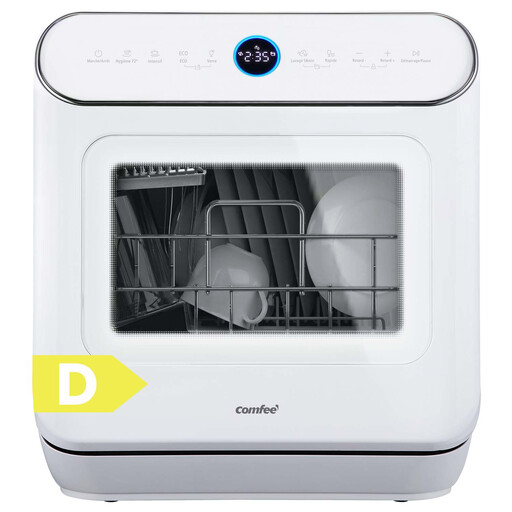 Image unavailable
COMFEE CDWMT305WD, compact tabletop, 3 place settings
If you have a small amount of washing-up and space on your worktop, check that its stated capacity of 3 place settings will be enough between cycles. The product name lists seven programmes, a delay start of up to 24 h and energy class D. Also bear in mind that you need to fill the water tank manually, and check the noise level before choosing it for an open-plan room.
View on Joybuy
Frequently asked questions
What should you compare first for an open-plan kitchen?
Start by comparing the dimensions and capacity, then look at the noise level in dB and its class. ADEME also notes that the label shows consumption figures and the duration of the Eco cycle. These figures matter if the dishwasher will run while you’re using the living space.
Can you replace a freestanding model with an integrated one?
Yes, if the space and kitchen units are compatible with the integrated model you’ve chosen; the two types aren’t interchangeable without checking. Measure the housing space and consult the installation diagram, especially its requirements for the door panel.
What is the repairability index for a new dishwasher?
In France, the repairability index tells you how easy an appliance is to repair, not its capacity or noise level. The Ministry for the Ecological Transition states that dishwashers are among the product categories covered by this index, which is scored out of 10 and displayed both in shops and online.
How can you reduce the number of cycles in a shared kitchen?
Choose a capacity that suits the amount of washing-up produced between cycles and agree on times that work for everyone using the room. ADEME recommends waiting until the dishwasher is full and not pre-rinsing dishes; still, check that the duration and noise level of your chosen cycle suit everyone in the household.


