In an unfitted kitchen, start by measuring the space and checking which connections are available. A freestanding dishwasher gives you more flexibility, while an integrated model needs a compatible housing unit and cabinet door. If space is tight, choose between a slimline and a compact appliance based on how much washing-up you generate. For an open-plan kitchen, also compare the stated noise level, then check energy consumption and the Eco cycle duration on the energy label.
Who are these criteria useful for?
People with an open-plan kitchen
If your dishwasher runs near the living area, compare its stated noise level in dB and its noise class, as well as the Eco cycle duration. Que Choisir highlights how important noise is in an open-plan kitchen: a programme described as quiet is no substitute for checking these figures.
Households fitting out an unfitted kitchen
You’ll need to find a place for the appliance and check that a water supply, waste outlet and electrical supply are available. According to Que Choisir, a freestanding model offers more flexibility than an integrated one; with the latter, you’ll need to check the housing unit and cabinet door in particular.
Small households with limited space
A 45 cm or compact appliance may suit a tight space. Before opting for a smaller capacity, compare the stated place settings with your everyday washing-up, and remember to allow for large dishes and enough room to open the door.
What should you check before choosing?
First, choose between a freestanding and an integrated model to suit your kitchen layout. Then compare the width, capacity and noise level of each model that fits the space.
Freestanding
Consider this if: there’s no cabinet or door planned for the appliance and you want more flexibility with your kitchen layout.
Bear in mind: the appliance will be visible in your kitchen; installation under a worktop must be compatible with the model you choose.
Integrated or semi-integrated
Consider this if: your kitchen design includes a housing unit and cabinet door for the appliance.
Bear in mind: the door, its fixings and the installation must be suitable for the appliance; a semi-integrated model has a visible control panel.
| Criteria |
What to check |
Consumers concerned |
| Space and connections |
Measure the space, including with the door open, then check the water supply, waste outlet and electrical supply against the model’s instructions. |
If my kitchen isn’t already fitted, I need to make sure I can position and connect the appliance before choosing its size. Around 33% of consumers would put this compatibility first. |
| Noise in the living area |
Compare the dB level, noise class and Eco cycle duration shown on the energy label. |
If my kitchen opens onto the living area, I want to minimise disruption while people are talking or working. For around 27% of consumers, noise would be the top priority. |
| Capacity in a small space |
Compare the stated place settings with your usual washing-up and check there’s room for bulky dishes. |
With limited width available, I want to save space without having to run cycles too often. Around 20% of consumers would put this useful capacity first. |
| Consumption and extra costs |
Check the kWh per 100 cycles, litres per cycle and Eco cycle duration; also check what’s involved in installing your chosen type of appliance. |
I want to take account of water and electricity use, as well as delivery and any cabinet door I might need. Around 20% of consumers would put these costs first. |
Mistakes to avoid
-
Ordering an integrated model after checking only its width
The housing unit, worktop, cabinet door and door fixings must also be suitable for the appliance. A cabinet door and its installation may involve extra elements in your project.
Ask for the model’s installation diagram and door fitting instructions, then confirm they’re compatible with your planned kitchen.
-
Assuming a low stated noise level means no disruption
In an open-plan room, the time the appliance runs and the programme duration also matter to the people in the room.
Compare the dB level, noise class and Eco cycle duration of the models you’re considering, then think about when you’ll run the cycles.
-
Choosing a 45 cm or compact model simply because it fits
If the capacity is too small for your usual washing-up, you may end up running more cycles, despite saving space.
Work out how many place settings you need, and consider your saucepans, large dishes and entertaining habits too.
-
Looking at the energy rating alone
The rating doesn’t tell you everything about water consumption, cycle duration or installation requirements.
Compare all the information on the energy label, and check delivery, installation and old-appliance collection arrangements separately.
Brands to consider
Bosch
Bosch’s range includes 45 and 60 cm integrated appliances, as well as compact models. It’s worth considering if your kitchen design includes a housing unit.
- Bosch provides information on water and electricity use, drainage and appliance integration.
- You’ll still need to check the housing unit dimensions, cabinet door and connections in the instructions for your chosen model.
Beko
Beko offers freestanding, built-in and fully integrated models, including 45 and 60 cm widths.
- The range includes 45 cm freestanding models stated to hold 10 place settings.
- Check capacity, consumption and drying features for each model rather than assuming they’re the same across the brand.
Whirlpool
Whirlpool offers freestanding appliances and 45 cm models to consider when space is limited.
- These two formats let you compare the flexibility of freestanding installation with the space savings of a narrower appliance.
- Check the exact width, noise level and consumption figures on the product details for your chosen model.
Miele
Miele offers integrated, compact and freestanding dishwashers, including models to consider for a narrow space.
- The Miele G 5790 SCVi SL product details state a noise level of 44 dB for this 45 cm fully integrated model.
- This noise level doesn’t apply to other models; check the housing unit and connections for the specific model too.
Dishwashers for your kitchen layout
These Joybuy models include freestanding appliances, models designed to fit into a cabinet, and a compact worktop model. Compare each one with your kitchen measurements and the amount of washing-up you generate; the width and connections must suit your installation.
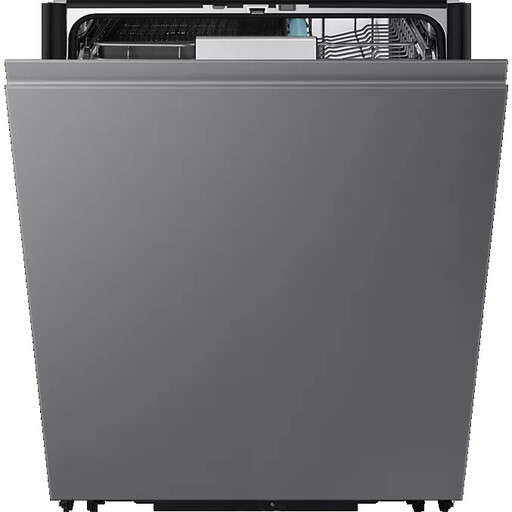 Image unavailable
Samsung DW90H79JAI0U1 Bespoke AI, 60 cm integrated, 14 place settings
Consider this if your kitchen plans include a cabinet designed for an integrated dishwasher. The title states a width of 60 cm, 14 place settings and an A energy rating; check the housing unit dimensions, cabinet door and connections before ordering.
View on Joybuy
 Image unavailable
Hotpoint H4FD641A, white freestanding, 60 cm, 14 place settings
A freestanding option for a kitchen without a cabinet door planned for the appliance. The title states a noise level of 41 dB and a C energy rating; measure the space and check the model’s dimensions and installation requirements.
View on Joybuy
 Image unavailable
AEG FSB34707Z, fully integrated, 14 place settings
Consider this if you have a housing unit and cabinet door planned. The title states a C energy rating, but its 60 cm width doesn’t match the width given in the product description table. Confirm the exact dimensions and compatibility with your housing unit before buying.
View on Joybuy
 Image unavailable
Whirlpool WFP5O41PLGX, 60 cm freestanding, 14 place settings
A freestanding model to consider if you don’t have a cabinet door planned for the appliance. The title states a stainless steel finish and a C energy rating; the published dimensions conflict, so confirm the exact measurements before deciding where to put it.
View on Joybuy
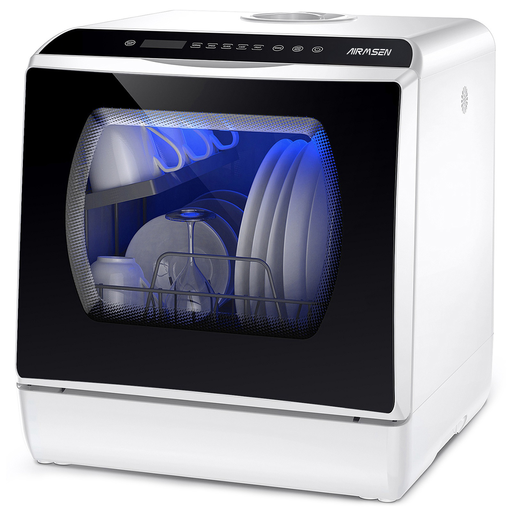 Image unavailable
AIRMSEN worktop dishwasher with 5 L tank
Consider this if you have room on your worktop but nowhere for a full-size appliance. The title states a built-in 5 L tank and 5+1 cycles; not needing a direct water supply doesn’t remove the need to plan for drainage, an electrical supply and space for the appliance.
View on Joybuy
Frequently asked questions
Which connections should you check before buying a dishwasher?
Check that the appliance can be connected to a water and electricity supply, and that wastewater can drain away. Confirm the requirements in the model’s instructions, and have any new or altered connections checked before planning the work.
What should you compare on the energy label for an open-plan kitchen?
In particular, compare the noise level in dB and its class, then the Eco cycle duration if the appliance will run near your living area. ADEME says the label also gives the capacity, water consumption per cycle and energy consumption per 100 cycles. These details can help you choose between models that will fit your kitchen.
Is a 45 cm dishwasher suitable for a small household?
It can be, provided its capacity suits your usual washing-up and its full dimensions fit the available space. Que Choisir lists 45 cm models stated to hold 9 place settings; also check that there’s room for your large dishes and consider how often you’ll need to run a cycle.
What else do you need for an integrated dishwasher?
You’ll need a compatible housing unit and cabinet door, plus installation and the connections required by the model. Bosch’s guidance explains that an integrated dishwasher has a cabinet door fitted to it. Ask for the installation diagram before finalising your kitchen plans.


