Households that spend time in an open-plan kitchen
If you eat, chat, watch TV or work near the appliance, compare its noise level while keeping in mind the capacity you need for your usual loads.


For an open-plan kitchen, start by comparing the noise level and noise class on the energy label. According to ADEME, classes A and B are a useful guide when looking for a quiet appliance. Next, choose a built-in or freestanding model that suits the space, without assuming that one type will be quieter than the other. Finally, check the capacity and duration of the programmes you plan to use. A delay-start function changes when the noise occurs, but does not make it go away.
UFC-Que Choisir points out that noise matters more when the dishwasher shares space with your living area. Where the appliance is installed and when you run it will also affect which features to prioritise.
If you eat, chat, watch TV or work near the appliance, compare its noise level while keeping in mind the capacity you need for your usual loads.
First, check the dimensions, connections and whether the appliance needs to accommodate a furniture door panel. A model with an appealing noise rating will only be useful if it fits the space.
A delay-start function can help you avoid running the appliance during meals or leisure time. If the cycle needs to start late, also consider how noisy the appliance will be once it is running and, if you live in a flat, check the building rules.
For an open-plan kitchen, first rule out appliances that will not fit the space. Then compare the noise ratings of models that offer the capacity you need. The European regulation uses the Eco programme to measure, among other things, the noise emissions shown on the label; this figure may not reflect the noise levels of other programmes.
| Criterion | What to check | Who this matters to |
|---|---|---|
| Noise in the living area | The dB level and noise class of the exact model; if possible, an independent test covering the programmes you use. | If people chat or relax nearby, I want to minimise disruption while the cycle is running. Around 33% of consumers prioritise a quiet living area. |
| Installation | The available dimensions, connections and whether the appliance is compatible with any furniture door panel. | If I’m replacing an appliance or need to use a specific space, the new model has to fit first and foremost. Around 27% of consumers put this compatibility first. |
| Capacity and usual cycle | The number of place settings, how the baskets are arranged and the length of the Eco programme; washing and drying results if a test of the model is available. | Given the amount of washing-up in my household, I want to load the appliance without having to run multiple cycles. Around 20% of consumers prioritise capacity and how the cycle they use performs. |
| When the appliance runs | Whether it has a delay-start function, the length of the programme you choose and, if you live in a flat, the building rules. | If the dishwasher runs during meals, I’d rather be able to move the cycle to a time that suits my household and neighbours. Around 20% of consumers prioritise scheduling. |
A marketing name is no substitute for the comparable information on the energy label. When comparing models for the same type of installation, look at the individual specifications of each one.
Compare their dB levels, noise classes, capacities and Eco programme durations before weighing up their features.
The European regulation bases the energy label’s noise figure on the Eco programme. So don’t assume a quick or intensive cycle will be just as quiet.
Identify the programme you’ll use most often and check its duration in the manual. If an independent test covers the exact model, look at its findings on noise too.
A delay-start function does not reduce the noise of the cycle. In France, Service-Public.fr notes that noise can constitute an abnormal neighbourhood nuisance during the day as well as at night. ANIL also advises checking the co-ownership rules or building regulations, where applicable.
Before regularly choosing a late start time, check the cycle duration, the appliance’s noise level and the rules that apply in your building.
An incompatible space or furniture door panel could prevent you from installing the model you’ve chosen. A capacity that is too small could also mean running more cycles than expected.
Measure the space, confirm the type of installation and estimate how much washing-up you usually have before comparing models with similar noise ratings.
These examples relate to specific ranges or models. Always check the details and label for the model you’re considering, rather than assuming the same features apply across an entire brand.
The range includes built-in and freestanding models, with noise information you can compare model by model.
A brand worth considering if you’re comparing integrated appliances and want to check the noise rating for each model.
The brand offers built-in and freestanding dishwashers, as well as scheduling features on some compatible appliances.
These models cover two 60 cm installation types, freestanding and built-in, as well as a compact tabletop model with a delay-start function. For an open-plan kitchen, compare the listed specifications with your space, the amount of washing-up you have and the programme you plan to use.
 Image unavailable
Worth considering if you have space for a freestanding appliance and need capacity for 14 place settings. The listing states 41 dB and a white finish. Compare this figure with the label for the exact model, and check the dimensions and connections before buying.
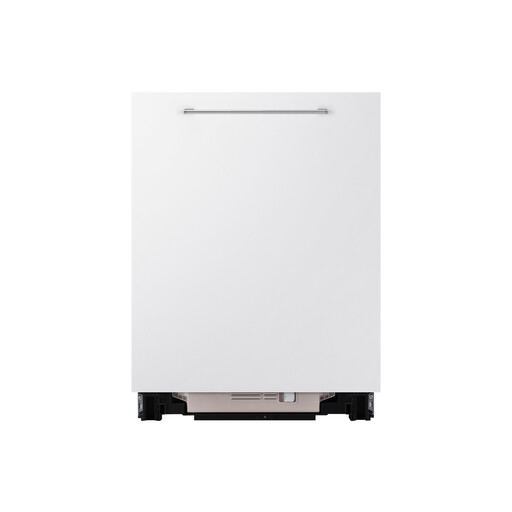 Image unavailable
Worth a look if your kitchen is designed for a 60 cm built-in dishwasher and 13 place settings will meet your needs. Check the space dimensions, whether the furniture door panel is compatible and what the class B rating in the listing refers to. To assess noise, consult the energy label for the exact model and information about the programmes you use.
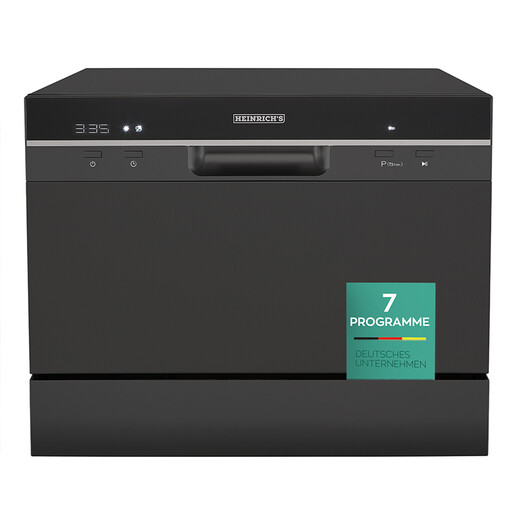 Image unavailable
Worth considering if a tabletop appliance with capacity for 6 place settings suits your space and household’s washing-up needs. The listing states 47 dB, seven programmes and a delay-start function of up to 24 hours. Measure the available space and check the water supply. A delay-start function changes when the noise occurs, not its level during the cycle.
The label shows a noise level in dB and a noise class from A to D. European regulations require noise emissions to be measured or calculated using the Eco programme, so compare this information across models without automatically applying it to other cycles.
No. According to ADEME, classes A and B indicate particularly quiet appliances, but they are not the only factors to consider. Also compare the dB rating of the exact model, its capacity and the duration of the Eco cycle. An independent test covering the programmes you usually use can provide additional information.
The type of installation alone won’t tell you. Choose a format that suits the space and the furniture door panel you want, then compare the noise information on the labels of the specific models.
It lets you change the start time, but does not reduce the noise it makes. In France, Service-Public.fr explains that an abnormal neighbourhood nuisance can occur during the day or at night. If you live in a flat, also check the co-ownership rules or building regulations before regularly scheduling late-night cycles.
Check the manual and product information for the model you’re considering. Look for maintenance programmes, any consumables, warranty terms, repair options and installation instructions. The noise rating won’t tell you anything about these points.