Households that eat at home regularly
If dirty dishes pile up between washes, look at place setting capacity, basket layout and consumption per cycle together. The number of place settings alone won't tell you whether your plates and pans will fit.


For everyday meals, first choose a size that fits the space and connections available, then a capacity that means you won't need to run multiple cycles. Next, compare appliances using the figures on their energy labels. If you have an open-plan kitchen or tend to run washes in the evening, pay close attention to the noise level in decibels too.
If dirty dishes pile up between washes, look at place setting capacity, basket layout and consumption per cycle together. The number of place settings alone won't tell you whether your plates and pans will fit.
Limited space may point you towards a compact model. UFC-Que Choisir highlights countertop models with a capacity of 6 place settings, for example. Check whether this will also handle the amount of washing-up you produce each day.
If the dishwasher is near your living area or bedrooms, compare its noise level in decibels and the noise class shown on the energy label. UFC-Que Choisir stresses how important noise levels are when an appliance is in the same room as your living space.
First, make sure the dishwasher will fit and can be loaded to suit your mealtime routine. To compare consumption, ADEME and the European Commission explain that the energy label shows, among other things, energy use per 100 standard cycles and water use per standard cycle.
| Criteria | What to check | Who this matters to |
|---|---|---|
| Capacity and loading | Compare the stated place setting capacity and basket layout. Check that there is room for your plates and pans. | If you need to fit the washing-up from several meals into one load, avoiding extra cycles comes before other considerations. Around 36% of consumers prioritise this need for capacity and easy loading. |
| Space and installation | Measure the space and clearances, then check that the model is compatible with your water supply, drainage and electrical connection. | If space is limited in my kitchen, I need to know I can install the appliance before choosing its capacity or programmes. Fitting the available space is the main concern for around 36% of consumers. |
| Water and electricity | Check the kWh per 100 standard cycles and litres per standard cycle, along with the capacity and duration of the eco programme. | If I run washes often, I want to compare consumption on a like-for-like basis rather than rely on the energy rating alone. Around 21% of consumers put this comparison at the top of their list. |
| Noise | Compare the decibel rating and noise class on the energy label, taking into account how close the appliance is to your living areas. | In an open-plan kitchen or when running late-night cycles, I want the appliance to disturb everyone as little as possible. Noise is the top priority for around 7% of consumers. |
An energy rating doesn't tell you everything about consumption, capacity or eco programme duration. When you eat at home regularly, the number of cycles you need to run also matters.
Compare energy labels on a like-for-like basis: kWh per 100 standard cycles, litres per cycle, eco programme duration, place setting capacity and noise.
A countertop appliance may fit in your kitchen but still not hold all the washing-up produced between meals.
Before choosing this type of model, picture how you'd load it after a typical day, including plates and bulky utensils.
If its capacity means you have to run more washes, the number of cycles you use will increase too.
Delivery and installation may not include adjustments to the space or connections. Electrolux France states that its installers do not carry out carpentry, plumbing or electrical work as part of its service.
Measure the space and, before ordering, check the connections required for your chosen model and exactly what is included in the installation service.
Adjustments to your kitchen or connections may require a separate visit.
A marketing label doesn't provide a measurement you can compare between appliances. How much noise bothers you also depends on your home's layout and when the cycle runs.
For an open-plan kitchen or evening washes, compare the decibel ratings and noise classes shown on the energy labels.
The French range includes models worth considering if noise or drying is important to you.
Some models offer features for scheduling cycles or changing how long they run.
The G 7000 range may appeal to households looking for flexible basket layouts.
Some integrated models offer an option to reduce noise, depending on the programme.
These models are suited to everyday washing-up for a household: four freestanding appliances and one fully integrated model. Compare their capacity with your mealtime routine, then check the dimensions and connections for the model you choose.
 Image unavailable
Worth considering if you want to combine the washing-up from several meals in a freestanding appliance. The product listing states 14 place settings and 7 cycles. Check the interior layout, eco programme duration and dimensions before choosing.
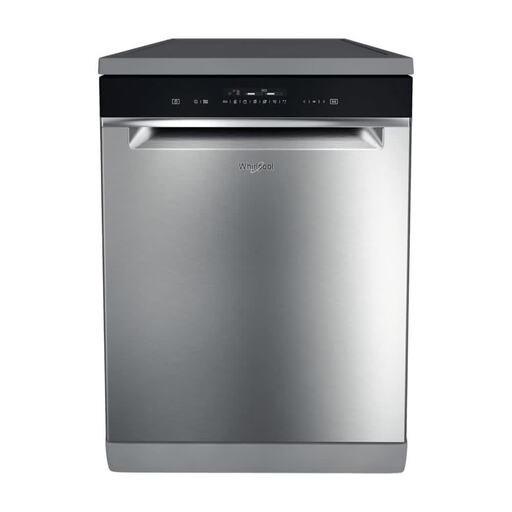 Image unavailable
Worth considering if you need a stated capacity of 14 place settings in a model described as 60 cm wide. Before planning where to put it, confirm the exact dimensions of this model, as the detailed measurements and stated width don't clearly match.
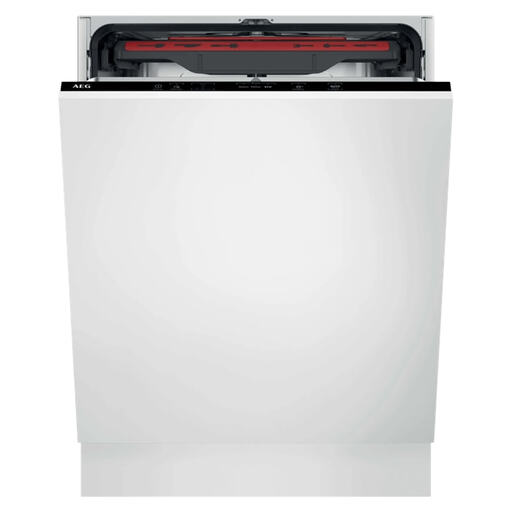 Image unavailable
Worth considering if your kitchen is designed for a fully integrated dishwasher. The model is described as 60 cm wide, with a stated capacity of 14 place settings. Confirm the exact installation dimensions and that it will fit your cabinet space before ordering.
 Image unavailable
Worth considering if noise during cycles near your living area is an important factor. The product listing states a width of 60 cm, a capacity of 14 place settings and a noise level of 41 dB. Compare the latter with the noise class on the energy label too.
 Image unavailable
Worth considering for the washing-up from several meals if a freestanding appliance suits your kitchen. The product listing states 14 place settings and a width of 60 cm. Check the energy label to compare its consumption and noise with other models on a like-for-like basis.
Compare the energy labels on a like-for-like basis: energy rating, kWh per 100 standard cycles, litres per standard cycle, eco programme duration, place setting capacity and noise. According to ADEME and the European Commission, these figures relate to the standard cycle; they don't directly show the consumption of a quick programme.
It may be suitable if you can wait for the cycle to finish and gather enough washing-up before starting it. Check its duration on the energy label, then consider when you'll need your plates and utensils again.
A compact model may be enough if it can hold your usual washing-up between cycles. For a countertop model with a capacity of 6 place settings, check that your plates and pans will fit too: their size may mean you have to run separate washes.
Measure the space and check the water supply, drainage and electrical connection required for the model you've chosen. For an integrated model, also check the cabinet space and whether a door panel is needed. Make sure you know what work is included in the installation service.
Promotelec recommends plugging a dishwasher directly into a wall socket connected to a dedicated circuit, rather than using an extension lead. If there isn't a suitable power supply where you plan to install it, have the electrical installation checked before fitting the appliance.