If you don’t have a suitable appliance housing, first check the space, water supply, drainage and electrical supply. A freestanding model still needs to be connected, while a compact dishwasher with a water tank may avoid the need for a fixed water supply, but not drainage. In an open-plan kitchen, compare each model’s stated noise level, then choose between a compact, 45 cm or 60 cm model based on the space available and how much washing-up you have. Consider a fully integrated model only if the housing and cabinet door are suitable.
Which format is right for you?
Homes without a fitted kitchen housing
If you’re buying your first dishwasher or replacing one without a fitted housing, the choice comes down to a connectable freestanding model or, if space or the water supply is an issue, a compact model with a water tank. UFC-Que Choisir distinguishes between freestanding and integrated models, while Daan Tech explains how to connect its compact Bob dishwasher.
For those who are sensitive to noise in an open-plan kitchen
If your dishwasher runs close to your living area, compare the stated noise level and noise class of the specific model rather than relying on its marketing name. UFC-Que Choisir highlights how important noise levels are in this type of layout.
Smaller households with limited space
If floor space or room on your worktop is limited, compare the footprint of a compact or 45 cm model with the washing-up that builds up between cycles. It’s not enough for an appliance to fit in your kitchen: it also needs a capacity that suits your routine.
What should you check before choosing?
Freestanding
Choose this if : you have floor space and the necessary connections, but no appliance housing or cabinet door.
Things to consider : the appliance has its own finished exterior, but it needs a water supply, drainage and an electrical supply, as UFC-Que Choisir and Bosch Électroménager France point out.
Countertop compact
Consider this if : space is very limited or a model with a water tank would suit you better because there’s no fixed water supply.
The trade-off : you’ll need to fill the tank and arrange drainage. A smaller capacity may also mean running more cycles.
Fully integrated
Choose this if : your kitchen has a suitable appliance housing and you can fit a compatible cabinet door.
Things to consider : this format needs to be installed in a kitchen unit. Being integrated doesn’t necessarily mean the model will be quieter or use less energy.
| Factor |
What to check |
Who is this for? |
| Installation |
Measure the space and check the model’s instructions for the water supply, drainage, electrical supply and required clearances. |
Without a kitchen unit designed for the appliance, I need to know where it will go and how it will connect before choosing a format. Around 33% of consumers would put installation feasibility first. |
| Noise |
Compare the decibel level and noise class shown on the label for the exact model, rather than relying on the word ‘quiet’. |
Near the living area, I want to be able to start a cycle without the noise becoming my main source of irritation. Noise comfort would be a priority for around 27% of consumers. |
| Space and capacity |
Check the width, depth and height, how far the door opens, and the place-setting capacity against the amount of washing-up between washes. |
In a small kitchen, I’m looking for an appliance that fits in its space without making me load it more often. Around 27% of consumers would prioritise this balance between size and capacity. |
| Running costs |
Check the label for kWh per 100 cycles, litres per cycle and the Eco programme duration. Also consider how often you wash. |
If I run cycles frequently, I want to compare how much appliances use in everyday operation, not just their capacity. This would be a priority for around 13% of consumers. |
Mistakes to avoid
-
Assuming no fixed water supply means no drainage is needed
According to Daan Tech, Bob’s water tank means it doesn’t need a fixed water supply, but its drain hose still needs to be connected. This installation may not be suitable if you don’t have a usable drainage point.
Check where the water will drain before buying, and consult the instructions for your chosen version to find out how it can be installed.
If your existing drainage isn’t suitable, you may need accessories or changes to your installation.
-
Treating an integrated model like a freestanding one
UFC-Que Choisir explains that an integrated model is designed for an appliance housing and needs a suitable cabinet door. An open space on the floor isn’t a substitute for a kitchen unit.
Check the housing dimensions, cabinet door and installation requirements before ordering. If your kitchen isn’t set up for an integrated model, consider a freestanding one instead.
-
Choosing based solely on a promise of quiet operation
In an open-plan kitchen, marketing claims don’t let you compare the noise levels of two models. The decibel level and noise class give you model-specific points of comparison.
Check both details on the energy label for the model you’re considering.
-
Choosing the narrowest format without checking place settings
A compact or 45 cm model may solve a space problem, but if its capacity is too small for your household’s washing-up, you may need to run extra cycles.
Think about how much washing-up builds up between washes, then check the capacity, baskets and space needed when the door is open.
Extra cycles also mean more time and more use of the appliance.
Brands to consider
Bosch
Bosch’s 45 cm and 60 cm freestanding models let you compare both formats for a kitchen without an appliance housing.
- Bosch Électroménager France gives noise levels of 42 dB for the SMS4ELI06F and 44 dB for the SPS4EMI11E. Compare these figures for these specific models.
- Freestanding models still need the connections specified for the appliance, and the noise level of one model doesn’t apply to the whole range.
Beko
Beko’s French 45 cm dishwasher range is worth considering if the available width is a key factor in your choice.
- Beko France lists 45 cm models with a stated capacity of 10 place settings.
- Check the capacity, noise level and energy label of the model you choose rather than assuming them from its width.
Miele
Miele’s 45 cm freestanding and integrated models give you two different installation options to consider.
- Miele France lists a capacity of 9 place settings and a noise level of 44 dB for the freestanding G 5740 SC SL, compared with 9 place settings and 43 dB for the integrated G 5990 SCVi SL.
- These figures apply to these specific models. The G 5990 SCVi SL needs a compatible appliance housing and cabinet door.
Daan Tech
The compact Bob with a water tank is an option if the lack of a fixed water supply affects your installation choice.
- According to Daan Tech, Bob can use its water tank instead of a fixed water supply.
- The brand also requires you to connect the drain hose, so check the instructions for the version you’re considering.
Freestanding dishwashers on Joybuy
These freestanding models are for kitchens without an appliance housing, where there’s a suitable space and the right connections. Before choosing between their 60 cm formats, compare capacity and the available noise information, and check the actual dimensions against your open-plan kitchen.
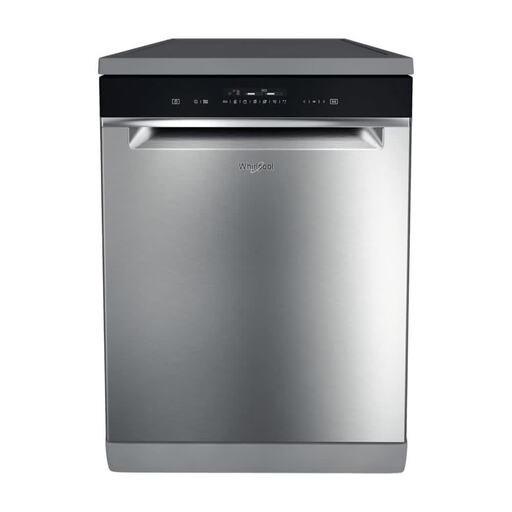 Image unavailable
Whirlpool WFP5O41PLGX freestanding dishwasher, 60 cm, 14 place settings
For a kitchen without an appliance housing, if a capacity of 14 place settings suits the amount of washing-up you have.
Energy rating C; stainless steel finish. Check the appliance’s actual dimensions, particularly its width, as well as the model’s installation instructions.
View on Joybuy
 Image unavailable
Hotpoint H4FD641A freestanding dishwasher, 60 cm, 14 place settings
For a household without an appliance housing looking to compare the capacity and noise level of a freestanding model.
Stated noise level of 41 dB, energy rating C, white finish. Check the label and dimensions of this model before installation.
View on Joybuy
 Image unavailable
Samsung DW60M6050FS freestanding dishwasher, 14 place settings
For an installation without an appliance housing, if the available space and 14-place-setting capacity suit your household.
Seven stated programmes. Check the label for the exact model to compare its noise level and energy use, and consult the instructions for installation requirements.
View on Joybuy
 Image unavailable
Indesit D2F HK26 S freestanding dishwasher, 60 cm, 14 place settings
For a kitchen without an appliance housing, if a 60 cm appliance with a capacity of 14 place settings suits your space and the amount of washing-up you have.
Energy rating E, grey finish. If your kitchen opens onto your living area, check the noise level on the label for this model.
View on Joybuy
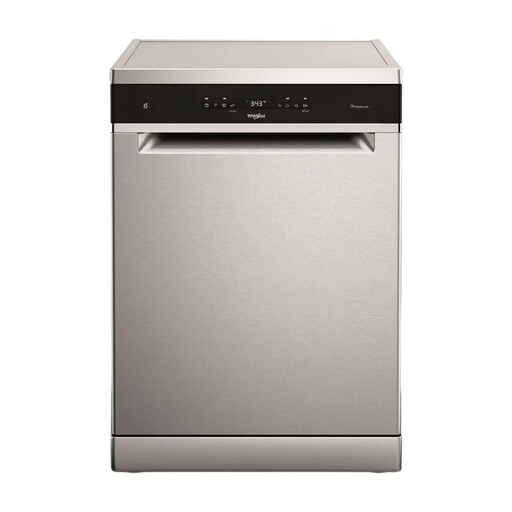 Image unavailable
Whirlpool WH6FC14BN70X freestanding dishwasher, 60 cm, 14 place settings
For a space without an appliance housing, if a capacity of 14 place settings suits your household’s washing-up.
Energy rating C, stainless steel finish. Check the actual width before relying on the 60 cm description. For an open-plan kitchen, also check the noise level of this model.
View on Joybuy
Frequently asked questions
Can you install a freestanding dishwasher without an appliance housing?
Yes. A freestanding model doesn’t need an appliance housing or cabinet door. You should still check the available space and the water, electrical and drainage connections listed in its instructions.
Can a compact dishwasher with a water tank work without a water supply?
Some models can work without a fixed water supply: according to Daan Tech, Bob is one of them. You’ll need to fill its tank, and the brand still requires you to connect the drain hose.
How can you compare noise levels in an open-plan kitchen?
Compare the decibel level and noise class on each model’s energy label. ADEME presents noise classes A and B as indicators of quieter appliances; also check the dB figure for the model you’re considering.
Is a 45 cm dishwasher big enough for a household?
It may be, if its capacity covers the washing-up that builds up between cycles. UFC-Que Choisir generally puts 45 cm models at around 9 to 10 place settings, compared with 12 to 17 for 60 cm models. Also check whether your dishes and pans will fit.
Which figures should you check to compare energy use?
Check the kWh per 100 cycles and litres of water per cycle on the energy label, then consider how often you wash. The Eco programme duration and capacity can help you compare models, but they can’t predict your daily energy use on their own.


