If washing-up piles up after every meal and your kitchen has the space, start by comparing 60 cm dishwashers. According to Que Choisir, built-in models of this width generally hold 12 to 17 place settings, compared with 9 to 10 for 45 cm models. Next, choose between freestanding and built-in to suit your kitchen, then compare the usable loading capacity and Eco programme figures with your household’s mealtimes.
Who is this choice for?
Households looking to run fewer cycles
After a big meal, these families want to fit plates, cutlery and large dishes into one load. Que Choisir says 60 cm built-in models generally hold 12 to 17 place settings, compared with 9 to 10 for 45 cm models. The layout of the racks is still crucial.
Families with a fitted kitchen
Your choice depends as much on the space and door panel as it does on capacity. Before settling on a built-in model, check its dimensions, the type of door it requires and what’s included with installation.
Households with limited width
When the available space only allows for a 45 cm model, a large family should compare the stated capacity with the washing-up from its biggest meals. A slimline model may require more cycles than a 60 cm appliance.
Which features should you compare?
For a large household in France, first check the available width and what will fit in the racks. Then decide whether the appliance needs to match your kitchen units, before comparing energy and water use and noise levels in the conditions that matter to you.
| Feature |
What to check |
Who should consider it? |
| Capacity per cycle |
Compare the stated number of place settings and the space left for large dishes in the racks. |
When plates and utensils pile up after every meal, I want to load everything at once without immediately running the machine again; around 36% of consumers rank this capacity as their top priority. |
| Fit with your kitchen |
Measure the space and check the door panel, connections and installation service. |
If my kitchen is already fitted, the appliance needs to slot into place without any surprises during installation; this is the top priority for around 29% of consumers. |
| Everyday use and noise |
Check the label for kWh per 100 cycles, litres per Eco cycle, cycle duration and noise level. |
With frequent cycles or an open-plan kitchen, I want to take everyday energy and water use and noise into account; around 21% of consumers make this their main concern. |
| Limited to 45 cm width |
Make sure a 60 cm model won’t fit, then assess the load from your biggest meals. |
When there’s only space for a slimline model, I have to accept less room per cycle or plan to wash more often; this is the main constraint for around 14% of consumers. |
Label figures don’t apply to every programme in the same way. According to ADEME and the European Commission, energy use in kWh per 100 cycles and water use in litres per cycle refer to the Eco programme. If you often use a quick or intensive cycle, check the figures for that programme too before estimating your consumption.
Mistakes to avoid
-
Choosing based only on the number of place settings
A stated capacity doesn’t guarantee that your pans, dishes and utensils will all fit together. The layout can also make two appliances with the same capacity less practical for different types of load.
Compare the dimensions of your largest items with the rack dimensions, and check what can be adjusted or folded down before ordering.
-
Applying Eco figures to every wash
The label’s reference figures don’t necessarily reflect your quick or intensive cycles. Running costs also depend on how often you wash.
Start with the number of cycles your household is likely to run, and check the consumption figures for the programmes you use. Also factor in detergent, maintenance and any installation services you need.
-
Treating a built-in model like a freestanding appliance
A built-in model needs to fit a suitable space and door panel. The existing connections also determine what work may be needed.
Check the available width, height and depth, then confirm that your door panel is compatible and exactly what the installation service includes.
-
Pre-rinsing every time or running partial loads
ADEME advises against pre-rinsing dishes and recommends waiting until the dishwasher is full before starting a cycle.
Remove food scraps and load the appliance according to its instructions, without packing the dishes so tightly that they can’t be washed properly.
Brands to consider
Beko
Worth considering if you’re looking for a 60 cm freestanding model and capacity per cycle is a priority.
- Beko lists 15 place settings for the BDFN26530W, a 60 cm freestanding model.
- This capacity applies to the specific model listed. Check the rack layout and dimensions of the model you’re considering.
Bosch
Worth a look if you’re considering built-in models and fit and Eco cycle specifications are important to you.
- Bosch’s specification for the SMI4HCB19E lists 9,0 L of water per Eco cycle; the SMV4EVX00E is listed at 44 dB.
- These figures relate to two separate models and don’t represent all Bosch dishwashers.
Miele
Worth considering if the way the cutlery and racks are organised is an important factor in your decision.
- Miele offers freestanding slimline and standard models, listed at between 9 and 14 place settings depending on the model.
- Compare the capacity, consumption and any model-specific consumables for the model you choose, rather than assuming one model’s features apply to the whole brand.
Whirlpool
Worth considering if the available space means you need a 45 cm model.
- Whirlpool describes the WSFO3T223P as a 45 cm model with 10 place settings and seven programmes.
- If your household gets through a lot of washing-up, check whether this capacity will be enough after your biggest meals.
Dishwashers to consider on Joybuy
These freestanding or built-in models are listed with a capacity of 13 or 14 place settings. Compare their installation requirements with your kitchen before weighing up the capacity and specifications of each model.
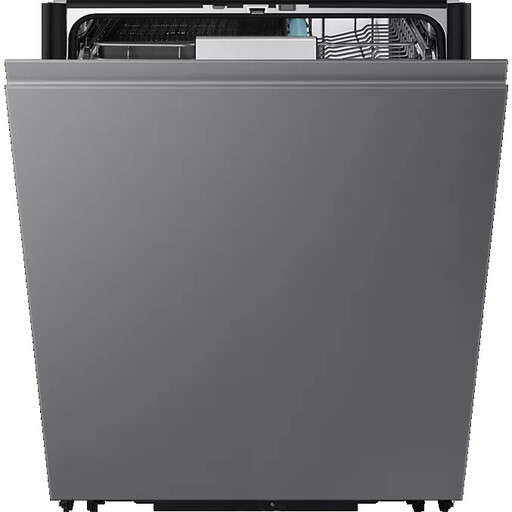 Image unavailable
Samsung DW90H79JAI0U1 Bespoke AI, built-in, 14 place settings
Worth considering if you’re looking for a stated capacity of 14 place settings for a fitted kitchen.
60 cm built-in model, energy rating A. Check the space dimensions, door panel and required connections.
View on Joybuy
 Image unavailable
Samsung DW60M6050FS freestanding, 14 place settings
A freestanding option to consider if you want to wash the family’s dishes without fitting the appliance behind a door panel.
Stated capacity of 14 place settings, seven cycles and a grey finish. Check the available space and room needed to open the door.
View on Joybuy
 Image unavailable
Indesit D2F HK26 S freestanding, 14 place settings
Worth considering for households with large loads after meals, if a freestanding appliance suits your kitchen.
Listed as a 60 cm model with a grey finish and energy rating E. To compare running costs, check the energy and water figures for this model’s Eco programme on its label.
View on Joybuy
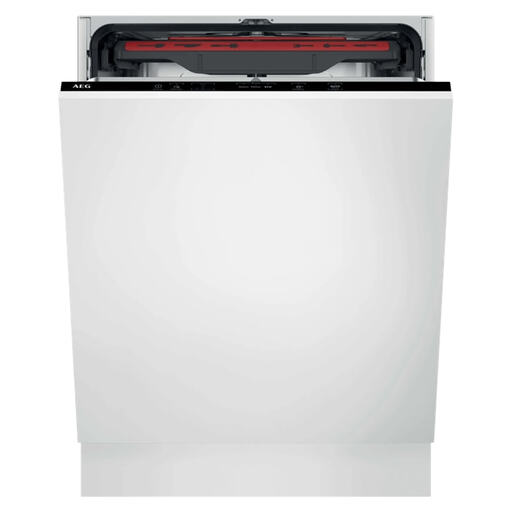 Image unavailable
AEG FSB34707Z built-in, 14 place settings
Worth considering for a fitted kitchen if its stated capacity of 14 place settings suits your usual loads.
Energy rating C. The stated width for this model is inconsistent across listings, so confirm the dimensions of both the appliance and the space before arranging installation.
View on Joybuy
 Image unavailable
Samsung DW80H72YBB0U1 built-in, 13 place settings
Worth considering if you have a fitted kitchen and a stated capacity of 13 place settings is enough for your usual meals.
Listed as a 60 cm model with energy rating B. Check that it will fit the space, and compare its Eco programme consumption with that of other models.
View on Joybuy
Frequently asked questions
Can a 45 cm dishwasher suit a large family?
Yes, if the available space means you need a slimline model and its capacity is enough for your usual loads, even if you may need to run more cycles. For built-in models, Que Choisir generally lists 9 to 10 place settings for 45 cm models, compared with 12 to 17 for 60 cm models. Also check there’s room for your largest dishes.
Which figures should you compare to estimate consumption?
Compare the kWh per 100 cycles and litres per Eco cycle, then take your washing frequency into account. ADEME and the European Commission say the label also shows capacity and Eco programme duration; check the figures separately for quick or intensive cycles.
Is the Eco programme suitable after every meal?
It is if its duration and the results you expect suit your household’s routine. Its figures are used as a reference on the label. If you regularly need to use another programme, check the information for the model you choose rather than automatically applying the Eco figures to it.


