Households with lots of washing up every day
If several meals leave you with plates, pans and large dishes to wash, look at the place-setting capacity and how the baskets are arranged. These two factors matter more than width alone.


To cut down on washing up by hand, first choose an appliance that fits the space available and has suitable connections, then find a capacity that suits your meals. A 60 cm model is worth considering if you often have large loads, while a 45 cm or compact model can work well when space is tight – just check the capacity carefully. An integrated model also needs a compatible cabinet space and door panel. To compare running costs and noise levels, ADEME recommends looking at all the energy label data together.
If several meals leave you with plates, pans and large dishes to wash, look at the place-setting capacity and how the baskets are arranged. These two factors matter more than width alone.
If space is limited by the width available or the cabinet space, compare the full dimensions of a 45 cm, compact or integrated model with the space you have. Que Choisir points out that an integrated model needs to fit into a purpose-built cabinet space.
In an open-plan kitchen, or if you run the appliance while the room is in use, check the noise level alongside water and electricity consumption. ADEME lists this data on the energy label, based on the reference programme.
First rule out any formats that will not fit your kitchen. Then compare the capacity of the remaining options with your everyday washing-up, and look at the running-cost and convenience information together.
| Criteria | What to check | Who this matters to |
|---|---|---|
| Space and connections | Measure the width, height and depth, then check the manual for door clearance and the required connections. | If my kitchen has a cabinet space or a narrow area to fit, I need to know whether the appliance can actually be installed there. Around 31% of consumers would make this compatibility their priority. |
| Capacity and loading | Compare the place-setting capacity with your meals and check whether the baskets have room for larger utensils. | When several meals quickly fill the sink, I want to be able to load dishes and pans too, without running multiple cycles. This capacity would be the priority for around 25% of consumers. |
| Running costs | Compare the kWh per 100 cycles and litres per reference cycle on the energy label, as well as the Eco programme duration. | If I run the dishwasher often, the water and electricity it uses will influence my choice. Around 25% of consumers would put energy and water use first. |
| Noise and drying | Check the noise level and its class on the energy label; look separately at the drying information for the specific model. | In an open-plan kitchen, I want to be able to start a cycle without excessive noise and avoid having to dry too many dishes afterwards. Around 19% of consumers would put quiet operation first. |
A 45 cm or 60 cm appliance will not necessarily fit the available cabinet space: the height, depth, door clearance and door panel also matter.
Measure the space and check the installation diagram for the exact model before choosing an integrated dishwasher.
You may need a cabinet door panel, adjustments to the cabinet space or installation work.
The class alone does not tell you how much water the appliance uses, how long the Eco cycle takes, how noisy it is or how much it holds.
Compare these figures across the energy labels of the models you are considering, as ADEME recommends.
Detergent and regular maintenance are also part of everyday use.
A dishwasher running during mealtimes or in the evening may disturb people at home if its noise level does not suit their routine.
Compare the noise level in dB and the noise class of the models you are considering on their energy labels.
The term covers different types of installation: Electrolux, for example, offers compact integrated models. So the word alone does not tell you whether a model is suitable for a worktop.
Check the installation type, dimensions, weight and connection instructions in the manual for your chosen appliance.
In France, Bosch offers freestanding and integrated dishwashers, including 45 cm and 60 cm widths.
Whirlpool’s French range includes freestanding and integrated 45 cm and 60 cm models.
Electrolux offers 60 cm integrated models and compact appliances, with installation type varying by model.
This selection includes 60 cm freestanding models for larger loads, an integrated model to consider if you have a compatible cabinet space, and a small countertop model for lighter loads. Check the dimensions and connections for each model before deciding which format is right for you.
 Image unavailable
Worth considering if you’re looking for a freestanding model for a busy household’s everyday washing up.
Energy class E; grey finish. Check the space needed for the door to open and the connections required for this model.
 Image unavailable
Worth considering if you have room for a freestanding model and want space for larger loads.
41 dB, energy class C and a white finish are listed in the product name. Check the available height if you’re thinking of installing it under a worktop.
 Image unavailable
Worth considering if you want to integrate a dishwasher into a kitchen with a compatible cabinet space.
Energy class B. Check the cabinet-space dimensions, door panel and required connections before planning installation.
 Image unavailable
Worth considering for a household that needs plenty of room for dishes and would like a choice of programmes.
Grey finish. Measure the space, including room for the door to open, before choosing this model.
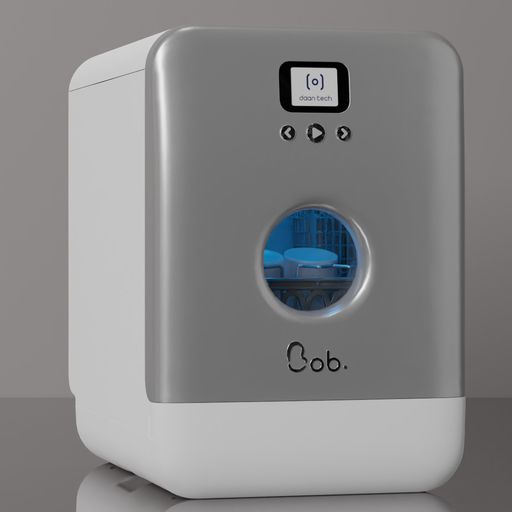 Image unavailable
Worth considering for smaller loads when there isn’t room for a full-size appliance.
Metallic grey and white finish. Check that your worktop can support the appliance and that its water supply and drainage will work in your home.
Compare the kWh per 100 cycles and litres per cycle on the energy labels. ADEME explains that these figures are based on the reference programme. To understand what they mean for your household, also consider how often you use your dishwasher.
Yes. The regulated figures on the energy label are based on the Eco programme, giving you a common basis for comparing appliances. Delegated Regulation (EU) 2019/2017 covers energy, water and programme duration, among other things. This does not mean the cycle will be the quickest option for your everyday washing up.
Measure the width, height and depth of the cabinet space, then check the door panel and connections using the diagram for your chosen model. Que Choisir points out that an integrated model fits into a purpose-built cabinet space, so the words ‘60 cm’ alone are not enough to confirm compatibility.
Check the manual for the required water inlet, drainage and electrical supply, as well as the route for the hoses and cable through your kitchen. If the existing installation needs modifying, confirm what work is required before ordering. Electrolux states that its installers do not carry out plumbing, electrical or carpentry work.