What should you prioritise?
Freestanding
Worth considering: if your kitchen doesn’t have a dedicated space for a dishwasher, or you want more flexibility over where to put it.
Bear in mind: the appliance will be visible. If you plan to install it under a worktop, check all its dimensions and, if necessary, whether the top can be removed.
Integrated
Worth considering: if you have a compatible space in your units and want the dishwasher to blend in with your kitchen.
Bear in mind: you’ll need a suitable furniture door and must check its fitting and installation. An integrated model isn’t a direct replacement for a freestanding one.
Compact
Worth considering: if your kitchen can’t accommodate a 45 or 60 cm model, or there isn’t much washing up waiting for the next cycle.
Bear in mind: its smaller capacity may mean running more cycles if your meals also leave you with dishes and pans to wash.
If the space or connections in your kitchen won’t allow you to install a suitable appliance, reorganising your storage may free up room, but it won’t replace washing up. To compare dishwashers, start with the need that matters most in your daily routine:
| Factor |
What to check |
Which shoppers is it for? |
| Size and capacity |
Measure the width, height and depth; compare the stated place settings and basket layout with the dishes you use regularly. |
When I cook often, I want to fit pans in as well, without leaving dishes waiting to be washed. Capacity would be the main concern for around 33% of shoppers. |
| Noise |
Compare the decibel rating and noise class on the energy label for the Eco programme. |
In an open-plan kitchen, I want to be able to start a cycle without it disrupting the room. Quiet operation would come first for around 27% of shoppers. |
| Drying and cycles |
Check the Eco programme duration, short programmes and drying features for the specific model. |
After a meal, I want to be able to put the dishes away without unnecessary waiting, while choosing a cycle that suits my schedule. Around 20% of shoppers would put this need first. |
| Energy use and lifespan |
Check the kWh per 100 cycles and litres per Eco cycle; also look for a repairability index, where available. |
If the appliance runs regularly, I want to understand how much energy and water it uses and know that repairs are an option. This would be the priority for nearly 20% of shoppers. |
The European Commission explains that the energy label’s electricity and water consumption, duration, capacity and noise figures are based on the Eco programme. A quick cycle or drying function should therefore be checked separately, as these figures may not reflect how it performs.
Brands to consider
These examples can help you identify formats and features to check on a specific model; they are not an assessment of every appliance made by each brand.
Bosch
Bosch offers freestanding dishwashers in 45 and 60 cm widths, among other options. Its range is worth exploring if you’re looking for a slimline model.
- For the SPS2HKI58E, Bosch states a width of 45 cm and an option for extended drying.
- The feature listed for the SPS2HKI58E doesn’t indicate how other models dry. Check the specifications of the model you’re interested in.
Beko
Beko’s range includes freestanding, integrated and fully integrated appliances, with storage features that vary by model.
- Beko describes the BDFN26443G as a 60 cm freestanding model with 14 place settings, a delay-start function and an automatic door opening at the end of the cycle.
- The noise information given in the BDFN26443G product description varies between sections. Check its energy label to compare noise levels.
Miele
Miele offers 45 cm freestanding models, among others, which are worth considering if you have limited width available.
- Miele lists the G 5540 SC SL Active as 45 cm wide, with a cutlery tray and delay-start function.
- The QuickPowerWash programme listed by Miele applies to this specific model. Check the programmes on the model you choose rather than assuming they’re available across the range.
Integrated dishwashers on Joybuy
These integrated models are suited to households that cook often and have a suitable space for installation. Before choosing, compare the stated capacity with the dishes you use and check the dimensions of the unit space, the furniture door and the cycle features that matter to you.
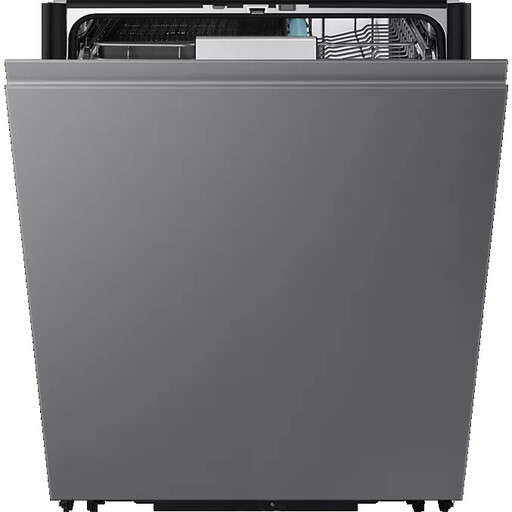 Image unavailable
Samsung DW90H79JAI0U1 Bespoke AI, 60 cm integrated, 14 place settings
Worth considering if you’re looking for an integrated dishwasher with 14 place settings for regular washing up. The title states an A energy rating; check the installation dimensions, compatible furniture door and Eco programme duration before you decide.
View on Joybuy
 Image unavailable
AEG FSB34707Z, fully integrated, 14 place settings, C energy rating
Worth considering if a capacity of 14 place settings and a dishwasher concealed behind a furniture door would suit your kitchen. The product name states 60 cm, but the model information lists a different width. Check the installation dimensions before making a decision.
View on Joybuy
 Image unavailable
Samsung DW80H72YBB0U1, 60 cm integrated, 13 place settings
Worth considering for regular meals if 13 place settings suits the amount you usually wash. Check that the space and sliding door are compatible, then consult the energy label to compare the model’s rating and Eco programme figures.
View on Joybuy
 Image unavailable
Samsung DW70H72WCB0U1, 60 cm integrated, 13 place settings
Worth considering if you’re looking for an integrated dishwasher with 13 place settings for regular use. Check the space and furniture door, then distinguish the noise stated on the energy label from that of the Extra Silence programme. Also check the model’s energy rating and Eco programme figures.
View on Joybuy
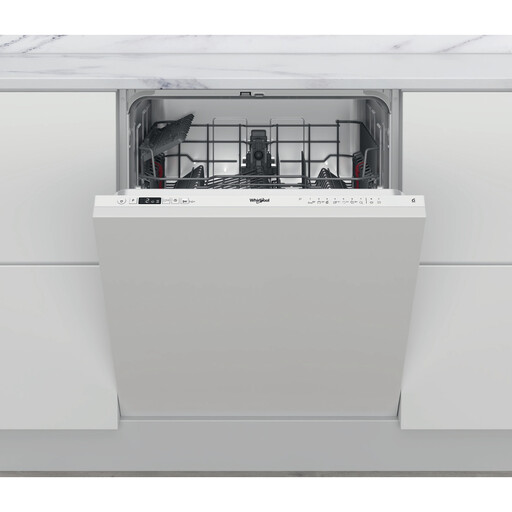 Image unavailable
Whirlpool W2I HD526 A, white 60 cm integrated, 14 place settings
Worth considering if you’re looking for a white integrated dishwasher with 14 place settings; the title states an E energy rating. Check the space, furniture door and drying features, as well as the Eco programme’s energy and water use, to compare it with other models.
View on Joybuy
Frequently asked questions
Which figures should I compare on a dishwasher’s energy label?
Compare the energy rating, kWh per 100 cycles, litres per cycle, capacity in place settings, Eco programme duration and noise in decibels, including its noise class. The European Commission states that the energy and water consumption and duration figures relate to the Eco programme, so they may not reflect a quick cycle.
Can an integrated dishwasher directly replace a freestanding one?
Not without checking the installation. According to Que Choisir, an integrated dishwasher must fit into a space designed for it. Check the dimensions, furniture door and fittings before replacing a freestanding appliance.
Can you put a freestanding dishwasher under a worktop?
Yes, if its dimensions fit the available space and its top can be removed if necessary. Measure the width, height and depth of the space, then check whether this is possible with the model you’ve chosen.
What should you do if a dishwasher bought in France has a fault or does not conform to the contract?
Contact the professional seller under the legal guarantee of conformity. The French Ministry of the Economy states that you have two years to make a claim, whether the product is new or second-hand. Describe the fault to the seller to find out how it can be dealt with in your circumstances.


