Households that wash dishes every day
If plates, dishes and pans pile up every day, check the place setting capacity and basket layout before choosing a type. UFC-Que Choisir also recommends considering washing and drying performance.


First, choose a size that fits your kitchen and can handle the amount of washing-up you usually have: a freestanding model offers more flexibility when it comes to installation, an integrated model needs a compatible housing unit, and a compact model takes up less space at the expense of capacity. Then, for models with a capacity suited to your household, compare the Eco programme’s energy and water consumption and the noise level shown on the energy label. Noise is particularly important in an open-plan kitchen.
If plates, dishes and pans pile up every day, check the place setting capacity and basket layout before choosing a type. UFC-Que Choisir also recommends considering washing and drying performance.
A slimline appliance can free up space, but its capacity still needs to suit your household’s washing-up. UFC-Que Choisir says 45 cm models with 9 place settings may suit a small family, even if they need to be run every day; compact models with 6 place settings can sit on a worktop.
If your dishwasher shares a room with your living space, compare the noise emissions in dB and their class on the energy label. The time you plan to run cycles may also affect your choice.
Worth considering: if your kitchen has no dedicated housing unit or you’d like to be able to move the appliance more easily.
Bear in mind: the width you choose needs to suit both the space available and the amount of washing-up between cycles.
Worth considering: if you have a small amount of washing-up and little floor space; UFC-Que Choisir describes 6-place-setting models that sit on a worktop.
The trade-off: limited capacity may mean you need to run more frequent cycles.
Worth considering: only if your kitchen has a housing unit that fits the model you choose.
Bear in mind: installation means checking the housing unit, door and, depending on the model, the cabinet front.
| Criteria | What to check | Think about your needs |
|---|---|---|
| Installation | Measure the space and check the water supply, drainage and electrical connection. For an integrated model, also check the housing unit and door compatibility. | I want an appliance that fits in my kitchen, without assuming that a housing unit and its cabinet front will be suitable. |
| Capacity | Compare the stated place setting capacity and the space available for dishes and pans. UFC-Que Choisir says 45 cm integrated models have 9 to 10 place settings, compared with 12 to 17 for 60 cm models. | If washing-up piles up every day, I’m looking for a capacity that suits the actual load, rather than choosing based on width alone. |
| Energy and water | According to ADEME and the European Commission, the label shows energy use in kWh per 100 cycles, water use in litres per cycle and the duration of the Eco programme. Compare these figures between appliances with a suitable capacity. | I want to understand the standard consumption figures, but also know whether the Eco cycle duration fits in with my routine. |
| Noise | Check the noise level in dB and the noise emission class shown on the energy label, as explained by ADEME. | In an open-plan kitchen, I’d rather know the stated noise level before deciding when to run the appliance. |
| Maintenance | Check the manual for instructions on cleaning the appliance and the products you’ll need. ADEME recommends scraping food off dishes rather than pre-rinsing them, and running the machine with a full load where possible. | I want an appliance that’s easy to maintain, and to adapt my loading habits to how I use it every day. |
The letter doesn’t tell you what capacity will suit you, how much water the reference cycle uses or how long the Eco programme takes.
Compare all these details on the exact model’s label, along with its noise emissions.
According to UFC-Que Choisir, an integrated model needs to fit into a purpose-built housing unit; it can’t simply replace a freestanding appliance.
Check the dimensions, door, hinges and connections using the installation guide.
You may also need a compatible cabinet front and a professional installation.
A 45 cm appliance that needs to run more cycles to handle your household’s washing-up shouldn’t be judged on its width alone.
Estimate the load between washes, then compare the capacity and Eco programme consumption listed for each model.
Detergent and, depending on the appliance and how it’s used, dishwasher salt and rinse aid are part of regular use.
Check the manual for instructions and plan to clean the appliance regularly.
In France, Bosch offers 45 cm and 60 cm freestanding dishwashers, as well as 45 cm integrated models.
Beko’s French range includes freestanding models, integrated models with a visible control panel, and fully integrated models.
Siemens offers dishwashers, some of which come with Home Connect features.
In France, Whirlpool offers integrated dishwashers, as well as 45 cm and 60 cm models.
Miele’s French range includes freestanding and integrated appliances.
These freestanding and integrated models show two options for everyday washing-up. Start by choosing according to the available space and installation type, then compare the features of the model you’ve selected.
 Image unavailable
Worth considering if you’re looking for a freestanding appliance for a large everyday load. The product title lists 14 place settings and 7 programmes; check the model’s energy label for the Eco programme duration before comparing cycles.
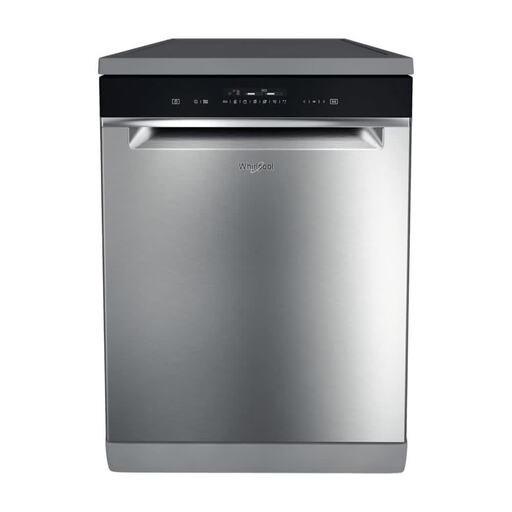 Image unavailable
This freestanding model is listed with 14 place settings and energy class C. Check its width before setting aside space for it: the information provided lists both 60 cm and 67.5 cm. Also check the Eco programme duration on the energy label.
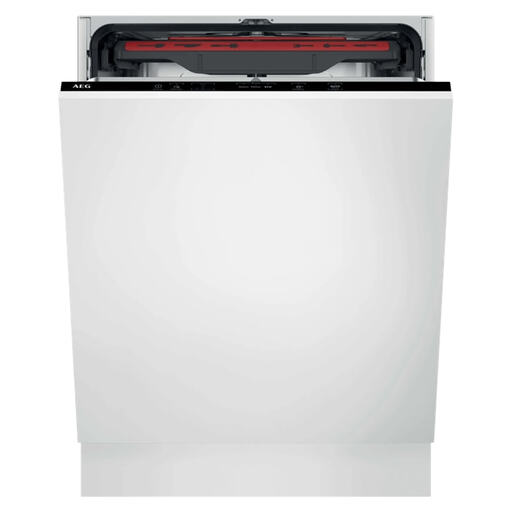 Image unavailable
This model is listed with 14 place settings and energy class C. Only consider it if your housing unit and kitchen door are compatible. Confirm the dimensions in the installation guide and check the label to compare energy use in kWh per 100 cycles.
 Image unavailable
This freestanding model is listed as 60 cm wide, with 14 place settings and energy class E. Check the model’s energy label to compare its energy use in kWh per 100 cycles and the duration of the Eco programme.
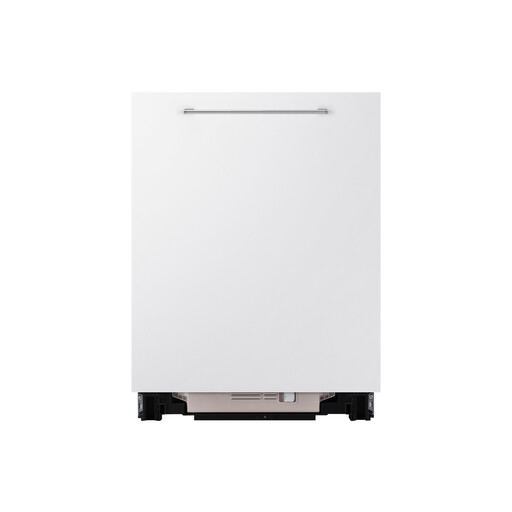 Image unavailable
This model is listed as 60 cm wide, with 13 place settings and energy class B. It needs a compatible housing unit and cabinet front. Check the installation guide and the model’s energy label to compare consumption, Eco cycle duration and the stated noise level.
For dishwashers with a capacity that suits your household, compare the A to G energy class, energy use in kWh per 100 cycles, water use in litres per cycle, the Eco programme duration and the noise level. The European Commission and ADEME explain that these consumption figures are reference values for the Eco programme; they don’t describe every other cycle.
Yes, if its capacity can handle the washing-up that builds up between washes. UFC-Que Choisir says 45 cm models with 9 place settings may suit a small family, although they may need to run every day. Also check there’s enough room for dishes and pans.
Compare the noise level in dB and the noise emission class on the energy label, then consider how close the appliance is to your living space and when you plan to use it. ADEME says both noise figures appear on the label.
In France, the ministry responsible for the environment says electrical appliances can be taken to a collection point or recycling centre, returned to a shop, or given to a social and solidarity economy organisation. Check the arrangements at your chosen location before moving the appliance.