Households with washing-up piling up after meals
If plates, glasses, dishes and pans pile up after meals, consider what the racks can actually hold. The number of people in your household alone won’t tell you what capacity you need.


A dishwasher is worth considering if your meals regularly create enough washing-up to fill the appliance, or if washing by hand takes up too much time at home. First, check the available space and connections, then choose a capacity that suits both plates and dishes or pans. If your kitchen is open-plan, noise is also worth considering. A freestanding model gives you more flexibility when arranging your kitchen, while an integrated model needs a compatible housing unit.
If plates, glasses, dishes and pans pile up after meals, consider what the racks can actually hold. The number of people in your household alone won’t tell you what capacity you need.
An existing housing unit, space under the worktop or a small kitchen may determine your choice before you even consider the programmes. UFC-Que Choisir highlights the different requirements for freestanding, integrated and compact models. You’ll also need to check the connections at your chosen location.
If the dishwasher runs near your living space or while other people are at home, noise matters more. UFC-Que Choisir particularly highlights this for open-plan kitchens. Compare the stated noise level, then look for any available acoustic test results for the model you’re considering.
First, check that your kitchen can accommodate the appliance, then see whether its capacity suits the washing-up your meals produce. Energy and noise levels can help you choose between models that otherwise meet your needs.
Consider this if: you don’t have a dedicated housing unit or want more flexibility when arranging your kitchen.
Bear in mind: the appliance will be visible, and fitting it under a worktop depends on its dimensions and whether it has a removable top panel.
Consider this if: you have a suitable housing unit for fitting the appliance into your fitted kitchen. A semi-integrated model leaves the control panel visible.
Bear in mind: you’ll need a compatible door panel and suitable installation, which may involve preparatory work depending on your kitchen.
Consider this if: space and the amount of washing-up are limited, after checking where the appliance could go.
Bear in mind: a smaller capacity may mean running more cycles or washing large utensils separately.
| Criterion | What to check | Who is it for? |
|---|---|---|
| Capacity and meal routines | Include dishes and pans from a typical day, then compare them with the place-setting capacity and rack layout. | If meals quickly fill the sink, I want to load the washing-up without having to do several rounds by hand. Around 31% of consumers put capacity at the top of their list. |
| Space and connections | Measure the space and the door opening; check the water supply, drainage and electrical supply. For an integrated model, also check the housing unit and door panel. | In a kitchen where every centimetre counts, I need to know I can install the appliance before choosing its features. Around 31% of consumers would prioritise whether it fits their kitchen. |
| Noise during cycles | Compare the noise level and noise class on the label. If possible, also look for tests covering vibrations and intermittent noises. | If the kitchen opens onto the living room or I share my home, I want the cycle to disrupt other activities as little as possible. Around 23% of consumers put quiet operation first. |
| Energy use and repairability | Check the energy use in kWh per 100 cycles and water use in litres per cycle on the label, then look at the repairability index for the model. | If I use the appliance regularly, I want to compare its energy and water use and consider whether it can be repaired. Around 15% of consumers prioritise these practical considerations. |
ADEME says the energy label includes details such as capacity, water consumption, energy use per 100 cycles, Eco programme duration and noise. These figures let you compare appliances using the reference cycle; they don’t necessarily reflect a quick or intensive programme.
Dishes, pans and containers used at mealtimes can take up a large part of the racks. A small appliance may then need to run more often, even in a smaller household.
Make a note of the washing-up from your usual meals, then check the loading layout of the model you’re considering.
The term “freestanding” doesn’t guarantee that the appliance’s top panel can be removed. UFC-Que Choisir recommends checking whether the top panel is removable before installing this type of model under a worktop.
Measure the available height and check the specifications for the exact model before ordering.
If the appliance doesn’t fit, you may need to adapt the units or choose another model.
It’s also worth comparing water use per cycle, energy use per 100 cycles, Eco programme duration and noise. According to ADEME, these figures relate to the reference cycle and don’t cover every programme.
Compare the same details across models, then think about which programmes and times work best for your meals.
A housing unit alone isn’t enough: the door panel, installation dimensions and connections all need to be suitable for the appliance. Bosch recommends professional installation for its integrated models. Electrolux says its installers don’t carry out preparatory joinery, plumbing or electrical work.
Confirm the installation requirements for your chosen model with the retailer or installer, and don’t make changes to the connections without checking what’s suitable for your home.
The door panel and any preparatory work need to be organised separately from delivery of the appliance.
This Joybuy selection includes freestanding models for regular loads, fully integrated models for fitted kitchens and a compact countertop model for smaller amounts of washing-up. Check the space and connections for each model before choosing.
 Image unavailable
For meals that regularly leave you with a large load of washing-up. The product description states a capacity of 14 place settings, a C energy rating, 41 dB and around 9,5 L per Eco cycle. It lists a removable top panel and an adjustable height of 820 mm. Check all the dimensions and connections if you’re planning to install it under a worktop.
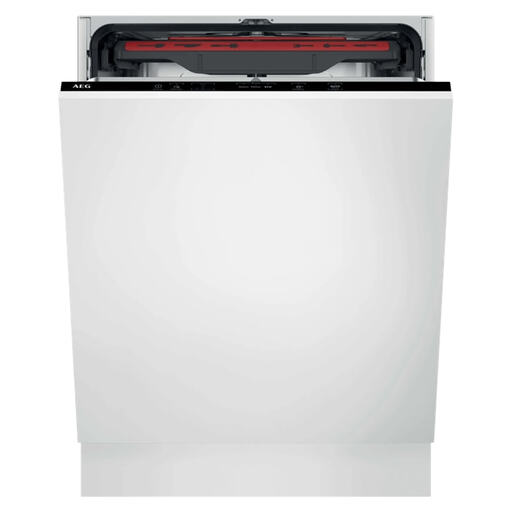 Image unavailable
For a fitted kitchen with space for a fully integrated dishwasher. The product description lists 14 place settings, a C energy rating, 44 dB, 10,5 L per Eco cycle and an Eco cycle duration of 240 minutes. Check the installation dimensions, door panel, sliding hinges and connections for your housing unit.
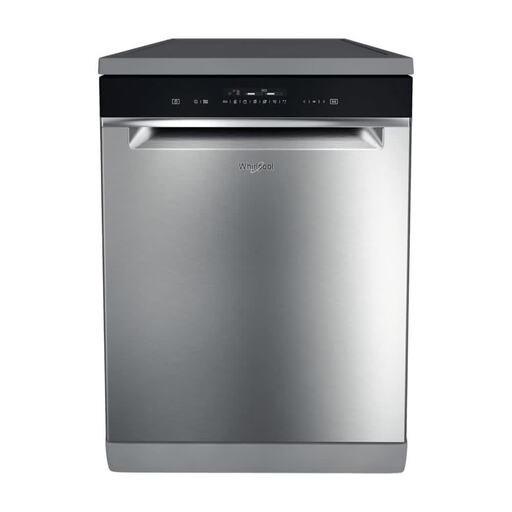 Image unavailable
For a household looking for a freestanding dishwasher with a stated capacity of 14 place settings. The product description lists a C energy rating, 41 dB, 9,5 L per Eco cycle and 75 kWh per 100 Eco cycles. The detailed dimensions don’t clearly match the stated 60 cm width, so confirm the exact installation dimensions before deciding where to put it.
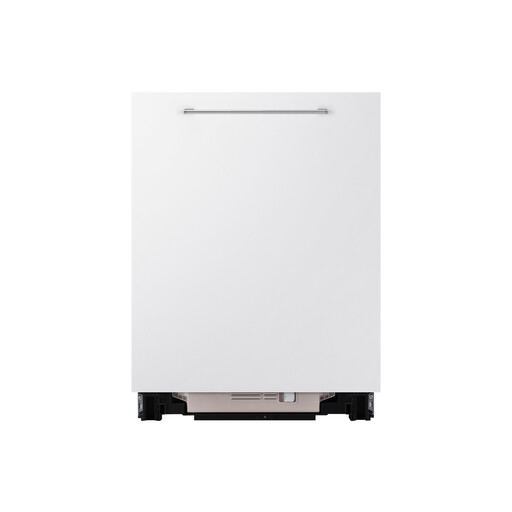 Image unavailable
For regular loads in a kitchen with a compatible housing unit. The product description states 13 place settings and a B energy rating. It lists 44 dB in the technical table and 42 dBA for the Extra Silence programme. Check the reference noise value on the label, as well as the door panel, dimensions and installation requirements before fitting it.
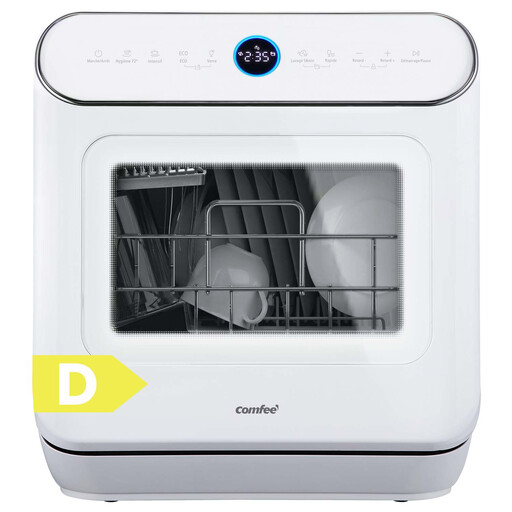 Image unavailable
Worth considering if you have limited space and less washing-up. The product description lists a manually filled water tank, 7 programmes and a D energy rating. Its “3 cutlery” and “up to 30 pieces” specifications don’t provide a directly comparable place-setting capacity. Check what fits in the rack and how much space you have on your worktop.
When your meals regularly leave a load that suits the appliance, or washing up by hand takes too much time. If you can easily wash and dry everything after each meal, buying a dishwasher may be less urgent. Before choosing a size, see how much washing-up and how many large utensils you actually accumulate.
Compare the energy class, kWh per 100 cycles, litres of water per cycle, capacity, Eco programme duration and noise details. ADEME recommends using these as a guide when choosing. The stated consumption figures relate to the reference cycle, not every programme on the appliance.
Check the housing unit, installation dimensions, compatible door panel, water supply, drainage and electrical supply. Don’t choose an integrated model based only on its stated width: confirm the installation requirements for the exact model before ordering.
Yes, if being able to repair the appliance is important to you. Compare the repairability index of the models you’re considering, as well as their capacity and consumption. The French government departments responsible for the ecological transition include dishwashers among the product categories covered by this index.
ADEME advises against rinsing dishes before putting them in the dishwasher. Wait until you have a full load without overloading the racks, then choose a programme suited to the items you’re washing.