What should you check before choosing?
For the dishes you use at mealtimes, the dishwasher must first fit in your kitchen. Usable capacity and running figures can then help you choose between models that are suitable for installation.
Freestanding
Worth considering : if your kitchen has no dedicated housing and you want an appliance with its own finished exterior.
Bear in mind : the appliance will be visible. Installing it under a worktop depends on its dimensions and whether the top can be removed.
Integrated or semi-integrated
Worth considering : if you have a dedicated housing and want the appliance to blend into your kitchen.
Bear in mind : the housing, fixings and door panel must be compatible with the model. The control panel on a semi-integrated model remains visible.
Countertop compact
Worth considering : if there’s no room for a 45 or 60 cm appliance and you don’t have a large volume of dishes to wash.
Bear in mind : capacity per cycle is more limited, so you may need to run more cycles if you do a lot of cooking.
| Criteria |
What to check |
Who it’s for |
| Installation and connections |
Measure the space in all three dimensions. Check the installation instructions for clearances and connections, and for a door panel if needed. |
If my kitchen doesn’t have a suitable housing, I need to find an appliance I can actually install without blocking the door from opening. Around 36% of consumers would put this compatibility at the top of their list. |
| Capacity and loading |
Compare the stated place-setting capacity and basket layout with your plates, serving dishes and pans. |
When I cook every day, I want to be able to load bulky utensils too, without always having to run an extra cycle. For around 29% of consumers, usable capacity would be the priority. |
| Water, energy and consumables |
Check the label for kWh per 100 cycles, litres per cycle and the Eco programme duration. Also check the instructions for salt and rinse aid. |
If I use the appliance regularly, I want to understand its standard consumption figures and which products I’ll need for my water. This would be the top consideration for around 21% of consumers. |
| Space for a compact model |
Check the available worktop space, connections and whether the interior can hold the dishes from a meal. |
In a very small kitchen, my main priority is finding room for a dishwasher, even if I have to limit how much I wash per cycle. Around 14% of consumers would prioritise a small footprint above all else. |
Dishwashers for freestanding or integrated installation
These appliances are designed for freestanding use or installation in a housing, and for everyday dishes. Choose according to the space available, then compare the stated capacity with your dishes and the figures on the energy label.
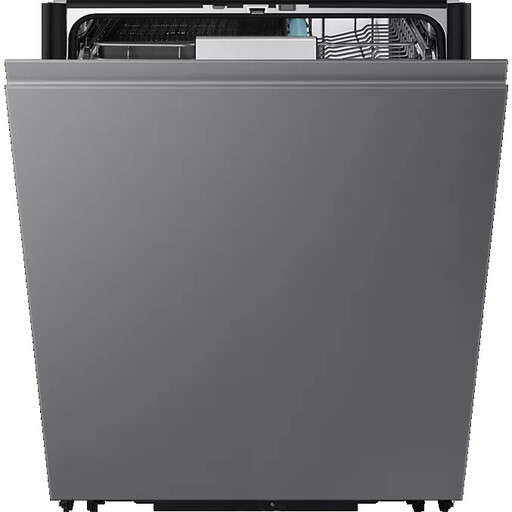 Image unavailable
Samsung DW90H79JAI0U1 Bespoke AI integrated dishwasher, 60 cm, 14 place settings, A energy rating
Worth considering for a kitchen with a dedicated housing, if 14 place settings suit the dishes you use at mealtimes. Check the housing dimensions, door panel and connections in the model’s instructions. Also check the programme list and energy label figures.
View on Joybuy
 Image unavailable
Samsung DW60M6050FS freestanding dishwasher, 14 place settings, 7 programmes, grey
Worth considering if you’re looking for a freestanding appliance for everyday dishes and want to compare a stated capacity of 14 place settings. Check that your larger dishes fit in the baskets, and check clearances, connections and the Eco programme duration before installation.
View on Joybuy
 Image unavailable
Indesit D2F HK26 S freestanding dishwasher, 60 cm, 14 place settings, E energy rating, grey
Worth considering if you have room for a 60 cm freestanding model and want to fit the dishes from your meals into a stated capacity of 14 place settings. If it needs to go under a worktop, check the instructions for the required dimensions, whether the top can be removed and the connections. Also compare the Eco programme figures on the energy label.
View on Joybuy
 Image unavailable
Hotpoint H4FD641A freestanding dishwasher, 60 cm, 14 place settings, 41 dB, C energy rating, white
Worth considering for freestanding installation and a stated capacity of 14 place settings. Check the dimensions and connections in the instructions, then check the Eco figures on the energy label. The product details warn of a risk of burns when the door opens automatically after a hot cycle. Keep children away and follow the model’s safety instructions.
View on Joybuy
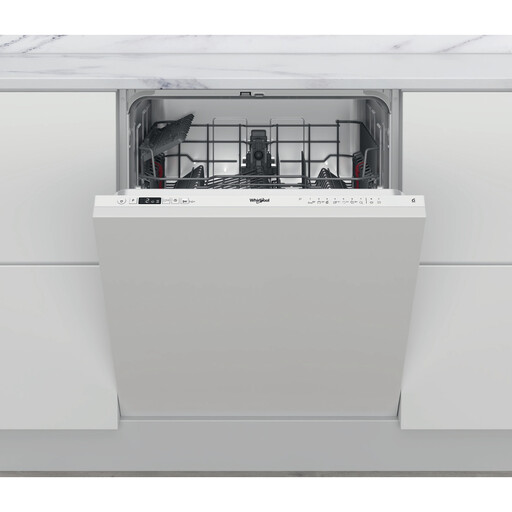 Image unavailable
Whirlpool W2I HD526 A integrated dishwasher, 60 cm, 14 place settings, E energy rating, white
Worth considering if your kitchen has a dedicated housing and the stated capacity of 14 place settings suits your everyday meals. Before choosing this integrated model, check the housing and door panel against the instructions, then consult the energy label to compare water and energy use, as well as the Eco programme duration.
View on Joybuy
Frequently asked questions
What should I measure before choosing a freestanding or integrated dishwasher?
Measure the height, width and depth of the space, as well as the clearance needed to open the door. For an integrated or semi-integrated model, also check the housing and door panel. For a freestanding model under a worktop, check the instructions to see whether its top can be removed. Confirm the chosen model’s water, drainage and electrical connections.
Which energy label figures should I compare for everyday use?
Compare the energy rating, energy use per 100 cycles, water per cycle, capacity and Eco programme duration. The European Commission also says the label shows noise emissions. Eco programme figures provide a common basis for comparison, but may not reflect the programmes you use most often.
Do I need to buy salt and rinse aid as well as detergent?
Check the instructions for your chosen model for guidance on dishwasher salt, rinse aid and maintenance. As Beko and Bosch explain, water hardness affects the water softener setting and how much salt you need. Follow the appliance-specific guidance when setting it up.


