What to consider
First decide which formats will fit your kitchen and whether you’ll keep washing by hand. Then compare the appliances that suit the amount of washing-up you produce.
Freestanding
Consider this if: you have a separate space and the necessary connections, without a cabinet niche intended to house the appliance.
Bear in mind: the appliance will be visible. Whether it can be installed under a worktop depends on the model’s dimensions and instructions.
Integrated or semi-integrated
Consider this if: you have a cabinet niche and want the appliance to blend in with your kitchen units.
Bear in mind: the niche must match the installation diagram for the model you choose, which gives you less flexibility on size.
Compact
Consider this if: space is limited and you only have a small amount of washing-up per cycle. Que Choisir notes that some models hold 6 place settings and sit on a worktop.
Bear in mind: a smaller capacity may mean running more cycles if washing-up builds up; you’ll also need to check the connections.
Washing by hand
Consider this if: you don’t have much washing-up or there’s no suitable space with the right connections. The French Ministry for Ecological Transition recommends considering how often you expect to use an appliance before buying one.
Bear in mind: you’ll still be washing up yourself. For a comparable amount of washing-up done regularly, Que Choisir says a dishwasher can use less water than traditional hand-washing.
| Criterion |
What to check |
Who this matters to |
| Capacity and daily load |
Compare the stated place settings, rack layout and the amount of washing-up you usually have. |
When washing-up builds up every day, I want to load the appliance without having to run several cycles. Around 36% of consumers put capacity at the top of their list. |
| Space and connections |
Measure the space’s width, height and depth. Check the water supply, drainage and electricity, as well as the installation diagram for integrated models. |
In a kitchen that’s already been designed, my first priority is finding an appliance that fits and can be connected. Around 29% of consumers prioritise this compatibility. |
| Energy and water use, and noise |
Check the kWh per 100 cycles, litres per cycle, Eco programme duration and noise level. Compare models with similar formats and capacities. |
If my kitchen opens onto the living space, noise matters, along with the water and energy used over time. Around 21% of consumers prioritise energy or water use, or a quieter appliance. |
| How often you’ll use it |
Think about how much washing-up you produce and how often you could fill and run the appliance. |
If I don’t have much washing-up, I want to know whether I’d use the appliance enough to justify giving it space in my kitchen. This is the main question for around 14% of consumers. |
Brands to consider
These range and model examples can help you identify what to look for. Always check the specifications for the exact model you’re considering.
Bosch
A brand to explore when dimensions and installation type are key to your choice.
- Bosch provides guidance on its 45 and 60 cm freestanding models, as well as information on installation and connections for integrated models.
- The manufacturer’s guidance doesn’t replace the installation diagram and instructions for the specific model.
Beko
A freestanding model to consider if its stated capacity and small-load options matter to you.
- Beko states that the LVV1347W has 13 place settings and a half-load option.
- These specifications apply to the LVV1347W, not to every Beko dishwasher.
Miele
A range to browse when comparing freestanding and integrated configurations, as well as their stated noise levels.
- Depending on the model, Miele lists different installation types and noise levels.
- These are specifications stated by the manufacturer for individual models, not independent measurements of the entire range.
Dishwashers to suit your space
These models include freestanding options for regular washing-up, as well as a tabletop model for smaller loads. First choose a capacity that suits your needs, then check the dimensions and connections before settling on a particular model.
 Image unavailable
Indesit D2F HK26 S, freestanding, 14 place settings, grey
Worth considering if your household regularly produces washing-up and you have space for a freestanding appliance.
- Stated width: 60 cm; stated energy rating: E.
- Check the installation dimensions, connections and full energy label figures before choosing.
View on Joybuy
 Image unavailable
Hotpoint H4FD641A, freestanding, 14 place settings, white
Worth considering if you regularly have washing-up and the stated noise level also matters in your kitchen.
- Stated width: 60 cm; stated noise level: 41 dB; stated energy rating: C.
- Check the depth and full energy label figures. Note the product information warning about hot steam when the door opens automatically.
View on Joybuy
 Image unavailable
Samsung DW60M6050FS, freestanding, 14 place settings, grey
Consider this model if you need a stated capacity of 14 place settings for your household’s regular washing-up.
- The product name lists seven cycles.
- Check the dimensions, connections and clearance needed to open the door in your chosen location.
View on Joybuy
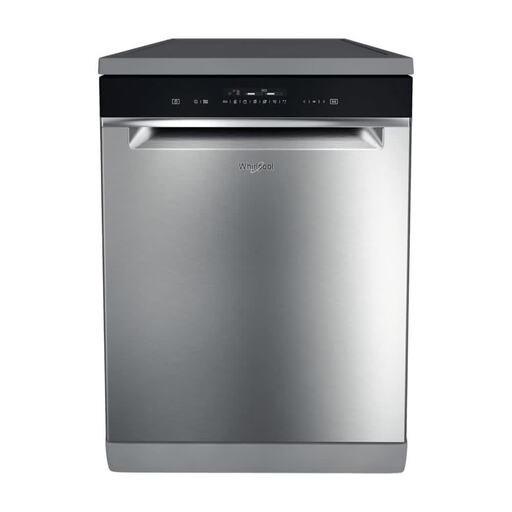 Image unavailable
Whirlpool WFP5O41PLGX, freestanding, 14 place settings, stainless steel
Worth considering for regular washing-up, as long as you confirm it will fit in the space available.
- Stated energy rating: C.
- Make sure to confirm the width of this model: the title states 60 cm, while the dimensions table lists 67.5 cm. Check the connections too.
View on Joybuy
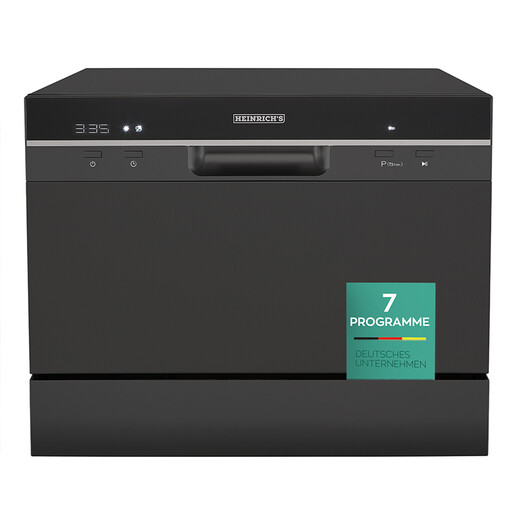 Image unavailable
Heinrich's HTG 8840 Schwarz, tabletop dishwasher, 6 place settings
Worth considering if limited space and smaller loads make a tabletop appliance the right choice for you.
- The product name lists seven programmes, 47 dB and a D energy rating.
- Six place settings may mean running more frequent cycles if you have a lot of washing-up. Check the dimensions and connections for this model.
View on Joybuy
Frequently asked questions
Which connections should I check before buying a dishwasher?
Check the water supply, drainage and electricity at the intended location. Dimensions alone aren’t enough: make sure your kitchen layout also meets the installation requirements for the model.
What should I compare on the energy label?
Compare the energy rating, kWh per 100 cycles, water used per cycle, capacity, Eco programme duration and stated noise level. ADEME and the European Commission show these details on the label. Where possible, compare appliances with similar capacities and formats.
What do the Eco programme figures mean?
According to the European Commission, the Eco programme is the reference used for the consumption and duration figures shown on dishwasher energy labels. So, if you need to plan your cycles, pay as much attention to its stated duration as to its water and energy figures.
When should I keep washing up by hand?
Washing by hand is worth considering if you rarely have washing-up and wouldn’t use an appliance often. The French Ministry for Ecological Transition recommends thinking about how useful you expect an appliance to be. On the other hand, Que Choisir says that a dishwasher used regularly for a comparable amount of washing-up can use less water than traditional hand-washing.


