Which criteria should you prioritise?
For a household of five, first choose an appliance that fits your kitchen and can hold the dishes you use regularly. Then compare its consumption, noise level and repairability.
Freestanding
Worth considering: if you don’t need a matching kitchen door and your space can accommodate the appliance you choose.
Keep in mind: a freestanding design doesn’t guarantee a greater loading capacity. Check its dimensions and connections.
Integrated
Worth considering: if the appliance needs to fit under the worktop and behind a kitchen door.
Keep in mind: the housing unit, door and door mechanism must suit the exact model, as well as the connections.
| Criteria |
What to check |
Who should consider this? |
| Capacity and loading |
Compare the stated place setting capacity, then check the basket heights and the space for your pans and large dishes. |
When a day’s washing-up already fills the baskets, I want to avoid running a second cycle. Around 33% of consumers prioritise usable space. |
| Water and electricity |
Check the kWh per 100 cycles and litres per cycle for the Eco programme on the label for the exact model. |
With almost daily use, I want to keep an eye on resource consumption. Around 27% of consumers rank water and electricity among their main concerns. |
| Noise and programme duration |
Compare the noise level in dB and the Eco programme duration, especially if your kitchen opens onto a living area. |
If the dishwasher runs while the family is in the kitchen or an adjoining room, I want to schedule the cycle without causing too much disruption. Noise and timing come first for around 20% of consumers. |
| Repairability and service |
Check the repairability index for the model and find out how to identify spare parts and access servicing. |
For an appliance used every day, I’d rather know who to contact if it breaks down. Around 20% of consumers prioritise repairability and service. |
ADEME explains that the energy label provides information including capacity, kWh per 100 cycles, litres per cycle, Eco cycle duration and noise level. Compare these figures for specific models: on their own, they don’t tell you how much space your own dishes will take up.
Models to consider on Joybuy
These freestanding and integrated dishwashers, each rated for 14 place settings, offer two possible installation types for a household of five. First choose the type that suits your kitchen, then check whether each model’s stated capacity works for your dishes and utensils.
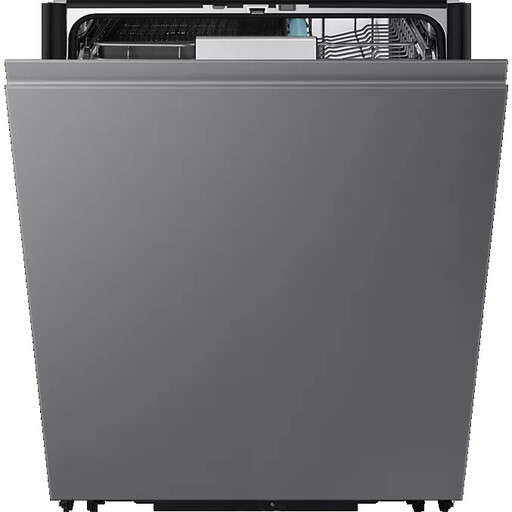 Image unavailable
Samsung DW90H79JAI0U1 Bespoke AI, integrated, 14 place settings
Worth considering if your kitchen can accommodate an integrated appliance and you want to wash the family’s dishes in one cycle.
Rated for 14 place settings, with a stated width of 60 cm and an A energy rating. Before comparing cycle performance, check that it fits the housing unit, that the kitchen door is compatible and what the Eco programme duration is for the exact version.
View on Joybuy
 Image unavailable
Samsung DW60M6050FS, freestanding, 14 place settings, grey
Worth considering if you need a freestanding model and your household’s dishes will fit in the baskets for everyday use.
Rated for 14 place settings, with seven cycles mentioned in the product name. To compare its suitability for everyday use, check the Eco programme duration and consumption figures on the label for the version on sale.
View on Joybuy
 Image unavailable
Indesit D2F HK26 S, freestanding, 14 place settings, grey
Worth considering if you’re looking for a freestanding appliance and want to check how well its baskets accommodate your household’s larger items.
Rated for 14 place settings, with a stated width of 60 cm and an E energy rating. Before comparing consumption, check the label for litres per Eco cycle and kWh per 100 cycles.
View on Joybuy
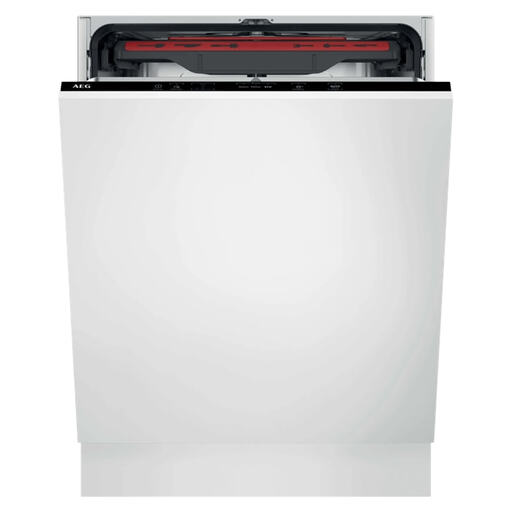 Image unavailable
AEG FSB34707Z, integrated, 14 place settings
Worth considering if you need an appliance that fits behind a kitchen door and its stated capacity suits your everyday dishes.
Rated for 14 place settings, with a C energy rating. The stated dimensions don’t match the advertised 60 cm width, so check the appliance and housing unit measurements before choosing how to install it.
View on Joybuy
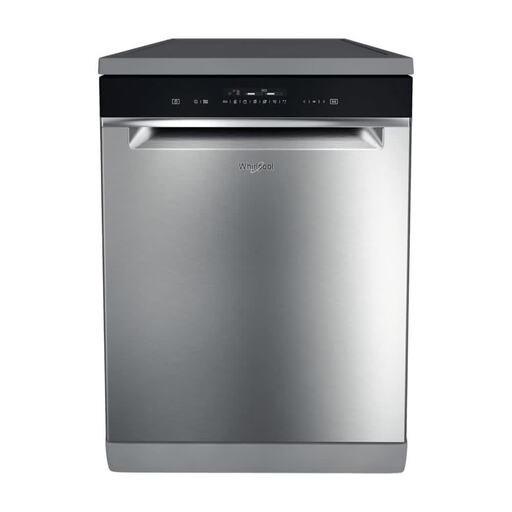 Image unavailable
Whirlpool WFP5O41PLGX, freestanding, 14 place settings, stainless steel
Worth considering for family-sized loads in a freestanding model, provided the baskets and available space suit your kitchen.
Rated for 14 place settings, with a C energy rating. The stated dimensions don’t match the advertised 60 cm width, so check the actual dimensions and Eco programme figures for this model.
View on Joybuy
Frequently asked questions
Is the place setting capacity enough to choose a dishwasher for a household of five?
No. The stated place setting capacity doesn’t tell you whether your pans, dishes and large utensils will fit alongside a day’s washing-up. A 14-place-setting model is worth considering, but you’ll also need to check the basket adjustments and cutlery storage.
What should I compare on the energy label?
Compare the capacity, kWh per 100 cycles, litres per cycle, Eco programme duration and noise level for each model. ADEME recommends using these figures to help you choose. Compare like with like by looking at the same programme, rather than assuming its consumption figures apply to a quick or automatic cycle.
Is a third rack useful for a household of five?
It can be useful if cutlery and small utensils regularly take up space in the main baskets. However, check how adjustable it is and how much height it leaves in the upper basket: it doesn’t guarantee more room for large dishes.
What should I check before choosing an integrated dishwasher?
Measure the housing unit and check the appliance dimensions, kitchen door, door mechanism and connections. A stated width close to 60 cm isn’t enough to confirm that everything will fit.
How can I factor repairability into my buying decision?
Check the repairability index shown for the model sold in France and find out how to identify spare parts and access servicing. Légifrance publishes the decree of 22 April 2022 on how this index is calculated and displayed for household dishwashers. A brand’s spare parts catalogue doesn’t confirm that every part is available for your model.


