What to compare before you buy
To narrow down your options, start with your usual load, then check energy and water consumption and cycle times before considering noise and after-sales support.
| Criterion |
What to check |
Who’s most likely to prioritise it |
| Fit your usual load |
Compare the stated capacity with your plates, glasses and larger utensils. Make sure the spray arms can rotate freely. |
If I need to fit dishes and utensils for five people between washes, I look at the rack layout first. Around 29 % of consumers prioritise a family-sized load. |
| Keep water and electricity use in check |
Compare kWh per 100 cycles and litres per cycle for the exact models, taking their capacity into account. |
If the appliance runs often, I want to compare the consumption figures for the cycles I’ll actually use. Around 23 % of consumers put managing water and electricity use first. |
| Have clean dishes when you need them |
Check the eco programme duration and delay-start options. Consult the manual for the conditions that apply to short programmes. |
If I need certain utensils again soon, I check programme durations before choosing. Around 18 % of consumers prioritise having dishes ready between uses. |
| Keep noise to a minimum in your living space |
Compare the noise level in decibels and the noise class on the label, then consider when you plan to run the cycles. |
If my kitchen opens onto my living space, I pay attention to how noisy the cycles are. Around 18 % of consumers make quiet operation their priority. |
| Plan for maintenance and after-sales support |
Check the repairability index, the seller’s terms and the instructions in the manual. |
When choosing an appliance I can maintain and have repaired, I also check the after-sales information. Around 12 % of consumers prioritise maintenance and repairability. |
Dishwashers available on Joybuy
These Joybuy models include freestanding and integrated dishwashers rated for 13 or 14 place settings. Compare the installation type and specifications listed for each model with your kitchen and usual load.
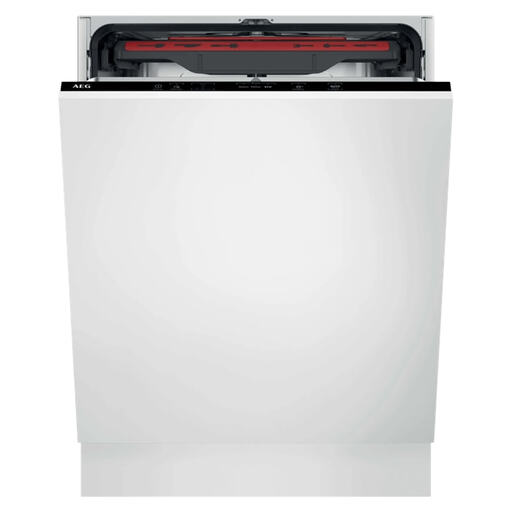 Image unavailable
AEG FSB34707Z
Worth considering if you’re looking for a fully integrated model for frequent family-sized loads.
60 cm, 14 place settings and a C energy rating, according to the product name. You’ll need a compatible housing unit and installation. The eco programme is listed as taking 240 minutes.
View on Joybuy
 Image unavailable
Whirlpool WFP5O41PLGX
Worth considering if you’re looking for a freestanding model rated for family-sized loads.
60 cm, 14 place settings, stainless steel finish and a C energy rating, according to the product name.
View on Joybuy
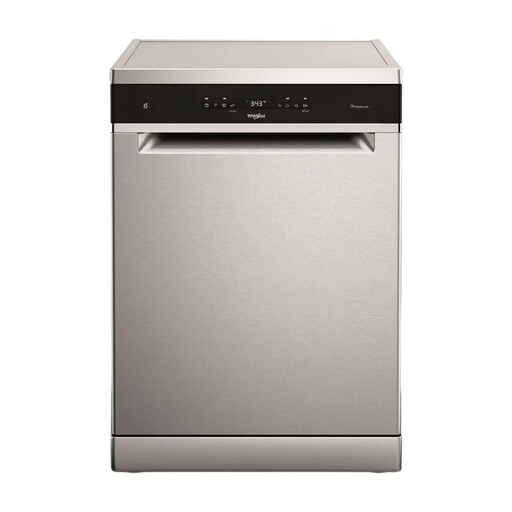 Image unavailable
Whirlpool WH6FC14BN70X
Worth considering if you prefer a freestanding dishwasher for family-sized loads.
60 cm, 14 place settings, stainless steel finish and a C energy rating, according to the product name.
View on Joybuy
 Image unavailable
Indesit D2F HK26 S
Worth considering if you’re looking for a freestanding model rated for 14 place settings.
60 cm, grey finish and an E energy rating, according to the product name.
View on Joybuy
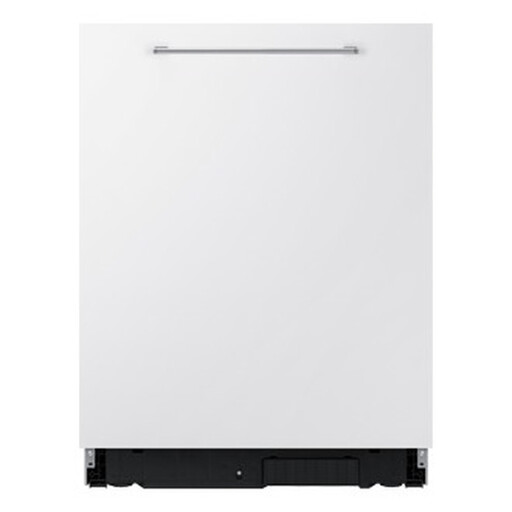 Image unavailable
Samsung DW70H72WCB0U1
Worth considering if you’re looking for an integrated model rated for 13 place settings, with adjustable racks.
60 cm and a C energy rating, according to the product name. You’ll need a compatible housing unit and installation.
View on Joybuy
Frequently asked questions
Are 15 place settings enough for all the dishes from a family of five?
Not necessarily : this figure doesn’t guarantee that your everyday load will fit in the appliance. Your mealtime habits and rack layout matter too. Check there’s enough space for your dishes and that the spray arms can rotate freely.
How can I estimate annual consumption from the energy label?
Multiply the kWh per 100 cycles by your number of cycles per year, then divide by 100; multiply the litres per cycle by the same number of cycles. For the EEM69300IX, the stated figures of 86 kWh per 100 cycles and 11 litres per cycle work out at 313,9 kWh and 4 015 litres for 365 cycles. This calculation uses the stated figures and doesn’t measure your household’s actual consumption.
Is a longer eco programme necessarily less economical?
No. Bosch explains that, for normally soiled dishes, its eco programme uses a longer wash with gradual heating to optimise water and energy use. Compare the programme’s consumption rather than looking at its duration alone.
What should you compare on a dishwasher’s energy label?
Compare the capacity, consumption figures, eco programme duration and noise level, among other things. The European Commission says that the current dishwasher energy scale runs from A to G; ADEME also recommends checking the specifications that match how you’ll use the appliance.
Does the repairability index guarantee that a dishwasher won’t break down?
No. The Ministry of the Economy says that the repairability index applies to dishwashers and gives an indication of how repairable they are, based on criteria including documentation, ease of dismantling and spare parts. It doesn’t guarantee that the appliance won’t break down or that it will last for a specific length of time.


