A dishwasher is worth considering if everyday meals produce enough washing-up to run full loads. If you prefer to wash everything straight after each meal, how useful one is will depend more on your routine. First, choose a size that fits your space and the amount of washing-up you produce, then compare energy and water use, Eco programme duration and noise levels. The energy rating alone is not enough to judge washing or drying performance.
Which households should consider one?
The right size depends as much on how much washing-up builds up between cycles as it does on the space available in your kitchen.
Households that cook every day
Plates, glasses and cutlery aren’t the only things to consider: dishes and pans can take up space in the racks too. Before choosing a capacity, work out what actually builds up, then look at the washing and drying performance of the model you’re considering.
Households with an open-plan kitchen or limited space
Measure the space available and compare the noise levels listed in dB before choosing an appliance. A slimline or compact model takes up less room, but its capacity still needs to suit your everyday washing-up.
Households replacing an appliance in a fitted kitchen
For an integrated model, check the housing, door panel and access to the connections. Que Choisir notes that a built-in appliance must fit into a purpose-made housing; also check what the installation service includes.
What should you check before choosing?
Start with the amount of washing-up and any installation requirements. An attractive capacity or energy label won’t make up for an appliance that doesn’t fit your kitchen.
Freestanding
Consider it: if you have a suitable space and don’t need to hide the appliance behind a door panel.
Bear in mind: the appliance will be visible, and its overall dimensions, including connections, must fit your kitchen.
Integrated or semi-integrated
Consider it: if you have a suitable housing and want the door panel to match your kitchen.
Bear in mind: the door panel and installation need to be checked separately from the appliance itself; an installation service may not include any additional work that’s needed.
Compact
Consider it: if space is limited and you don’t produce much washing-up between cycles.
Bear in mind: check that your everyday dishes and utensils will fit, so you won’t have to run extra cycles or regularly finish the job by hand.
| Priority |
What to check |
What I need |
| Capacity and routine |
Count the washing-up that builds up between cycles, including dishes. According to GIFAM, a 60 cm model holds 12 to 15 place settings, while a 45 cm model holds 9 to 10; check the capacity of the specific model. |
I cook often and want to wait until I have a full load without running short of dishes in the meantime. |
| Energy and water use |
Compare kWh per 100 cycles and litres per cycle on the Eco programme, then check how long it takes. The European Commission says the label also shows capacity and noise levels. |
I want to compare the figures on the label with the number of cycles I’ll actually run, rather than judging how I use it by the energy rating alone. |
| Washing and drying |
Look for comparable tests of the exact model and the programmes that suit your washing-up. Que Choisir assesses washing and drying performance separately from energy and water-use information. |
If I often wash containers, glasses or dishes, I want to know what results to expect after a cycle, not just read the energy label. |
| Space and installation |
Measure the available space and check the manual for clearance and connection requirements. For an integrated model, also check the housing, door panel and what the installation service includes. |
I’m replacing an appliance in a fitted kitchen, so the new model needs to fit in the space provided. |
| Noise |
Compare the dB levels listed for the models you’re considering, but don’t assume these alone tell you how noisy an appliance will seem in your room. |
In an open-plan kitchen, I want to take noise into account when running cycles while the room is in use. |
What pitfalls should you avoid?
-
Choosing based on the energy rating alone
The label helps you compare energy and water use on a like-for-like basis, but it doesn’t tell you how well the model washes and dries on its own.
Compare the Eco programme figures, then look for tests of the exact model and the results that matter for your washing-up.
-
Ordering an integrated model without checking the housing
A built-in appliance needs to fit into a suitable housing. According to Electrolux’s pre-installation guide, installers don’t carry out carpentry, plumbing or electrical work.
Measure the housing, check that the door panel is compatible, and ask what delivery and installation include before you order.
You may need a separate door panel or additional work to prepare the space.
-
Choosing a smaller capacity just to save a few centimetres
According to GIFAM, 45 cm and 60 cm models have different place-setting capacities. The number of place settings alone also won’t tell you how much room your pans and dishes will take up in the racks.
Base your choice on how much washing-up builds up between cycles, then check the layout inside the model you’re considering.
-
Comparing energy and water use without considering how often you’ll run it
Eco programme figures don’t cover every programme or every way of using a dishwasher. ADEME advises against pre-rinsing dishes before putting them in the machine.
Compare models using the same programme, and consider how often you’ll be able to run a full load.
Some brands to compare model by model
A feature or result associated with one model shouldn’t be assumed to apply to an entire brand.
Bosch
Bosch describes AquaStop as a safety feature designed to help protect against water leaks on appliances fitted with it.
- Check whether the specific model you’re interested in has AquaStop.
- This feature doesn’t tell you anything about capacity or washing and drying performance.
Whirlpool
When looking at a Whirlpool dishwasher, start with the exact model number rather than assuming all the brand’s models have the same features.
- Compare the capacity, installation type and label information for the model you’re considering.
- Check the dimensions in the manufacturer’s documentation before planning where to put it.
Beko
Like any other appliance you’re considering, a Beko model should be assessed on its own size and features.
- Check the installation type, capacity and energy and water use of the model you’ve chosen.
- The brand name alone can’t tell you how well a particular model washes or dries, or how reliable it is.
Dishwashers available from Joybuy
This selection includes freestanding models for regular loads and a compact option to consider if you produce less washing-up each day. Compare their capacities with your own washing-up, and check the installation requirements for each model.
 Image unavailable
Samsung DW60M6050FS, freestanding, 14 place settings
Its stated capacity of 14 place settings could suit a large daily load if you have room to wait between cycles. The title lists seven programmes; check the dimensions, connections and washing and drying performance of this model.
View on Joybuy
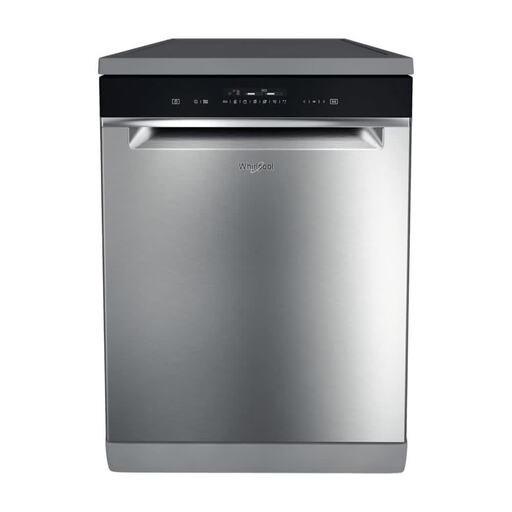 Image unavailable
Whirlpool WFP5O41PLGX, freestanding, 14 place settings
The stated capacity could suit a large amount of everyday washing-up. The title lists a C energy rating, but the dimensions given for this model don’t match. Confirm its width in the manufacturer’s documentation before checking whether it will fit.
View on Joybuy
 Image unavailable
Hotpoint H4FD641A, freestanding, 14 place settings
For regular loads, compare its stated capacity of 14 place settings with the space your dishes take up. The title lists a 60 cm width, 41 dB and a C rating; check the full dimensions and consult the energy label to compare Eco programme use.
View on Joybuy
 Image unavailable
Indesit D2F HK26 S, freestanding, 14 place settings
Compare its stated capacity of 14 place settings with the amount of washing-up your everyday meals produce. The title lists a 60 cm width and an E rating; compare energy and water use on the label, and confirm the installation dimensions and connections.
View on Joybuy
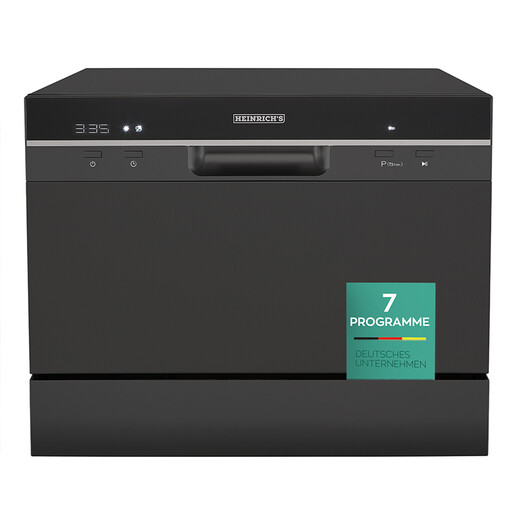 Image unavailable
Heinrich's HTG 8840 Schwarz, compact, 6 place settings
This tabletop model holds six place settings and is worth considering if you don’t produce much washing-up each day. The title lists seven programmes, 47 dB and a D rating; check the available space, water supply and room for your dishes before choosing this size.
View on Joybuy
Frequently asked questions
Is a dishwasher worth it if you cook every day?
It’s worth considering if you produce enough washing-up to run full loads and want to spend less time washing by hand. If you wash everything straight after each meal, weigh up how you’d use it against the space and installation it requires, rather than assuming every household will benefit equally.
How do you compare the energy and water use of two dishwashers?
Compare the Eco programme figures on a like-for-like basis: kWh per 100 cycles and litres per cycle. Then factor in the programme duration and how often you’ll use it. The European Commission says the label also shows capacity and noise levels; these figures alone don’t measure washing or drying performance.
Should you choose a 60 cm, 45 cm or compact model?
Choose according to the space available and how much washing-up builds up between cycles. GIFAM associates 60 cm models with 12 to 15 place settings and 45 cm models with 9 to 10; for a compact model, check the capacity of the specific appliance and how much room it leaves for the dishes you use every day.
What should you check before ordering an integrated dishwasher?
Measure the housing and check the door panel, clearance and connections required for the model you’ve chosen. Que Choisir notes that a built-in appliance must fit into a housing; also ask which tasks are included in the installation service.


