What should you check first?
First, decide where the appliance can go, then check that its capacity suits your household’s washing-up needs. Next, compare energy and water use and noise levels using the information for the exact model.
Fully integrated
Consider this if: your kitchen has a dedicated space and a door panel to conceal the appliance when it’s closed.
Bear in mind: you’ll need a compatible door panel, which should be planned alongside the kitchen units.
Semi-integrated
Consider this if: you have a dedicated space but want the control panel to remain visible at the front.
Bear in mind: the control panel stays visible, and the appliance still needs a dedicated space and a compatible door panel.
Freestanding
Consider this if: your kitchen doesn’t have a dedicated space, or you’re replacing an appliance that’s already on show.
Bear in mind: the appliance remains visible, and whether it can fit under a worktop depends on the model.
Compact
Consider this if: space is very limited and a smaller capacity will handle your washing-up between washes.
Bear in mind: if the capacity is too small, you may need to run more cycles. It’s worth comparing a slimline model as well.
| Criteria |
What to check |
Relevant consumers |
| Kitchen units and door panel |
Measure the space and appliance; check the door panel and its fixing system. |
I want the appliance to fit neatly with my kitchen units, without finding out too late that the door panel or space isn’t suitable. Around 36% of consumers would prioritise this integrated look. |
| Freedom to position |
Identify which sides will remain visible; if installing under a worktop, check whether the top panel is removable and measure the height with it removed. |
Without a dedicated space, I’m looking for an appliance that will fit into my existing kitchen. This flexibility would be the main priority for around 29% of consumers. |
| Space and capacity |
Compare the space available, the stated number of place settings and how often you’re likely to run a cycle. |
In a small space, I don’t want to save room at the expense of having enough capacity for the washing-up I do each day. Around 21% of consumers would put this trade-off first. |
| Use and service life |
Check the kWh per 100 cycles, litres per cycle and noise level. Also look at repairability information and any work needed to connect the appliance. |
I want to understand an appliance’s energy use and maintenance needs before buying one I’ll use regularly. This would be the main concern for around 14% of consumers. |
ADEME explains that the energy rating label shows energy use in kWh per 100 cycles and water use in litres per cycle. Compare these figures on the labels of the models you’re considering, bearing in mind that capacity and installation requirements can vary.
Dishwashers to suit your kitchen layout
These Joybuy models illustrate three options: an integrated dishwasher for a fitted kitchen, a freestanding model for a kitchen without a dedicated space, and a compact worktop appliance. First choose a format that fits your space, then check the specifications of the model you’re interested in.
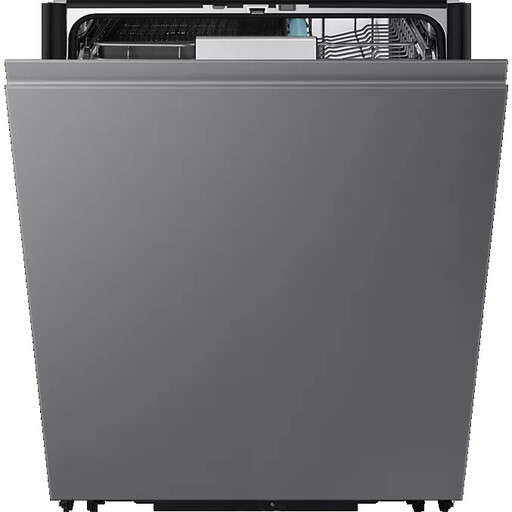 Image unavailable
Samsung DW90H79JAI0U1 Bespoke AI, fully integrated, 60 cm, 14 place settings
Worth considering for a fitted kitchen with a compatible dedicated space and door panel.
Energy rating A, as stated in the product name. Measure the space and check the connections and door panel before installation.
View on Joybuy
 Image unavailable
Indesit D2F HK26 S, grey freestanding, 60 cm, 14 place settings
Worth considering for a kitchen without a dedicated space for an integrated dishwasher.
Energy rating E, as stated in the product name. If you plan to install it under a worktop, check that the top panel can be removed and measure the appliance in this configuration.
View on Joybuy
 Image unavailable
Hotpoint H4FD641A, white freestanding, 60 cm, 14 place settings
Worth considering if you’d prefer a freestanding appliance rather than one concealed behind a door panel.
The product name states a noise level of 41 dB and an energy rating of C. If you plan to install it under a worktop, check the available height and exact dimensions after any adjustments.
View on Joybuy
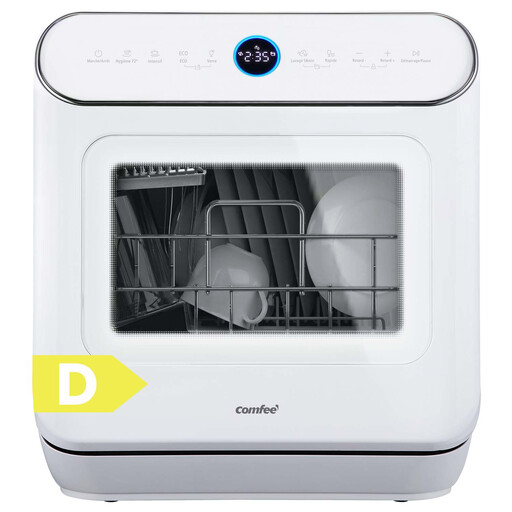 Image unavailable
COMFEE CDWMT305WD, white mini worktop dishwasher, 3 place settings
Worth considering for a very small space if three place settings are enough between washes.
The product name states that it has seven programmes and an energy rating of D. Before deciding where to put it, check its dimensions, how it’s filled and how it drains.
View on Joybuy
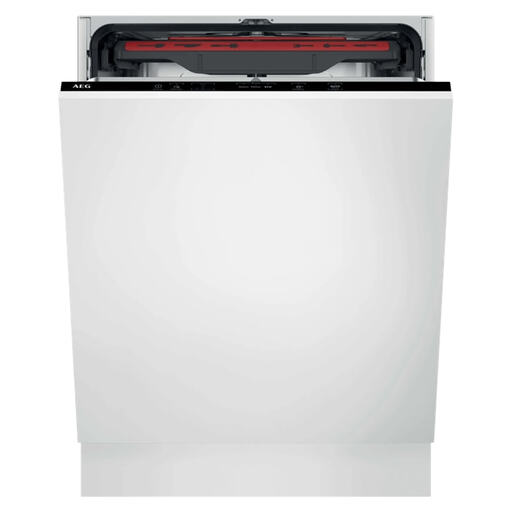 Image unavailable
AEG FSB34707Z, fully integrated, 14 place settings
Worth considering if your kitchen has a dedicated space and door panel for a fully integrated appliance.
The product name states an energy rating of C and a width of 60 cm, but the dimensions listed for this model don’t match. Confirm the exact measurements before choosing it for your kitchen space.
View on Joybuy
Frequently asked questions
Can you install an integrated dishwasher without a dedicated space?
No. According to Que Choisir, an integrated dishwasher must be fitted into a dedicated space and have a compatible door panel. If your kitchen isn’t set up for this, consider a freestanding appliance instead.
Can a freestanding dishwasher go under a worktop?
Some models can, provided you check whether the top panel is removable and whether the appliance will fit into the available space once it’s removed. Check these details for the model you’ve chosen before deciding where to put it.
What’s the difference between semi-integrated and fully integrated?
Both fit into a dedicated space with a suitable door panel, but the control panel on a semi-integrated model remains visible at the front. On a fully integrated model, the controls are on the top edge of the door, and the appliance is concealed when the door is closed.
Is a compact dishwasher enough for a small kitchen?
A compact model is enough if its capacity suits the amount of washing-up that builds up between washes. Que Choisir features compact models with 6 place settings and 45 cm models with 9 place settings. Compare these options if a smaller appliance would mean running more cycles. Some worktop models have an even smaller capacity.
What should you compare on a dishwasher’s energy label?
Compare the energy and water use of the models you’re considering, along with the noise level and any other details relevant to how you’ll use it. ADEME explains that energy use is shown in kWh per 100 cycles and water use in litres per cycle. Also check the capacity and make sure each appliance is compatible with your kitchen.


