Households that cook often with a standard kitchen
You build up plates, utensils and dishes every day: look for an interior large enough to avoid running cycles too frequently, then compare consumption on the Eco programme.


Start by choosing a format that fits the available space and the amount of washing-up that builds up between washes, then compare the labels for the exact models. A 60 cm model is suitable when the interior can be loaded regularly; a 45 cm or compact model is primarily a solution when space is limited. In France, the repairability index helps assess how repairable an appliance is, but does not on its own guarantee its actual service life.
You build up plates, utensils and dishes every day: look for an interior large enough to avoid running cycles too frequently, then compare consumption on the Eco programme.
A 45 cm or compact appliance may be suitable, provided you check the place setting capacity and label data. A smaller format is not automatically more efficient or quieter.
Before buying, check the exact model’s official repairability score out of 10. This indicator provides information about repairability, but is not a promise of service life.
Start with the available space and your actual load, then compare the shortlisted models on a like-for-like basis.
| Priority | What to check | Your needs |
|---|---|---|
| Capacity and format | Compare the place setting capacity, width and installation type. Also examine the baskets, cutlery drawer and available space for the dishes, pans and glasses you use every day. | I want an interior that can hold a day’s washing-up without multiplying cycles, while avoiding a capacity that would remain largely unused. |
| Water and energy | Note the kWh per 100 cycles, litres per Eco cycle and duration of the Eco programme. ADEME states that these figures allow appliances to be compared on a common basis. | I prefer to compare the resources used by the same references rather than infer consumption from the appliance’s size or number of programmes. |
| Noise | Check the dB(A) level and sound emission class on the label. A silent programme does not replace the declared sound level for the model. | For an open-plan kitchen or evening cycles, I’m looking for a noise level that works around mealtimes, working from home or sleeping. |
| Repairability | Look for the repairability index out of 10, its colour code and the details associated with the exact model. France’s Ministry for Ecological Transition cites dismantlability, advice and spare parts among the criteria taken into account. | I want to be able to consult official repairability information before choosing, without confusing this index with a guarantee of reliability. |
| Fitting | For an integrated model, check the cabinet dimensions, door panel, hinges and installation requirements. For a freestanding model under a worktop, check the available height and connections. | My appliance must fit the actual layout of my kitchen, not just the advertised width. |
Two appliances with the same width can have different water, energy and noise levels. Among the documented 45 cm models, one states 7.9 L per Eco cycle and 43 dB, while another states 11.9 L and 49 dB.
Once you have confirmed the dimensions and capacity, compare the kWh per 100 cycles, litres per Eco cycle, Eco duration and dB(A) of the exact model.
A compact model solves a space constraint, but its interior may be considerably smaller. The documented compact Electrolux example states 6 place settings, compared with 13 or 14 place settings for some 60 cm Electrolux appliances.
Estimate a day’s washing-up using your plates, saucepans and food containers. If several cycles become routine, compare 45 cm appliances as well.
The index covers factors including dismantlability, usage and maintenance advice, as well as the availability and price of spare parts. It does not directly measure the frequency of breakdowns or observed service life.
Use it as a repairability criterion, then separately check the applicable guarantee, available spare parts and documentation for the model you are considering.
ADEME states that a difference of three decibels corresponds to an almost doubling of the noise. In an open-plan kitchen, this difference can matter during a meal or in the evening.
Compare the dB(A) levels and sound emission classes, taking account of where the appliance will be installed and when you plan to run cycles.
The French range includes freestanding and integrated dishwashers, particularly 60 cm models for households seeking standard capacity or integration into a unit.
A brand worth considering for narrow kitchens, with 45 cm freestanding appliances available on the French market.
Offers, among other options, narrow 45 cm integrated appliances for fitted kitchens where width is limited.
The French range includes several formats, from compact 55 cm integrated models with 6 place settings to 60 cm appliances with 13 or 14 place settings.
Joybuy options for everyday washing-up, including integrated, freestanding and compact dishwashers to suit the available space.
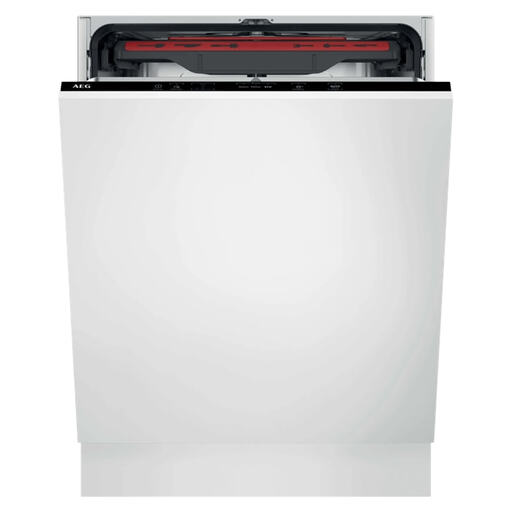 Image unavailable
For a fitted kitchen and substantial daily loads, with a stated capacity of 14 place settings.
Cutlery drawer, five programmes, 240-minute Eco cycle, AirDry drying and a stated noise level of 44 dB. Check the cabinet dimensions, door panel, sliding hinges and repairability index for the exact model.
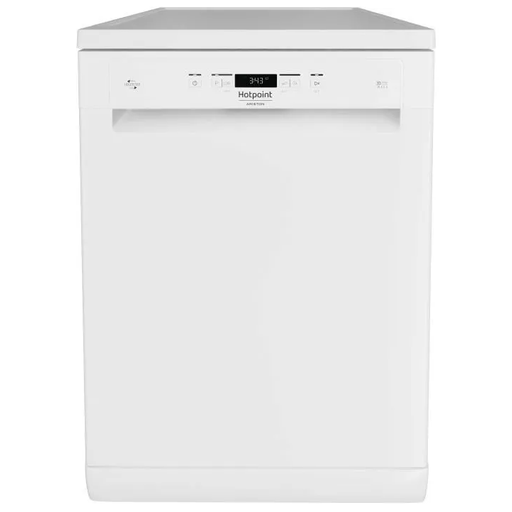 Image unavailable
For a household with room for a 60 cm freestanding model and a regular build-up of washing-up.
14 place settings, stated Eco consumption of around 9.5 L, a stated noise level of 41 dB, automatic door opening and a removable top. Check the full label, the available height under the worktop and the repairability index.
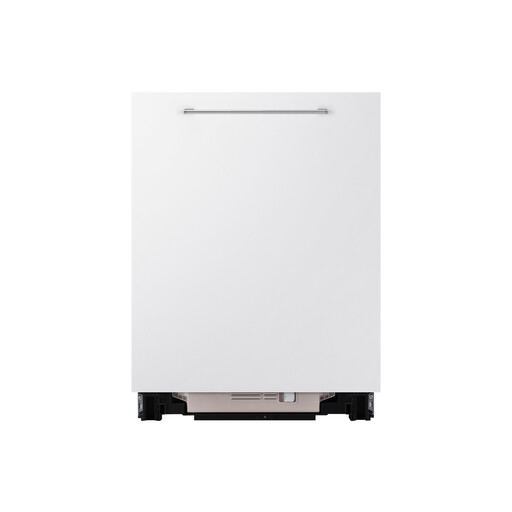 Image unavailable
For fitted kitchens where varied dishes and utensils require a flexible interior layout.
13 place settings, a three-level adjustable basket, fold-down tines and an Extra Silence programme rated at 42 dB(A). Confirm the cabinet dimensions, door panel, fixed hinge and Eco data on the label.
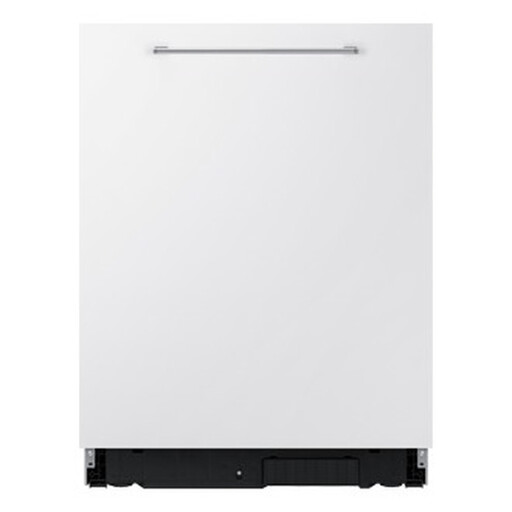 Image unavailable
For a fitted kitchen with loads of various sizes and a compatible sliding door.
13 place settings, a three-level adjustable middle basket, flexible tines, a Kitchen Fit sliding door and a stated noise level of 44 dB(A). Downloaded programmes require SmartThings and a Wi-Fi connection; also check the cabinet dimensions and label.
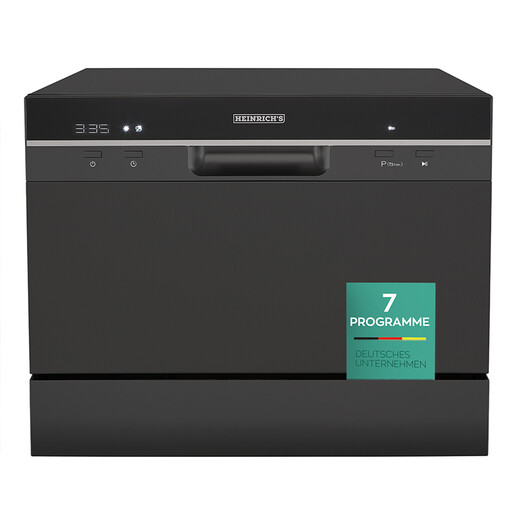 Image unavailable
Worth considering for a small kitchen or as a secondary appliance when space rules out a freestanding model.
6 place settings, seven programmes, 6.5 L per cycle, 49 kWh per 100 cycles, a 215-minute Eco cycle and a stated noise level of 47 dB. Check the dimensions, intended location and repairability index before buying.
First compare the dimensions that fit your kitchen and the place setting capacity, followed by the energy class, kWh per 100 cycles, litres per Eco cycle, Eco duration and noise level. ADEME states that the water and energy data on the label allow comparison on a common basis; format alone does not indicate consumption.
It can be suitable if the washing-up that builds up between washes genuinely fits its capacity. The documented compact Electrolux example states 6 place settings, while 45 cm examples state 9 or 10 place settings and some 60 cm Electrolux models have 13 or 14 place settings. Check the exact product details and the space required for your bulkiest dishes.
Look for the score out of 10 displayed near the price or on the sales page for the exact model. France’s Ministry for Ecological Transition states that dishwashers are among the categories covered, both in shops and online. If the reference is unclear, ask for the details of the index associated with the model.
No. It indicates how easy or difficult an appliance is to repair, based on criteria such as dismantlability, advice, the availability of spare parts and their price. It does not directly measure the frequency of breakdowns, washing performance or actual service life.
The Eco programme is used as the reference for label data: ADEME specifies that energy is expressed in kWh per 100 reference cycles and water in litres per reference cycle. Comparing these figures helps you avoid drawing conclusions from the number of programmes or the appliance’s size alone.