Households with lots of washing up
If plates and saucepans quickly fill the tub, look at the rack layout as well as the number of place settings. The usable space will determine whether your usual load fits into one cycle.


First, choose a size that fits your kitchen, can be connected up and holds your usual load of dishes without needing multiple cycles. Then compare the energy labels using the same units: kWh per 100 Eco cycles, litres per cycle, Eco programme duration and noise in dB. Place settings give you an indication of capacity, but you’ll still need to check the racks and dimensions of the specific model.
If plates and saucepans quickly fill the tub, look at the rack layout as well as the number of place settings. The usable space will determine whether your usual load fits into one cycle.
Measure the space and check access to water, drainage and electricity before choosing a slimline or countertop model. A compact dishwasher is only a good fit if its capacity and installation requirements suit your needs.
Compare the water, energy and noise figures on the label, then check whether the Eco programme duration works with your routine, particularly if your kitchen opens onto a living area.
Choose the size before comparing consumption: first, the appliance needs to suit the available space, connections and amount of washing up.
Consider this: if there’s an accessible spot where you can place the appliance without fitting it behind a kitchen unit door.
Bear in mind: it still needs connections to water, drainage and electricity; the width you choose must also leave enough room for your dishes.
Consider this: if the appliance needs to fit into a housing unit and, depending on the model, have a door panel to match your kitchen.
Bear in mind: width alone isn’t enough: the housing unit, door, panel, plinth and connections all need to suit the exact model.
Consider this: if you have limited space and a small amount of washing up. UFC-Que Choisir, for example, lists countertop models advertised as holding 6 place settings.
Bear in mind: a model that connects to your plumbing still needs water, drainage and electricity. Check how your chosen model works rather than assuming it has a water tank.
| Criterion | What to check | Who is it for? |
|---|---|---|
| Practical capacity | Number of place settings, rack layout and space for large dishes; consider these in relation to how often you wash up. | If plates and saucepans quickly fill the tub, I want to run fewer cycles without having to leave bulky items out. Around 40% of consumers would put practical capacity first. |
| Water and electricity | On the energy label, compare kWh per 100 Eco cycles, litres per cycle and the Eco programme duration. | When I run cycles frequently, I want to compare water and electricity on a like-for-like basis before choosing. Around 30% of consumers would make keeping consumption under control their priority. |
| Installation | Measure the space and check the water inlet, drainage and electricity supply; for an integrated model, also check the housing unit and door panel. | In a kitchen where space is limited, I need to know whether the appliance can actually be installed before comparing its programmes. Installation compatibility would come first for around 20% of consumers. |
| Noise | Check the noise emissions in dB and the noise class, taking the kitchen’s location into account. | With an open-plan kitchen, I want to minimise disruption while the dishwasher is running, especially when the living area is in use. Around 10% of consumers would make noise their main concern. |
Two dishwashers advertised with the same number of place settings may load differently. Tall dishes or large saucepans could mean you need to run another cycle.
Look at the racks and usable dimensions of the specific model, then compare them with the dishes you wash regularly.
UFC-Que Choisir points out that a dishwasher connected to the plumbing needs a water supply, a wastewater outlet and an electricity supply. Its small size doesn’t mean it can do without these connections.
Before ordering, check the instructions for your chosen model, the location of the connections and what’s included in the installation.
The consumption figures shown on the energy label relate to the reference Eco programme. They don’t tell you how much a quick programme will use.
Look at the kWh per 100 Eco cycles, litres per cycle and Eco programme duration together, then consider which programmes you’ll actually use.
An appliance may fit the available width but still be incompatible with the height of the housing unit, the plinth or the way the door opens.
Also measure the depth and the space needed with the door open; confirm that the panel and hinges are compatible with the exact model.
Bosch offers 45 cm and 60 cm freestanding dishwashers in France.
The French product page for the Miele G 5790 SCVi SL describes a fully integrated 45 cm dishwasher.
Beko offers freestanding, integrated and fully integrated models in France.
These models suit two different needs: fitting into a fitted kitchen, or washing small loads in a countertop appliance. In either case, compare the stated capacity with your dishes and check the installation requirements before comparing the consumption figures on the energy label.
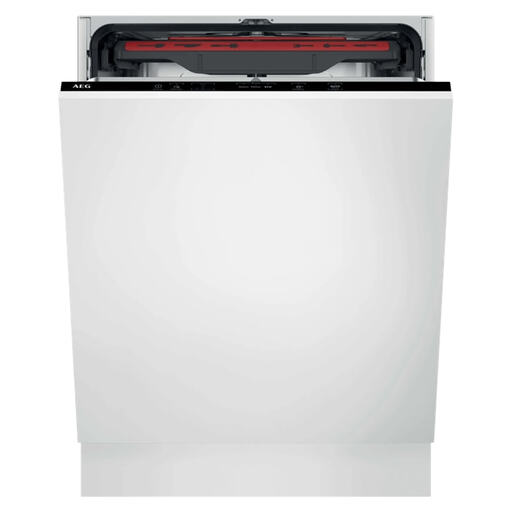 Image unavailable
For a fitted kitchen where the stated capacity of 14 place settings suits your usual load. The title specifies a 60 cm model with a C rating; confirm the exact dimensions of the appliance and housing unit, as well as the consumption figures on its energy label.
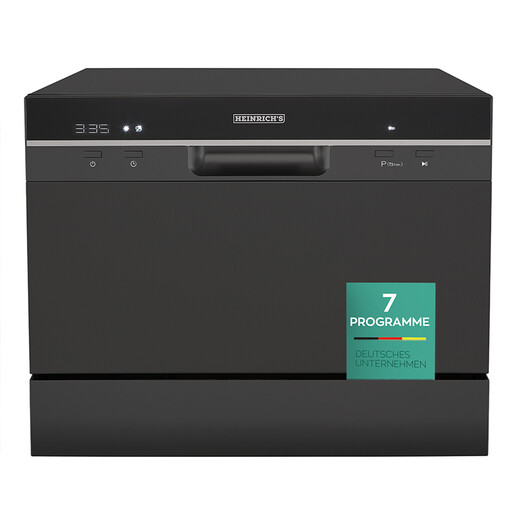 Image unavailable
Worth considering for a small amount of washing up if there’s room for the necessary connections. The title states 7 programmes, 47 dB and a D rating; check the dimensions and Eco programme figures on the model’s energy label.
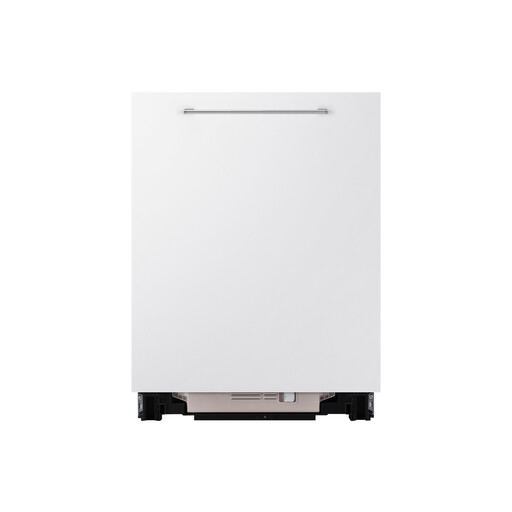 Image unavailable
Consider this if your kitchen has a suitable housing unit and 13 place settings match your usual loads. The title specifies a 60 cm model with a B rating; check the door panel, connections and the model’s water and energy figures before comparing it with other options.
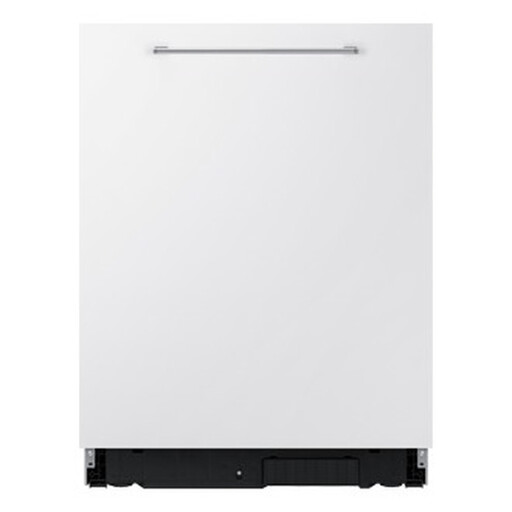 Image unavailable
Another integrated option to consider if the stated capacity of 13 place settings suits your dishes. The title specifies a 60 cm model with a C rating; check the dimensions of the housing unit and the water and energy consumption figures on the exact model’s energy label.
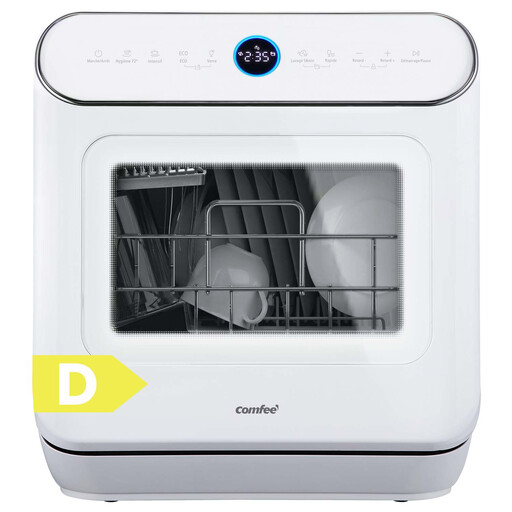 Image unavailable
For small loads, first check that your dishes fit inside: the capacity stated in the title doesn’t give a standard number of place settings. The title specifies 7 programmes and a D rating; check the instructions for loading, drainage and electricity supply, and the energy label for consumption and noise figures.
Compare the kWh per 100 cycles and litres per cycle shown for the Eco programme, then check its duration. ADEME and the European Commission present these figures as energy label information; use the same units and reference programme when comparing two models.
No: a compact model connected to the plumbing needs a suitable space, a water supply, drainage and an electricity supply. If you’re considering a model that uses a water tank rather than a direct connection, check the instructions for the specific model.
No: it gives you an indication of capacity, but the available width and rack layout matter too. Before choosing, check that your plates, dishes and saucepans will fit in the model you’re considering.
The legal guarantee of conformity applies when a private individual buys goods from a professional seller in France. The Ministry of the Economy states that you have two years to claim under this guarantee if the goods don’t conform, whether they’re new or second-hand. Keep your proof of purchase and a description of the product.