What should you compare before buying?
Freestanding
Worth considering: if you’re happy for the appliance to remain visible or want more flexibility in your kitchen layout. Bosch lists 45 and 60 cm widths for its freestanding models.
Check: the appliance will remain visible. Measure the space and check the manual for connection requirements.
Integrated
Worth considering: if your kitchen has a housing space designed to fit an appliance within the units.
Check: that the housing space, door panel and door clearance are compatible with your chosen model.
Compact
Worth considering: if you don’t have room for a full-size floor-standing model and a smaller dishwasher has enough capacity for your dishes.
Check: distinguish between a worktop model and a compact integrated one, and check you have enough room for larger dishes and the connections.
When fitting out a kitchen, start by checking the dimensions and installation type. Then work out the capacity you need and compare consumption based on how often you wash up.
| What matters |
What to check |
Who it matters most to |
| Fit and installation |
Measure the width, height and depth; check the housing space, door panel, door clearance and connections specified in the manual. |
If I’m refitting my kitchen, I want to make sure the appliance and its door will fit, and that the connections are possible. This is the top priority for around 33% of consumers concerned. |
| Amount of washing up |
Compare the stated capacity and basket layout, particularly for larger dishes and utensils. |
When meals leave me with lots of washing up, I want to load the items I use without running extra cycles. Usable capacity is the top priority for around 27% of consumers concerned. |
| Consumption |
Look at the kWh per 100 Eco cycles, litres per Eco cycle, capacity and programme duration together. |
If I run cycles regularly, I want to compare consumption under like-for-like conditions rather than relying on the energy class alone. This is a priority for around 20% of consumers concerned. |
| Everyday noise |
Compare the noise emissions shown on the label, especially if your kitchen opens onto your living space. |
In an open-plan kitchen, I want to keep noise disruption to a minimum while people are using the room. Quiet operation is the top priority for around 20% of consumers concerned. |
Dishwasher picks on Joybuy
This selection includes compact worktop dishwashers for smaller spaces and an integrated model for a fitted kitchen. Compare their stated capacities and installation requirements with your available space and the amount of washing up you have.
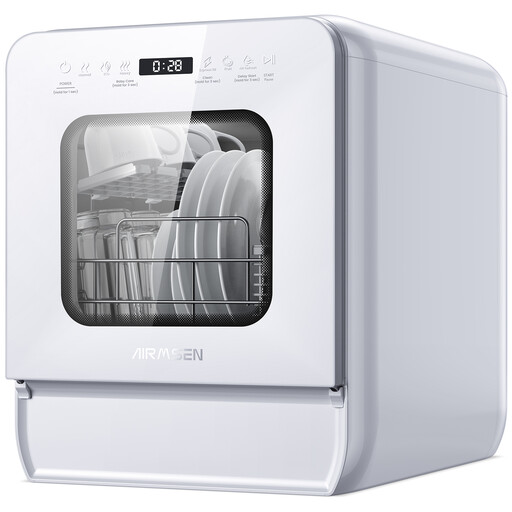 Image unavailable
AIRMSEN worktop dishwasher with 5 L tank
Its worktop design is made for smaller spaces and lighter loads of washing up.
Stated capacity: 4 place settings; built-in 5 L tank; 9 programmes; energy class D.
View on Joybuy
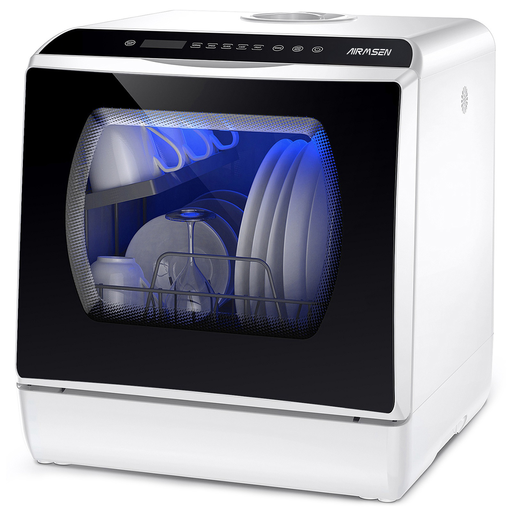 Image unavailable
AIRMSEN portable worktop dishwasher
The worktop design and built-in tank are worth considering if you’re short on space or don’t have a permanent water connection.
Stated capacity: 4 place settings; 5 L tank; tap connection also listed; 5+1 wash cycles.
View on Joybuy
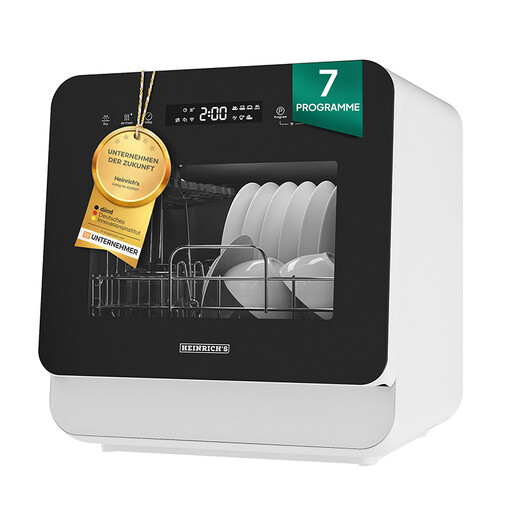 Image unavailable
Heinrich’s HTG 8855 compact table-top dishwasher
Its stated capacity makes it better suited to smaller amounts of washing up than larger loads.
3 place settings; 7 programmes; 5 L tank; stated noise level of 56,3 dB; energy class C.
View on Joybuy
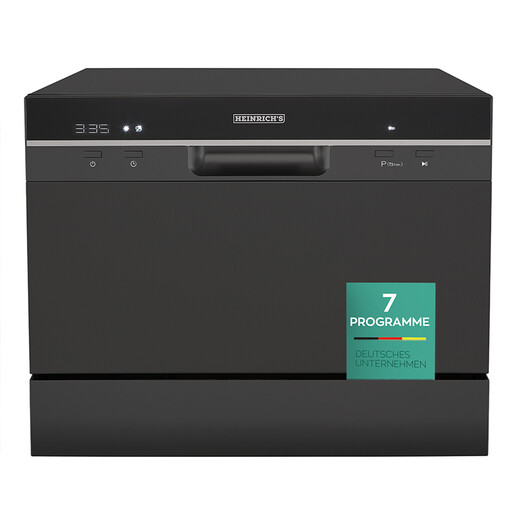 Image unavailable
Heinrich’s HTG 8840 worktop dishwasher
Its stated capacity may suit a larger amount of washing up than 3- or 4-place-setting compact models, provided you have enough worktop space.
6 place settings; 7 programmes; stated water consumption of 6,5 L per cycle; stated noise level of 47 dB; energy class D.
View on Joybuy
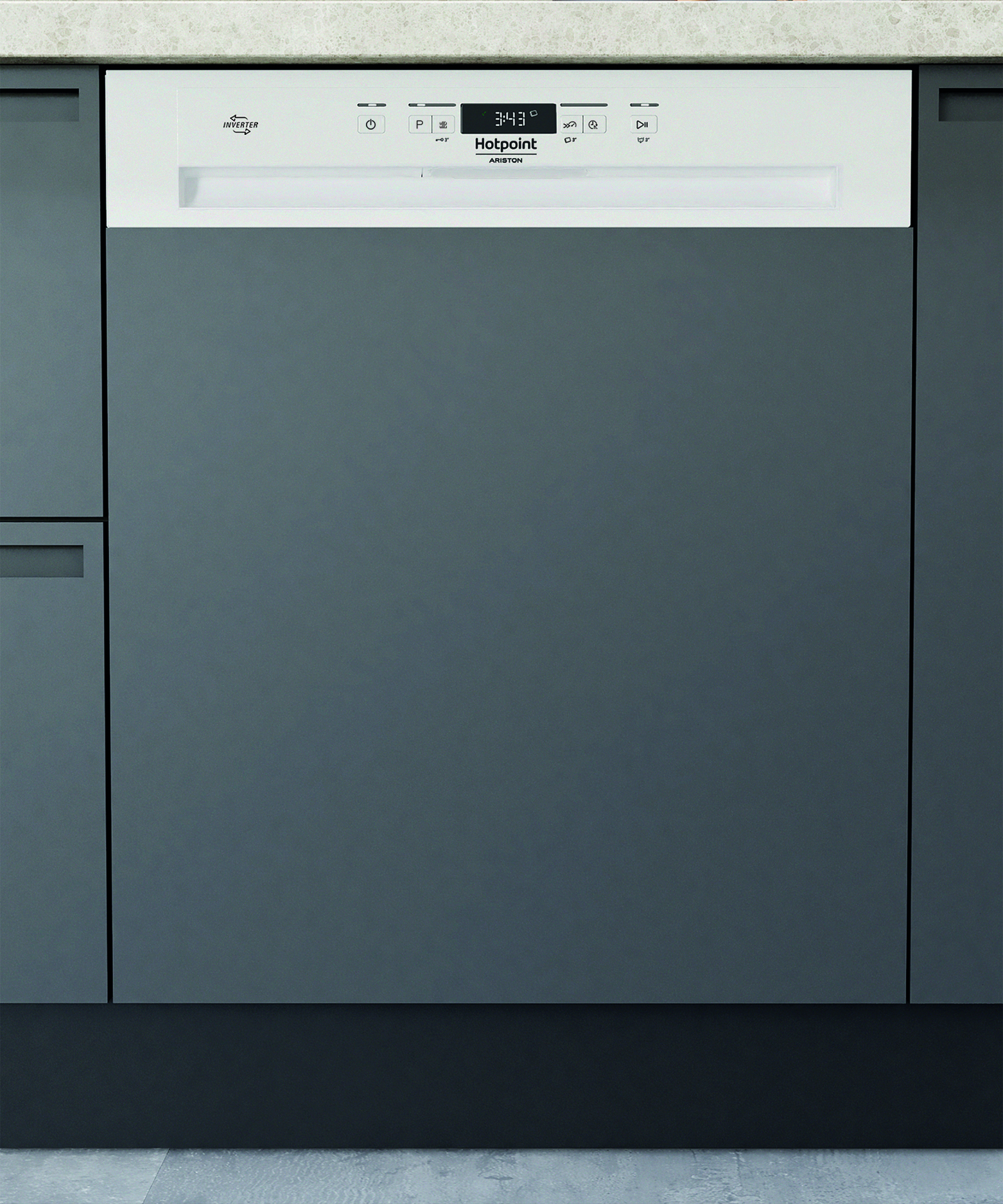 Image unavailable
Hotpoint H3BFD536W 60 cm integrated dishwasher
This integrated option is worth considering if your kitchen has a housing space that’s compatible with the model.
Stated width: 60 cm; stated capacity: 14 place settings. Check that the housing space and door panel are compatible before installation.
View on Joybuy
Frequently asked questions
What should I check before connecting a dishwasher?
Measure the space and check the model’s manual for the water inlet, drainage and electrical requirements. For an integrated dishwasher, also check the housing space, door panel and door clearance. For a compact model, first work out whether it sits on a worktop or fits inside a unit.
How do I read the energy label?
The EU energy label includes the energy class, kWh per 100 Eco cycles, litres per cycle, capacity, Eco programme duration and noise level. The European Commission sets out these indicators for dishwashers. They are based on the stated test conditions and don’t reflect a personalised annual bill.
What maintenance should I do after installation?
Follow your model’s manual for cleaning the filter and taking water hardness into account. Bosch recommends cleaning the filter on its appliances and explains how to use salt to prevent limescale deposits. The process varies by appliance.
What rules apply in France when buying or replacing a dishwasher?
In France, dishwashers sold in shops or online must display an energy label. When a consumer buys from a professional seller, the legal guarantee of conformity allows them to take action within two years of delivery, subject to the conditions set out by the DGCCRF. When you buy a new appliance, the retailer must offer to take back your old one under the “one-for-one” take-back scheme, according to the ministry responsible for the ecological transition.


