Start by measuring the space and checking the connections. A freestanding model is a good choice if you don’t plan to fit a matching cabinet door; an integrated model needs a compatible housing space and door, while a compact model is best suited to limited space and smaller loads. To compare models that will work in your kitchen, think about how much washing-up builds up between cycles, then compare energy and water use, noise levels and the Eco programme duration shown on the label.
Which households are these options suited to?
Households that build up washing-up from several meals
If you also load the day’s saucepans and utensils, look at the capacity and basket layout rather than just the number of people in your household. Que Choisir gives a guide of 12 to 17 place settings for 60 cm models and 9 to 10 place settings for 45 cm models.
Households with open-plan kitchens or a low tolerance for noise
If your dishwasher runs while you’re at home, compare the dB level and noise class shown on the label. ADEME recommends taking noise into account when choosing a household appliance.
Households with limited kitchen space
First, check how much space you have: freestanding, integrated and compact models each need a different type of installation. Que Choisir lists countertop compact models with 6 place settings, for example; make sure the capacity suits the amount of washing-up you actually build up.
What should you consider when choosing?
First, work out which format your kitchen can accommodate, then compare models based on what matters most in your day-to-day use.
Freestanding
Consider this : if you don’t plan to fit a matching kitchen door and want an appliance with finished sides on show.
Bear in mind : you’ll still need the connections; if you’re placing it under a worktop, check whether the model’s top can be removed.
Built-in or integrated
Consider this : if your kitchen has a suitable housing space and you want the appliance to match your cabinetry.
Bear in mind : check the dimensions and door-fitting requirements, and whether a matching door is included with the model you choose.
Compact
Consider this : if there isn’t enough space for a 45 or 60 cm appliance and you don’t have much washing-up.
Bear in mind : its smaller capacity may mean running more cycles if washing-up from several meals builds up.
| Criteria |
What to check |
Who it matters to |
| Capacity |
Compare the stated place settings with the washing-up you build up between cycles, and check that the baskets have room for your utensils. |
When plates and saucepans from several meals pile up, I want to avoid running the dishwasher too often. Around 31% of consumers would make capacity their top priority. |
| Installation |
Measure the space and check the water supply, waste outlet and electrical connection; for an integrated model, also check the cabinet door. |
In a fitted or narrow kitchen, I first need an appliance that will fit the space available. This compatibility would be the main consideration for around 25% of consumers. |
| Energy and water use |
On the label, compare kWh per 100 reference cycles and litres of water per reference cycle, as recommended by ADEME. |
If I run cycles regularly, I want to keep an eye on the water and electricity used. Around 25% of consumers would put this consumption first. |
| Noise |
Compare the dB level and noise class on the label, and check which cycle the stated figure applies to. |
With an open-plan kitchen or cycles running while people are at home, I want to keep noise to a minimum. Noise would be the top priority for around 19% of consumers. |
What mistakes should you avoid before buying?
-
Choosing the width based only on the number of people in your household
How much needs washing also depends on the meals you build up and the space taken up by saucepans and utensils. A model with too little capacity could mean running it more often.
Take note of your washing-up over one or two days, then look at the basket layout. Que Choisir puts 60 cm models at 12 to 17 place settings and 45 cm models at 9 to 10; check the capacity of any compact model you’re considering.
-
Focusing only on the energy rating letter
The letter alone doesn’t tell you how much water the appliance uses, how long the Eco programme takes or how noisy it is.
Compare the label figures on a like-for-like basis: according to ADEME, energy use is shown in kWh per 100 reference cycles and water use in litres per reference cycle.
-
Ordering an integrated model before checking the housing space and cabinet door
An integrated model needs to fit your kitchen cabinetry, and you shouldn’t assume a matching door is included. You’ll also need a water supply, waste outlet and electrical connection.
Measure the housing space and check the instructions for your chosen model to see how the cabinet door is fitted and what installation requirements apply.
-
Overlooking noise in an open-plan kitchen
Noise matters particularly if a cycle is running during meals or in the evening, near your living space.
Compare the dB level and noise class on the label rather than relying on a general description of the appliance as quiet.
Brands to know, depending on the format you’re looking for
Bosch
In France, Bosch offers freestanding, built-in and compact dishwashers, including models in 45 and 60 cm widths.
- The range gives you a choice of formats to suit the space available.
- Check the energy rating, stated drying performance and installation instructions for the specific model.
Siemens
Siemens offers freestanding and integrated models, with programming features available on selected models.
- According to Siemens, some models have Home Connect features for scheduling or monitoring cycles.
- These features, like the Zeolith drying system advertised on some ranges, may not be available on the model you’re considering.
Miele
Miele offers freestanding and integrated appliances, as well as XXL models.
- The range includes several installation types for fitted and unfitted kitchens.
- Check the dimensions, noise level and advertised features, such as AutoDos or AutoOpen, for each model.
Beko
Beko offers freestanding, built-in and fully integrated models, including widths of 45 and 60 cm.
- You can compare formats based on the space available and the type of cabinet door you want.
- Capacities and features highlighted by Beko vary by model; check the product details and label for the one you choose.
Whirlpool
Whirlpool offers freestanding and built-in dishwashers, including 45 cm models.
- Its installation information highlights the connections you’ll need for your chosen space.
- Check the dimensions and connection requirements in the instructions for each model.
Joybuy models for fitted kitchens or freestanding installation
These models are designed for integrated or freestanding installation. First choose the type that suits your kitchen, then check the measurements and figures that matter for your washing-up routine.
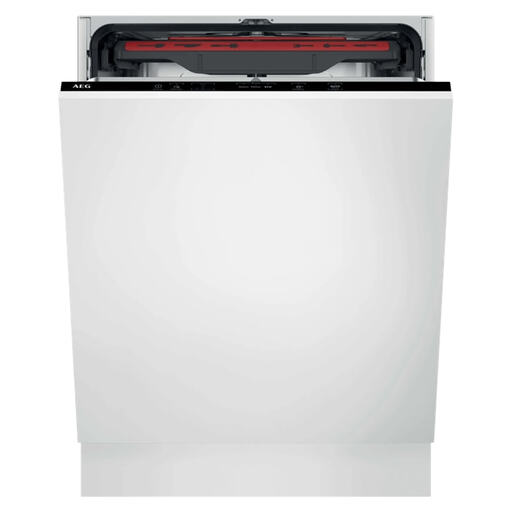 Image unavailable
AEG FSB34707Z integrated, 60 cm, 14 place settings
Worth considering for a fitted kitchen and washing-up that builds up between meals. Stated energy rating: C.
The stated width and detailed dimensions don’t clearly match up: confirm the appliance and housing measurements before choosing this model.
View on Joybuy
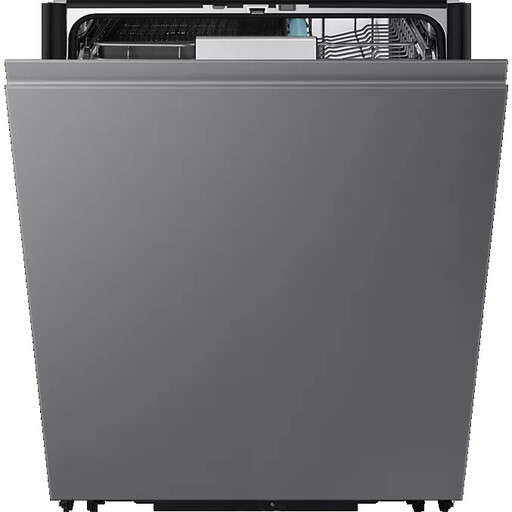 Image unavailable
Samsung DW90H79JAI0U1 Bespoke AI integrated, 60 cm, 14 place settings
Worth considering if your kitchen is designed for an integrated installation. Stated energy rating: A.
To compare noise levels and plan your cycles, confirm which programme the figures of 42 dB in Extra Silence mode and 44 dB in the table apply to. Also check the Eco programme duration.
View on Joybuy
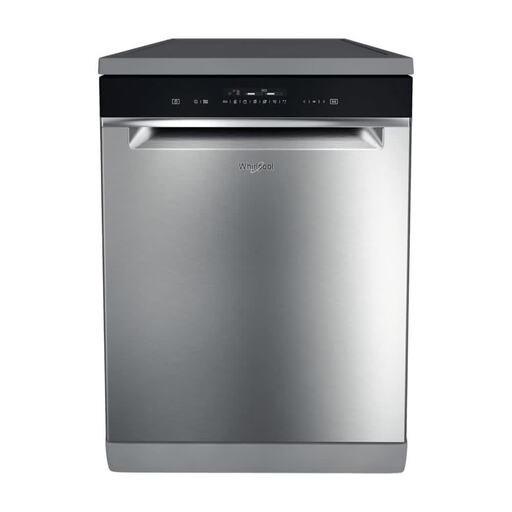 Image unavailable
Whirlpool WFP5O41PLGX freestanding, 60 cm, 14 place settings, stainless steel
Worth considering if you want to install a freestanding model without a matching cabinet door. Stated energy rating: C.
The stated width and detailed dimensions don’t clearly match up: check the exact footprint and space needed for installation.
View on Joybuy
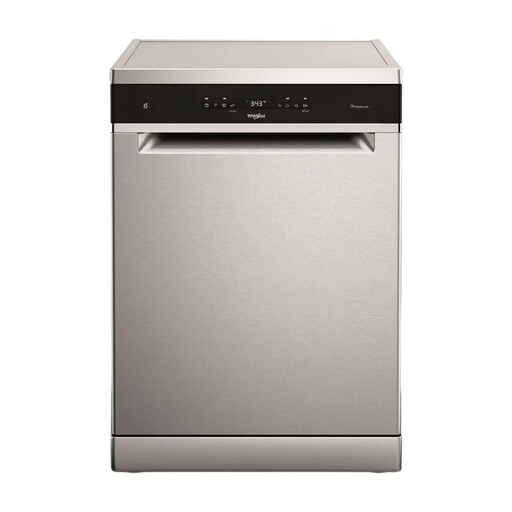 Image unavailable
Whirlpool WH6FC14BN70X freestanding, 60 cm, 14 place settings, stainless steel
Worth considering if your kitchen can accommodate a freestanding model with this capacity. Stated energy rating: C.
To compare its energy use, check the label and note the kWh per 100 cycles; also check the Eco programme duration against how often you plan to use it.
View on Joybuy
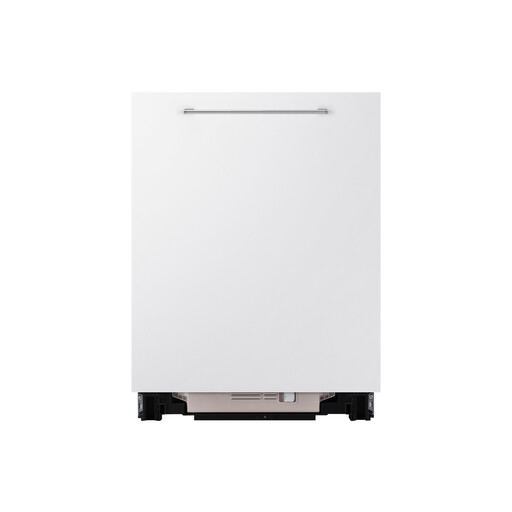 Image unavailable
Samsung DW80H72YBB0U1 built-in, 60 cm, 13 place settings
Worth considering for a fitted kitchen if this capacity suits your usual loads. Stated energy rating: B.
To assess whether it’s suitable for an open-plan kitchen, confirm which programme the figures of 42 dBA in Extra Silence mode and 44 dB(A) in the table apply to. Check the label too to compare water and energy use.
View on Joybuy
Frequently asked questions
Which connections should you check before choosing a dishwasher?
Check that there’s a water supply, waste outlet and electrical connection near the space you’ve chosen. Also make sure the floor is level and stable, and follow the instructions for your chosen model when installing it.
Can a freestanding dishwasher go under a worktop?
Yes, provided the dimensions are suitable and the top can be removed if necessary. Check both points for the model you’ve chosen before planning to install it under the worktop.
How do you compare the energy and water use of two dishwashers?
Compare the kWh per 100 reference cycles and litres of water per reference cycle shown on their labels, taking their capacity and how often you wash into account. ADEME explains these units; the energy rating letter alone is no substitute for the figures.


