Start by choosing a format that suits your kitchen: freestanding for greater flexibility when positioning the appliance, integrated if a housing unit and door front are provided, and compact when space or the volume of dishes is genuinely limited. For regular meals shared by several people, compare capacity and the interior layout, then the energy-label figures — kWh/100 cycles, litres per Eco cycle, duration, noise level in dB and noise class — rather than relying on a single letter or a marketing name.
Which households is it for?
Households with several people eating together every day
If meals shared by several people are a regular occurrence, the volume of plates, glasses, saucepans and serving dishes matters just as much as the number of people. According to Que Choisir, typical capacities range from 12 to 17 place settings for 60 cm models, compared with 9 to 10 for 45 cm models.
Smaller households with a narrow kitchen
A 45 cm or compact model can be useful when space is limited, provided the accumulated load remains suitable for its capacity. According to Que Choisir, 45 cm models generally accommodate 9 to 10 place settings, while a compact model holds fewer than 9.
Households with an open-plan or fitted kitchen
In a living space, compare the noise level in dB and the noise class. For a fitted kitchen, also check the housing unit, door front, connections and installation requirements before choosing an integrated model.
Buying priorities
Freestanding
Choose this if: your kitchen does not have a dedicated housing unit or you want to keep your layout more flexible.
Bear in mind: the appliance remains visible; check the available space, connections and exact dimensions, including beneath a worktop.
Integrated
Choose this if: a housing unit is available and integrating the appliance with your kitchen furniture is important.
Bear in mind: an integrated dishwasher is not designed simply to stand on the floor; the compatible door front and installation need to be planned in advance.
Compact
Choose this if: space is very limited and the volume of dishes is smaller than that of a 45 cm model.
Watch out for: reduced capacity may mean running cycles more frequently when serving dishes and saucepans build up.
| Priority |
What to check |
Your needs |
| Capacity and loading |
Compare the number of place settings, basket layout, any cutlery drawer and height adjustments. Make sure there is enough room for serving dishes and saucepans, not just plates. |
I want to avoid running several cycles because there is no room for cookware. A 60 cm width usually corresponds to 12 to 17 place settings, compared with 9 to 10 for a 45 cm model, according to Que Choisir. |
| Consumption and duration |
Compare kWh per 100 cycles, litres per Eco cycle and the duration of the Eco cycle on a like-for-like basis. Also check the energy class, without considering it in isolation. |
I want to plan cycles without relying on a simple promise of lower consumption. ADEME states that the label displays water and energy consumption along with the reference duration. |
| Noise |
Check the noise level in dB and the noise class, particularly for an open-plan kitchen. Do not rely solely on the name of a quiet programme. |
I want to be able to run the appliance in the evening without excessive disruption in the living space. ADEME points out that a difference of 3 dB represents an almost twofold increase in noise. |
| Installation |
Check the height, width and depth of the model, the housing unit and access to the connections. For an integrated model, also confirm the door front, plinth and installation method. |
I want to avoid discovering after ordering that an appliance cannot be integrated into my kitchen. An integrated model requires a suitable housing unit and is not simply a replacement for a freestanding one. |
Mistakes to avoid
-
Choosing an integrated model without confirming the housing unit, door front and installation method
An integrated dishwasher is supplied without a door front, worktop or side panels; it must not be placed on the floor like a freestanding model. An incompatibility can therefore be both functional and aesthetic.
Measure the housing unit and compare its height, width and depth with the specifications for the exact model. Confirm that the door front is compatible and obtain an installation quote before making your choice.
-
Choosing a smaller model simply because it takes up less space
A 45 cm model generally accommodates 9 to 10 place settings, compared with 12 to 17 for a 60 cm model; a compact model holds fewer than 9. If several people regularly share meals, extra cycles may reduce the practical benefit you were looking for.
Assess a typical day with plates, glasses, containers, saucepans and serving dishes. Check the interior layout before prioritising a narrower model.
-
Comparing only the energy class or a ‘quiet’ description
The label also shows kWh per 100 cycles, litres per cycle, duration, dB and the noise class. These figures allow a more complete comparison using the Eco programme.
Place the labels or product specifications for the models you are considering side by side. For noise, compare the dB level and noise class, not just the name of a programme.
-
Overlooking collection of your old appliance
An old dishwasher falls under the waste electrical and electronic equipment stream. Arranging its collection means you will not be left with a bulky appliance or have to send it through an unsuitable recycling route.
Before completing your purchase, confirm with the retailer how they collect an appliance of the same type, or find out about a suitable collection point.
Notable brands to consider
Bosch
Worth considering for a 60 cm freestanding dishwasher when low reported noise and flexible loading are priorities.
- According to Bosch, the SMS6ECW15F has a noise level of 42 dB, energy class A, 9.0 L per Eco cycle and Max Flex baskets.
- These specifications apply to this particular model: check the dimensions, consumption and requirements for connected features.
Siemens
Worth considering for a fitted kitchen looking for an integrated model with adjustable storage and a cutlery drawer.
- According to Siemens, the SN53ES14CE features a rackMatic system adjustable to three levels, a cutlery drawer and a varioSpeed Plus function.
- This model is listed as unavailable by the manufacturer; check the specifications and availability of the model currently on sale.
Miele
Worth considering if you are looking for a 60 cm freestanding model with automatic dosing and detailed consumption indicators in the product specifications.
- According to Miele, the G 7040 SC Front AutoDos is rated class A, with a noise level of 43 dB, a cutlery drawer and 8.4 L per Eco cycle.
- The AutoDos system means you should check the availability and cost of consumables compatible with the model.
Beko
Worth considering for a 45 cm freestanding model in a narrow kitchen, when the stated capacity matches the actual volume of dishes.
- According to Beko, the BDFS26041XQ is a 45 cm model with 10 place settings, a stated noise level of 41 dB and energy class C.
- A capacity of 10 place settings may still be limiting if serving dishes and saucepans accumulate between cycles.
Dishwasher options on Joybuy
These Joybuy options include freestanding and integrated dishwashers for everyday meals shared by several people. Choose the format to suit your kitchen, then compare the capacity, noise, stated consumption figures and installation requirements of the exact model.
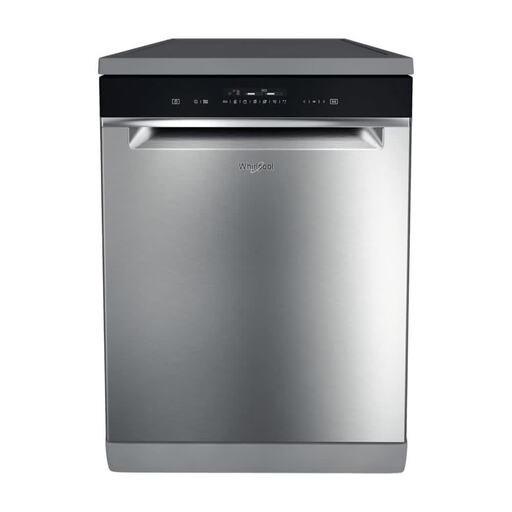 Image unavailable
Whirlpool WFP5O41PLGX freestanding 60 cm, 14 place settings
An option for a household wanting a large capacity without a dedicated integrated housing unit.
14 place settings, class C, 75 kWh/100 cycles, 9.5 L per Eco cycle and a stated noise level of 41 dB(A).
Check the dimensions, connections and clearance required to open the door before buying.
Joybuy
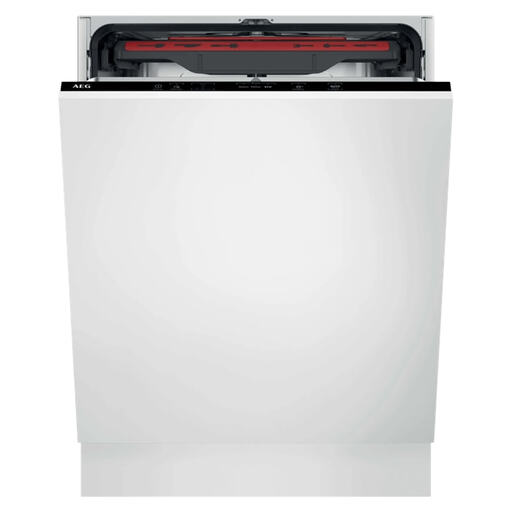 Image unavailable
AEG FSB34707Z fully integrated 60 cm, 14 place settings
Worth considering for a fitted kitchen with a compatible housing unit, door front and connections.
14 place settings, class C, 10.5 L and 0.75 kWh per Eco cycle, with a stated noise level of 44 dB.
The stated Eco cycle lasts 240 minutes; check that this duration suits your daily routine.
Joybuy
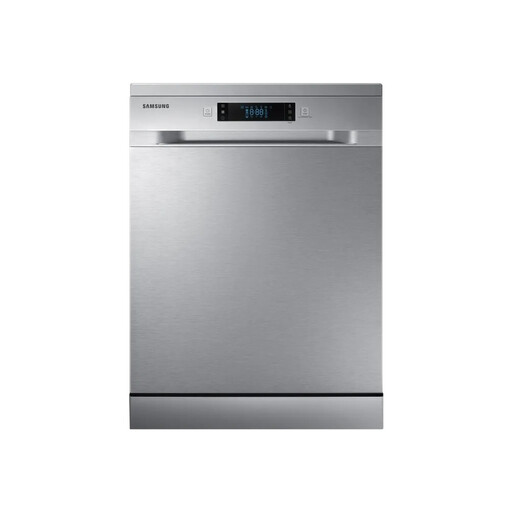 Image unavailable
Samsung DW60M6050FS freestanding, 14 place settings
A freestanding option for larger loads, with baskets that can be adapted for dishes, glasses and cutlery.
14 place settings, 7 cycles, class E, 95 kWh/100 cycles, 10.5 L per cycle and a stated noise level of 44 dB.
Compare these consumption figures with those of other models and check the usable installation dimensions before ordering.
Joybuy
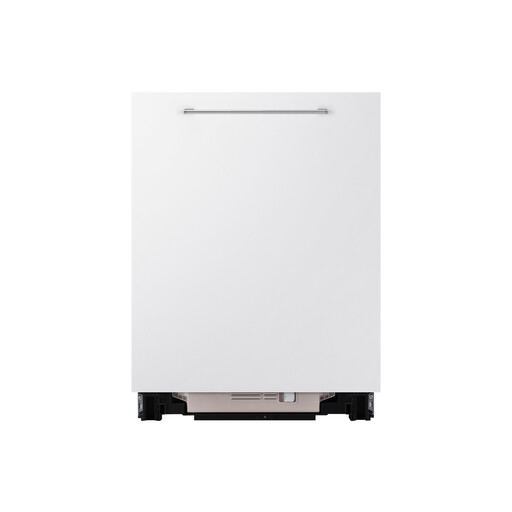 Image unavailable
Samsung DW80H72YBB0U1 integrated 60 cm, 13 place settings
Designed for a fitted kitchen where a capacity of 13 place settings suits regular meals.
13 place settings, class B, a stated noise level of 44 dB(A) and an Extra Silence programme stated at 42 dBA.
The specifications state a minimum housing-unit height of 820–900 mm, width of 600 mm and depth of 555 mm; also confirm that the door front is compatible.
Joybuy
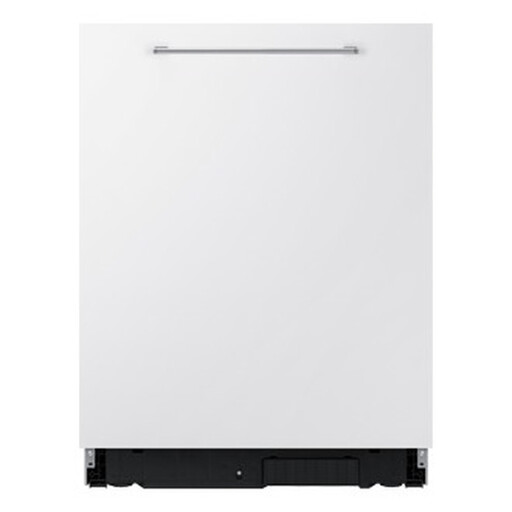 Image unavailable
Samsung DW70H72WCB0U1 integrated 60 cm, 13 place settings
An integrated option for a fitted kitchen handling frequent meals and varied loads.
13 place settings, class C, a stated noise level of 44 dB(A), Express cycle and AutoRelease automatic door opening.
Check the housing unit, door front, plinth and consumption figures for the exact model before comparing its running costs.
Joybuy
Frequently asked questions
Is a 45 cm dishwasher large enough for everyday meals shared by several people?
It may be sufficient if the actual load fits within 9 to 10 place settings and you are happy to run one cycle a day. Que Choisir states that a 60 cm model usually offers 12 to 17 place settings; if you often wash cookware, also check the basket layout.
Which energy-label figures should you compare first?
Compare the class from A to G, kWh per 100 cycles, litres per cycle, the duration of the Eco cycle, capacity, dB and the noise class. ADEME explains that water and energy consumption figures are provided to make it easier to compare appliances.
Is the Eco programme necessarily the shortest?
No. Its duration is shown separately and should suit your daily routine. The Eco programme is often used as the reference cycle for water and energy consumption figures.
Do you need any additional components for an integrated dishwasher?
Potentially, yes. An integrated dishwasher requires a suitable housing unit and is supplied without a door front, so the compatible front and installation may need to be included in your plans. Ask for a quote tailored to your kitchen before ordering.
What should you do with your old dishwasher when replacing it?
A dishwasher falls under the waste electrical and electronic equipment stream. Before buying, confirm with the retailer how they collect an appliance of the same type, or find a suitable collection point.


